Lebanon is urging international action as military activity threatens the historic sites of Tyre and Beaufort Castle, two landmarks of global cultural significance.


Lebanon is urging international action as military activity threatens the historic sites of Tyre and Beaufort Castle, two landmarks of global cultural significance.

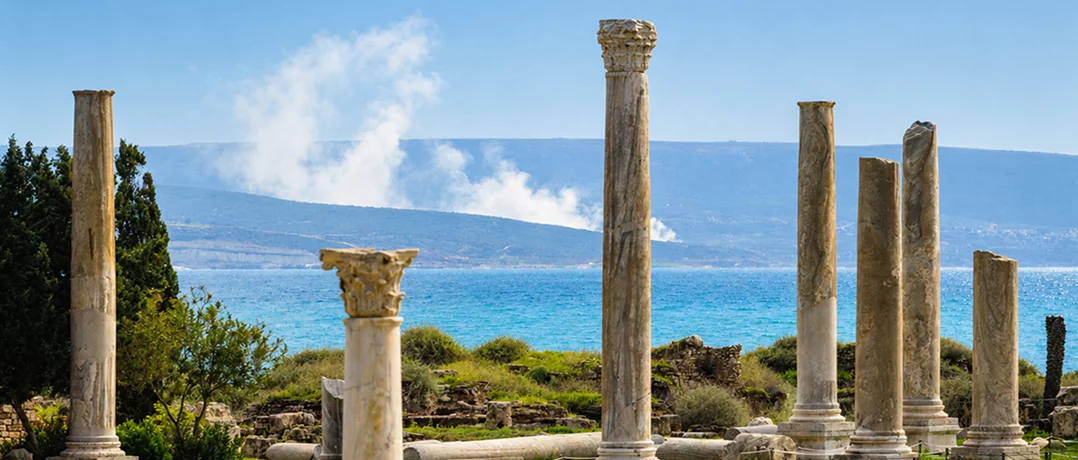
As hostilities in southern Lebanon continue to intensify, two of the country's most historically significant archaeological sites are now at the center of an urgent international alarm. Beaufort Castle and the ancient city of Tyre, landmarks that together span thousands of years of human civilization, face mounting threats from military activity, prompting Lebanon's cultural authorities to issue urgent calls for international protection.
The Beiruter spoke with the Ministry of Culture to understand the full picture.
The ancient city of Tyre, inscribed on UNESCO's World Heritage List since 1984, has borne the brunt of what Lebanese authorities are describing as a sustained and escalating campaign of destruction. With a history stretching back more than 5,000 years, Tyre is not simply a national treasure, it is a cornerstone of humanity's shared civilizational memory.
The Ministry confirmed to The Beiruter that Israeli airstrikes directly struck the area at the entrance to the archaeological site, known as the "City Site." The strikes hit a historic building, electrical generators at the main entrance, the offices of the Directorate General of Antiquities itself, and the southeastern section of the site. Ancient columns and capitals near the blast zones sustained damage, and the site's entrance and administrative buildings were directly affected.
"Although the full extent of the damage cannot currently be determined due to security conditions, it is certain that archaeological structures within the site have sustained actual damage," the Ministry told The Beiruter, adding that a comprehensive field assessment would be conducted as soon as safe access can be secured.
The attacks, according to the Ministry, are not isolated incidents. They form part of an ongoing series of violations that have affected the site and its surroundings since 2024,violations that intensified sharply in May 2026 following evacuation orders issued for the entire city of Tyre. Despite repeated official complaints submitted to UNESCO, and despite Tyre having been granted enhanced protection under the 1954 Hague Convention and its 1999 Second Protocol since November 2024, the strikes have continued. "These attacks constitute a flagrant violation of international law," the Ministry stated plainly.
Perched high above the Litani River in southern Lebanon, Beaufort Castle, known in Arabic as Qalaat al-Shaqif, is one of the most iconic Crusader-era fortifications in the Middle East. It currently sits on UNESCO's Tentative List for World Heritage nomination, and like Tyre, has held enhanced protection status under the Hague Convention since November 2024.
The Ministry raised the alarm over what it described as a coordinated media campaign by Israeli outlets, involving the circulation of videos and maps alleging that the castle conceals Hezbollah military infrastructure. Lebanese cultural authorities say the intent is transparent: to lay the groundwork for justifying military action against the site.
The Ministry pushed back firmly on those claims. "A review of the maps and videos being circulated clearly shows that the locations in question are situated far from the castle and its immediate surroundings and bear no connection to the archaeological site. All claims suggesting that the castle is being used for military purposes are misleading and entirely unfounded."
The Ministry also stressed that since Israel's withdrawal from southern Lebanon in 2000, Beaufort Castle has been under the exclusive management and supervision of the Directorate General of Antiquities, which has worked to secure funding for its restoration and eventual reopening to visitors, researchers, and tourists.
In both cases, the Ministry's message to the international community is the same: act now, before it is too late. "Any targeting of the site, or any attempt to justify its destruction or damage, constitutes a flagrant violation of international agreements," the Ministry said of Beaufort Castle, words that apply with equal force to Tyre.
Lebanon is calling on UNESCO, international cultural organizations, and governments worldwide to take immediate and concrete steps to shield these sites from further harm. What is at stake is an irreplaceable part of the world's collective memory, one that, once lost, can never be recovered.

