



Lebanon's healthcare system during the war

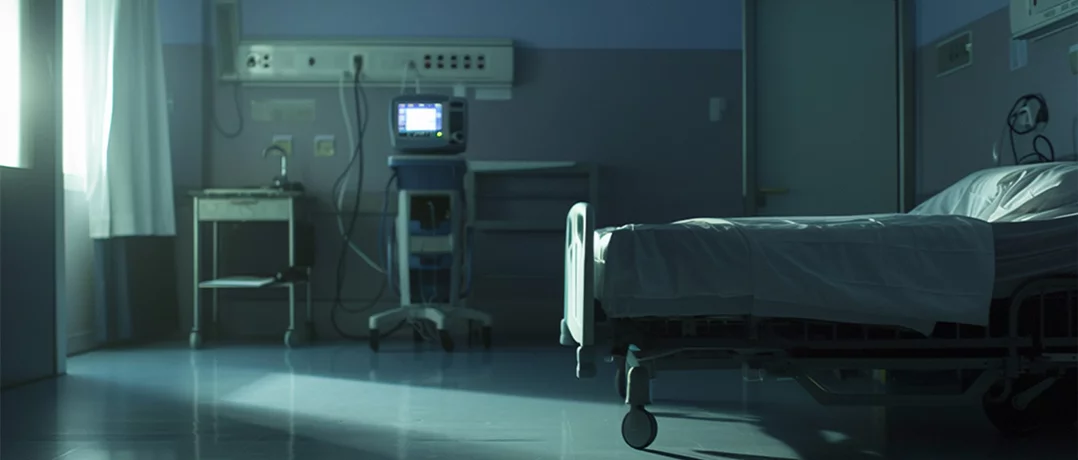
The ongoing Israeli aggression against Lebanon has pushed the country's already fragile healthcare system to its limits. From hospital closures to the deaths of paramedics, the numbers tell a sobering story. What the war has done is push a weakened system past its breaking point.
What the war is doing
The March 2026 escalation has compounded every one of these vulnerabilities. Within the first month, Israeli strikes killed at least 53 medical workers, destroyed or damaged 87 ambulances and medical centers, and forced the closure of five hospitals, according to the Ministry of Public Health. The WHO recorded 92 attacks on healthcare in Lebanon between 2 March and early April 2026, resulting in 137 injuries and 53 deaths among health personnel. Amnesty International described the pattern as consistent with unlawful targeting, stating it had investigated multiple strikes on medical facilities and vehicles during the 2024 escalation and found no evidence of military use.
By 11 March, 47 primary healthcare centers and five hospitals in the south and Beirut’s southern suburbs had shut down, according to OCHA. Two hospitals in Beirut’s southern suburbs were evacuated following displacement orders on 5 March, coordinated by the Ministry and the Lebanese Red Cross. Jabal Amel University Hospital in Tyre was struck five times. The Lebanese Italian Hospital near Tyre sustained damage from a nearby strike that wounded 18 people, including three paramedics.
The escalation worsened dramatically on 8 April, when Israeli forces unleashed over 100 bombs across southern Lebanon and surrounding areas. The strikes killed at least 203 people and injured more than 1,000, including many women and children, overwhelming already strained hospitals and emergency services. The sheer scale of the attacks added a new layer of urgency to humanitarian operations, further straining the capacity of local medical teams and aid organizations struggling to respond to a mounting death toll.
Rafik Hariri University Hospital, the largest public hospital in the country, reported a threefold increase in emergency admissions following the closure of facilities in the southern suburbs. Sweeping Israeli evacuation orders sent over one million people north, flooding hospitals that were already operating at or beyond capacity. The disruption of fuel supply chains and the destruction of road infrastructure in the south have further isolated remaining facilities from patients and supplies.
The ministry responds
In an interview with The Beiruter, the Ministry of Health confirmed it is covering 100 percent of hospitalization costs for uninsured displaced individuals at public hospitals and redistributing nursing staff across facilities to fill gaps created by closures and displacement. “We want to utilize all available capacities, based on the principle that no nurse should currently be unemployed,” the Ministry said. It acknowledged the financial burden this places on a sector already running on fumes, with hospital workers across the public system raising concerns about unpaid salaries. The Ministry stated it has allocated funds for staff compensation at several hospitals but conceded that road closures, fuel shortages, and supply chain disruptions continue to complicate delivery of medications and equipment to frontline facilities.
The Ministry also addressed the targeting of healthcare infrastructure directly, warning that “there are no guarantees that healthcare facilities will not be targeted” and citing the deaths of dozens of paramedics as “a clear violation of international laws and conventions.” It attributed the ability of public hospitals to stay operational through successive crises, COVID-19, the port explosion, and now this war, to pre-war investments supported by the World Bank and the Islamic Development Bank.
An appeal to survive
The WHO launched a flash appeal on 2 April for $30 million over six months to address health needs in five affected countries, including $10 million for Lebanon. The UN and partners have appealed for $308.3 million for a three-month government-led response. Whether these funds materialize at the speed required is an open question. What is not in question is the arithmetic: a system that lost 40 percent of its doctors before a single bomb fell in 2026 cannot sustain a war of attrition against its remaining infrastructure.
What was already broken
Lebanon’s healthcare sector was, until recently, one of the most advanced in the Middle East. The country had 28 public hospitals and 134 private ones, with the private sector accounting for roughly 82 percent of national bed capacity. It ranked 23rd on the Bloomberg Healthcare Efficiency Index in early 2019. But the financial crisis that erupted later that year triggered a cascade that the sector has never recovered from.
The Lebanese pound lost over 90 percent of its value. Hospitals, which import 100 percent of their medical supplies, could no longer access foreign currency to pay for equipment and medication. Government reimbursements to both public and private hospitals dried up; private hospitals alone were owed more than $1.3 billion in unpaid dues dating back to 2011, according to the syndicate of private hospitals. Out-of-pocket healthcare spending, already high, surged from 33 percent to over 85 percent by 2023, according to a BMC Health Services Research review. Pharmacy stocks dropped by half. Seventy percent of the population lost access to essential services.
The human capital damage was equally severe. The World Health Organization estimates in the past five years, nearly 40 percent of Lebanon’s doctors and 30 percent of its nurses have emigrated. The Lebanese Order of Physicians reported approximately 3,000 doctors gone; the Order of Nurses counted roughly 5,000. The American University of Beirut Medical Center, the country’s flagship teaching hospital, lost 1,500 faculty and staff by mid-2021 alone, including 50 nurses recruited in a single batch by one Dubai hospital.
The structural question
The immediate crisis is the bombardment. But the deeper problem is what comes after. Lebanon’s healthcare system was not designed to absorb sustained conflict; it was designed to provide high-quality care in a small, urbanized country with strong private-sector capacity and a well-trained workforce. All three of those assets have eroded. The private hospitals that once formed the backbone of the system are financially starved. The workforce has been depleted by emigration. And the public sector, is now absorbing the full weight of war casualties, displacement, and the collapse of Beirut’s southern belt.
-
-

-
The Beiruter
-
