

Lebanon's mighty medieval castles face destruction
Lebanon's mighty medieval castles face destruction
By Tony McMahon | June 05, 2026

Reading time: 4 min
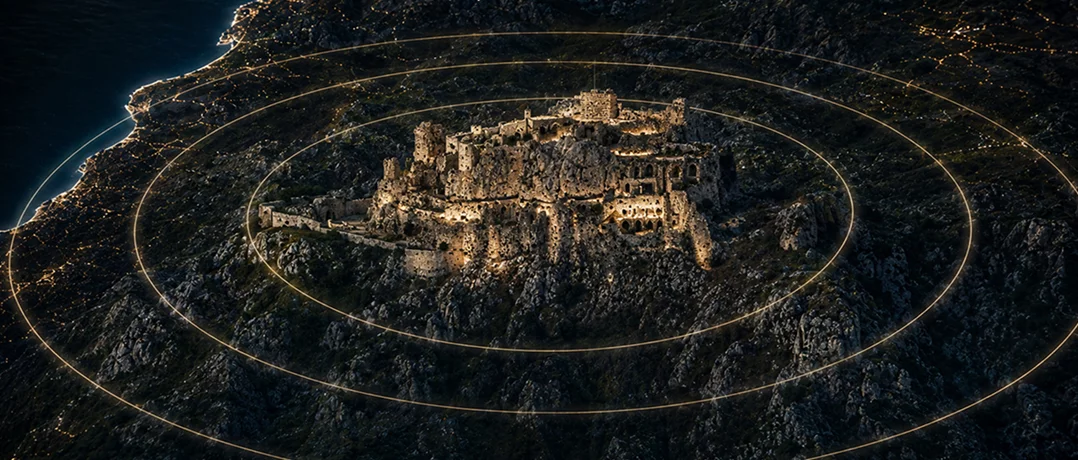
Medieval
castles are still being fought over, centuries after they were built. On 31 May
2026, Israel announced it had seized control of Beaufort Castle in southern
Lebanon, built in the 12th century at the height of the Crusades. An
online image showed the Israeli flag being hoisted over its fortifications.
It’s an image that any medieval knight would have understood.
There
are about a hundred crusader era castles dotted around Lebanon and surrounding
countries. They were built in the 12th and 13th centuries
by European nobles, and their regional allies, to secure control of the
Christian states established by the crusader princes. Amazingly, they remain
strategically important as Dr Steve Tibble, an academic and author on the
crusades, explains:
“The
crusaders were the experts when it came to warfare. That’s how they survived
for two hundred years despite being surrounded and heavily outnumbered. They
knew a commanding position when they saw one.”
Which
accounts for how Beaufort Castle, a hilltop fortress overlooking the Litani
river, is still a battle scene, eight centuries after it was constructed. The
name Beaufort means beautiful castle but the crusaders who constructed it were
more concerned about practicality than appearance. Beaufort, like most castles,
protected key routes used by Christian armies, merchants, and pilgrims.
In
Arabic, it’s known as the Qal’at al-Shaqif, meaning Castle of the Steep Cliff.
Like many crusader-era castles, it takes advantage of natural features in the
landscape that make it impregnable. From its walls, crusader knights could look
down on Sidon in the distance, Galilee as far as Mount Hermon, and the mountain
peaks of lower Lebanon.
Its
brilliant location has not been lost on Israel. This is not the first time that
the Israeli Defence Forces (IDF) have stormed its walls. Between 1982 and 2000,
they used Beaufort as an operational base, and this is a return after a gap of
26 years.
When
the IDF took Beaufort from the Palestine Liberation Organisation (PLO) in 1982,
the Israeli prime minister at the time, Menachem Begin, visited, surveyed the
damaged castle walls, and described it as an “open wound”. Located just a few
miles from the Israeli border, it had been used to launch missiles into Israel,
a situation resolved when Begin’s paratroopers scaled its fortifications.
History has now repeated with Hezbollah forces being removed by order of
Benjamin Netanyahu.
Muslim
attackers in the past also felt the need to control Beaufort. After Jerusalem
fell to Saladin in 1187, the Ayyubid ruler of Egypt and Syria mopped up
crusader resistance in the vicinity with Beaufort being one of the last castles
to resist his armies. However, it was back in crusader hands by 1240 and was
sold to the Knights Templar in 1260. It took the Mamluks, fearsome warriors
from Egypt, to bring it firmly into Muslim hands once more.
Toron
Castle (also known as Tibnin) is another 900-year-old military structure that
has fallen into the firing line between Hezbollah and Israeli forces. Artillery
booms and airstrikes have taken their toll on its roof and walls. This
limestone citadel was chosen by the crusaders because it had been a fortress
for thousands of years already, going right back to the Bronze Age. Now its
future is in question as drones buzz around the medieval remains.
Close
to Beaufort and Toron castles is Dubieh Castle, on a rocky ridge in the village
of Chakra. To the horror of UNESCO, which has listed all these castles as being
of “outstanding universal value”, this is another place where Hezbollah and the
Israelis have exchanged fire. UNESCO has worked closely with the Lebanese
authorities to try and protect these sites but shielding this heritage from the
ongoing conflict is extremely difficult.
Because
in effect, these castles have become what they were in the crusades: the front
line. Back then it was a front line between crusaders and Saracens. Now, it’s
Israel and Hezbollah. And whereas these castles could largely withstand an
onslaught with medieval weapons, they are very vulnerable today to modern
armaments. The worry is that they could very easily be reduced to rubble.
Happily,
there are some medieval gems yet to be endangered by the destruction in
southern Lebanon. This includes the awe-inspiring Citadel of Raymond de
Saint-Gilles, on a hilltop overlooking Tripoli. Originally constructed by the
Christian ruler Raymond of Toulouse, it has been strengthened by the Mamluks
and Ottomans. Mercifully, it has avoided being a conflict flashpoint.
Tragically,
there really is no respect among modern combatants for the heritage of Lebanon
– especially those who put ideology above patriotism. Looking over the border
into Syria, the idea of the magnificent Krak des Chevaliers, built by the
Knights Hospitaller, being bombed would have once been inconceivable. Yet
during the Syrian civil war, towers, walls, and roofs were smashed beyond
repair.
It’s
a grim warning to Lebanese history lovers, and all those who cherish the past,
what could befall these ghostly reminders of the past.
-
-

-
Tony McMahonJournalistInvestigative historian, published author.
-
