



UNICEF’s Aqwa program is helping war-affected children in Lebanon with urgent medical care, mental health support, and protection services.
Lebanon's war-wounded children

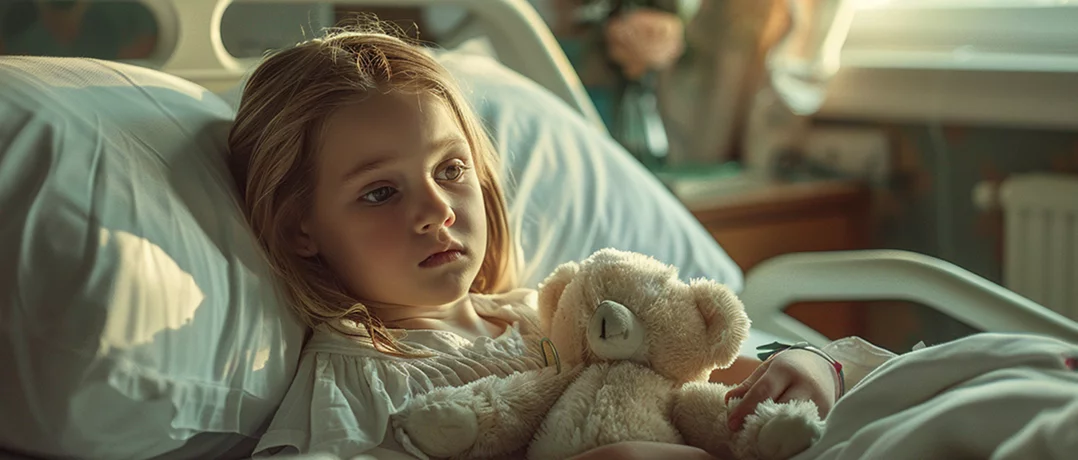
Amid the ongoing escalation along the southern border, at least 72 children have been killed, 661 wounded, and more than 415,000 displaced, many for the third or fourth time in their short lives.
Behind every figure is a name, a family, a home that may no longer exist, and a country where children are once again paying the steepest price for a war they did not start.
Into this emergency, UNICEF has launched the “Aqwa” program, Arabic for "stronger", an initiative designed to ensure that Lebanon's youngest victims do not become, in the organization's own words, "forgotten victims" of the ongoing conflict. The results so far are modest relative to the scale of need, but they represent the beginning of a structured, nationwide response at a moment when the gap between need and available resources is dangerously wide.
What Aqwa provides
The Aqwa program takes a holistic approach to the crisis. Under its framework, UNICEF and its partners, including the International Network for Aid, Relief, and Assistance (INARA) and the Ghassan Abu Sittah Children's Fund, are providing life-saving surgical care, mental health and psychosocial support, case management, education referrals, and access to disability services and the National Disability Allowance.
The initial results reported by UNICEF include 30 children who received urgent surgical operations, and 95 children and caregivers who received specialized mental health and psychosocial support. These figures, the organization stresses, represent only the children reached so far, a fraction of those in need. To reach one million people in need in Lebanon over the next three months, UNICEF requires $48.3 million, but faces a 77 percent funding gap with only $10.9 million currently available.
Invisible wounds
UNICEF has emphasized the importance of providing psychological support to children and parents alike, noting that many children are going through the same nightmare they endured just 18 months ago during the previous escalation of conflict. Repeated displacement, for the same child, the same family, compounds trauma in ways that manifest over years.
In shelters, UNICEF and partners are prioritizing psychosocial support, child protection services, and learning continuity, including through online and remote education platforms, while nutrition supplies are being pre-positioned and child protection teams are identifying and supporting injured, unaccompanied, and separated children.
UNICEF has called on communities and activists to share its hotline numbers, +961 76 325 928 and +961 76 835 307, under the campaign slogan "Reaching #Every_Child in time," a recognition that formal aid structures cannot reach every affected child without the help of local networks and first responders already embedded in affected communities.
A race against time
The Aqwa program is a lifeline, but its reach is constrained by the same structural realities that have hampered Lebanon's humanitarian response for years: a near-total dependence on international funding, a fragile national health system, and the logistical challenge of operating where active hostilities have damaged roads, water systems, and medical facilities simultaneously.
What UNICEF's intervention makes visible, beyond the surgeries and support sessions, is the scale of what remains invisible, the children not yet reached, the cases not yet referred, the psychological wounds accumulating in overcrowded shelters every night.
-
-

-
The Beiruter
-
