

France and key international partners are preparing a donor conference to support Lebanon’s army, encouraged by progress in weapons control south of the Litani and renewed Gulf and US engagement.
Lebanon’s Army at the center of a new international bet
Lebanon’s Army at the center of a new international bet
By The Beiruter | January 16, 2026

Reading time: 3 min
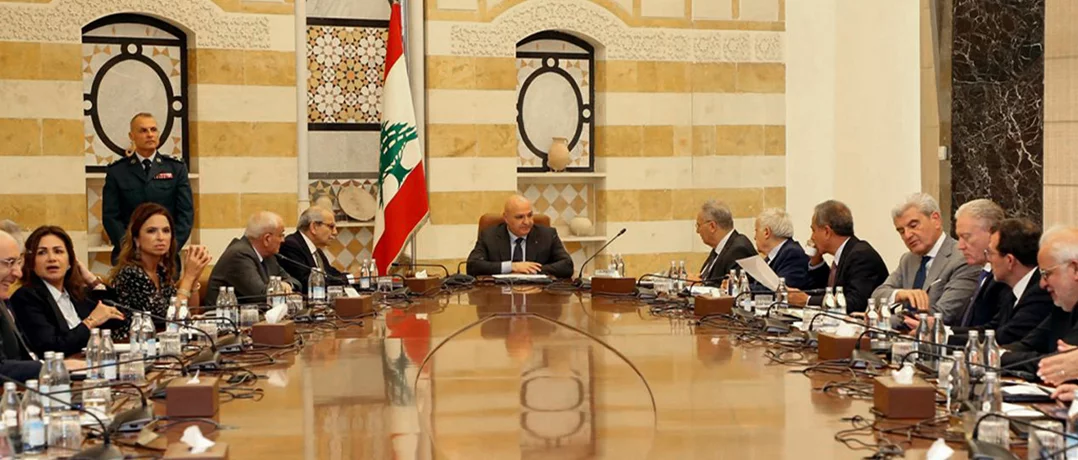
Lebanon’s Presidency has set March 5 as the date for an international conference in Paris to support the Lebanese Armed Forces and the Internal Security Forces, following two visits to Beirut by French envoy Jean-Yves Le Drian and intensive diplomatic consultations with prospective donor states. The move reflects coordinated Lebanese–French efforts and a growing international and Arab consensus on the army’s central role in preserving stability.
The idea for the conference emerged after the November 27, 2024 ceasefire, which mandated the deployment of the Lebanese Army in southern Lebanon up to the border, significantly expanding its responsibilities. Momentum increased after the army announced the completion of the first phase of weapons control south of the Litani River, encouraging previously hesitant donors to re-engage.
Diplomatic groundwork and five-party backing
Le Drian’s latest visit to Beirut included meetings with the three Lebanese presidents and participation in talks involving representatives of the Quintet Committee, which includes France, the United States, Saudi Arabia, Egypt, and Qatar. Also present were the ambassadors of the five countries, underscoring the level of international and Arab coordination behind the initiative.
Sources close to The Beiruter confirm that the decision to set March 5 as the conference date, taken during a meeting in Baabda attended by Le Drian and the Quintet ambassadors, signals clear Gulf and international approval for the conference.
Earlier preparatory talks were held in Paris on December 18, with representatives from the United States and Saudi Arabia in attendance, as well as Rodolphe Haykal, the commander of the Lebanese Army. While that meeting did not produce a fixed date, pending the army’s formal assessment of the first phase of weapons control, it laid the foundation for the Paris conference now scheduled for March.
What the conference will and will not do
According to informed sources speaking to The Beiruter, the French side has not attached any political conditions to the conference, stressing that French support for the Lebanese Army is “unconditional”. “There is no linkage between the issue of weapons north of the Litani River and the conference itself”, the source added, countering speculation that further steps on disarmament would be required to unlock support.
The assistance expected from the conference will focus on logistical, operational, and institutional needs required to implement the army’s mandate, particularly in relation to consolidating control over weapons. It will not include advanced defensive or offensive weaponry.
This approach aligns with previous statements by US envoy Tom Barrack, who said during a visit last summer that the Lebanese Army should be equipped and trained “as a peacekeeping force, not an offensive military force.”
Who will finance the support?
Crucially, sources to The Beiruter indicate that France will host and politically sponsor the conference, but will not finance the support package itself. Funding is expected to come primarily from Gulf states and the United States, reinforcing the collective nature of the effort and easing concerns over donor fatigue.
Although participation from countries outside the Quintet has not yet been officially announced, Paris and the Quintet states are expected to lead outreach efforts to secure the broadest possible international involvement.
Confidence boosted by army progress
Diplomatic enthusiasm for supporting the Lebanese Army has grown following the army leadership’s announcement that it had achieved its objectives in the first phase of weapons control south of the Litani. The government has since tasked the army with drafting a plan to extend the process north of the river, with the proposal expected to be presented to the Cabinet at a session scheduled for early February.
For donor states, these steps have been read as tangible progress rather than rhetorical commitment, an important factor in reversing earlier hesitation about participation.
-
-

-
The Beiruter
-
