



Lebanon ranked 8th globally in Numbeo’s 2026 Climate Index, placing it among the countries with the world’s most desirable climates.
Lebanon’s climate ranks among the world’s best

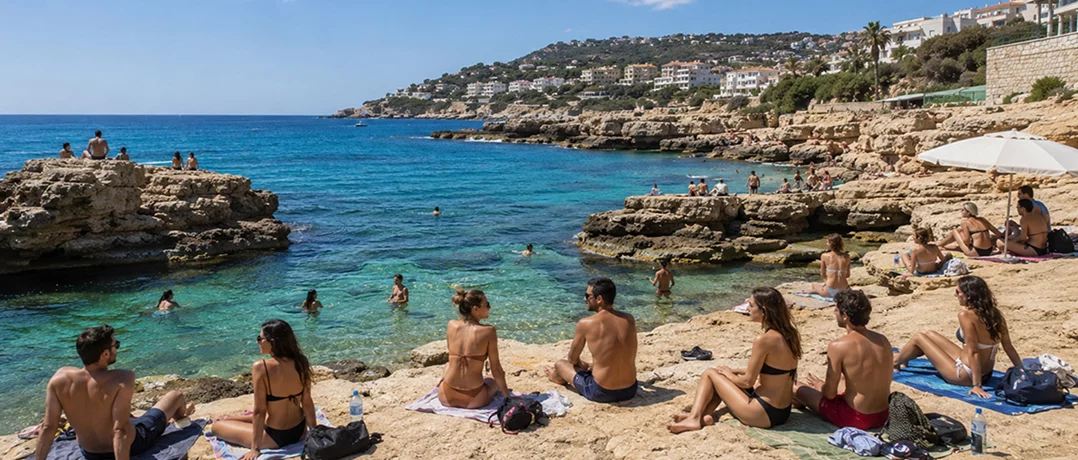
Lebanon's unique ability to offer snow-capped mountains and sun-soaked beaches within hours of each other has long set it apart from much of the world. That rare geographical and climatic diversity has now received global recognition. According to Numbeo's 2026 Climate Index, Lebanon ranked 8th worldwide with a score of 94.74 out of 100, placing it among the countries with the most desirable climates globally.
Why Lebanon's climate stands out
Doumet Kamel, environmental expert and president of the World Environment Party, attributes Lebanon’s favorable climate to its unique geography and rich natural diversity. Speaking to The Beiruter, Kamel noted that “few countries offer such dramatic variations in landscape within a small area, with the Mediterranean coast and high mountain ranges located just a short distance apart.”
He also highlighted Lebanon’s exceptional biodiversity, abundant vegetation, rivers, and natural springs, describing the country as “one of the region’s most environmentally significant areas”. According to Kamel, “these natural features contribute to Lebanon’s pleasant climate and environmental appeal, helping explain why the country consistently ranks among the world's most desirable climates.”
Kamel added that Lebanon’s climate is influenced not only by its mountainous terrain and Mediterranean location, but also by regional water systems and currents in the eastern Mediterranean, which play a role in shaping local weather patterns.
What sets Lebanon apart from many of its regional peers is the buffering effect of its mountains. The country's narrow strip of coastal plain rises quickly into the Mount Lebanon range, creating microclimates within a very small geographic footprint. This means residents and visitors can experience mild coastal weather and snow-capped peaks within the same afternoon drive, a variety that tempers the extremes that drag down scores for flatter nations in the region, such as Kuwait, Qatar, or Saudi Arabia, all of which score dramatically lower on the same index due to searing, prolonged summer heat.
Humidity is another factor working in Lebanon's favor. While coastal humidity can be noticeable in peak summer, it doesn't reach the punishing levels seen in Gulf states, and it's balanced by consistently comfortable conditions during spring and autumn, arguably the most pleasant stretches of the Lebanese year, when moderate daytime temperatures and low rainfall make outdoor life easy.
What the climate index measures
The crowd-sourced global database best known for its cost-of-living and quality-of-life comparisons, calculates its Climate Index using average monthly temperature, dew point, and an estimated humidex, a combined measure of heat and humidity. The index runs on a scale from -100 to +100, with higher scores reflecting climates that most people would consider comfortable: moderate temperatures, manageable humidity, and an absence of prolonged extreme weather such as bitter cold snaps, oppressive heatwaves, or relentless storms. A score close to 100 signals a broadly desirable, livable climate, one that does not require heavy investment in either heating or air conditioning for much of the year and does not regularly disrupt daily life with severe weather events.
By that standard, Lebanon's 94.74 places it firmly in elite company. Regional neighbors like Israel, Cyprus, and Turkey also score highly, reflecting a broader pattern in which Eastern Mediterranean nations consistently perform well on this metric.
How Lebanon compares globally
Countries like Ecuador benefit from equatorial highland stability, and Tunisia shares a broadly similar Mediterranean-adjacent climate to Lebanon's, yet both landed behind it in this year's rankings. Meanwhile, some of the very highest scorers globally, including several South American and East African nations, benefit from tropical highland conditions that avoid seasonal extremes altogether. Lebanon's presence in the top ten, despite lacking that kind of tropical buffering, is a testament to how effectively its mountainous terrain and coastal position offset what would otherwise be a fairly standard hot-summer Mediterranean profile.
A distinction shaped by nature
The ranking captures something genuinely true about day-to-day life in Lebanon: its weather encapsulates its beauty. It is mild enough in spring and fall, warm without being unbearable in summer, and rarely severe in winter. That combination has long been part of the country's appeal to visitors, part of the reason its coastal cities and mountain villages have historically drawn tourism, and now, part of what an independent global index is quantifying in hard numbers. The 8th-place global ranking for comfortable, temperate weather is a notable reminder of the physical geography that has drawn people to the Eastern Mediterranean for centuries.
-
-

-
The Beiruter
-
