



Lebanon’s smoking crisis, where high tobacco and waterpipe use, early addiction among youth, and weak enforcement of anti-smoking laws are driving serious public health and economic consequences.
Lebanon’s devastating habit: A public health emergency in plain sight
Lebanon’s devastating habit: A public health emergency in plain sight
By The Beiruter | March 12, 2026

Reading time: 5 min
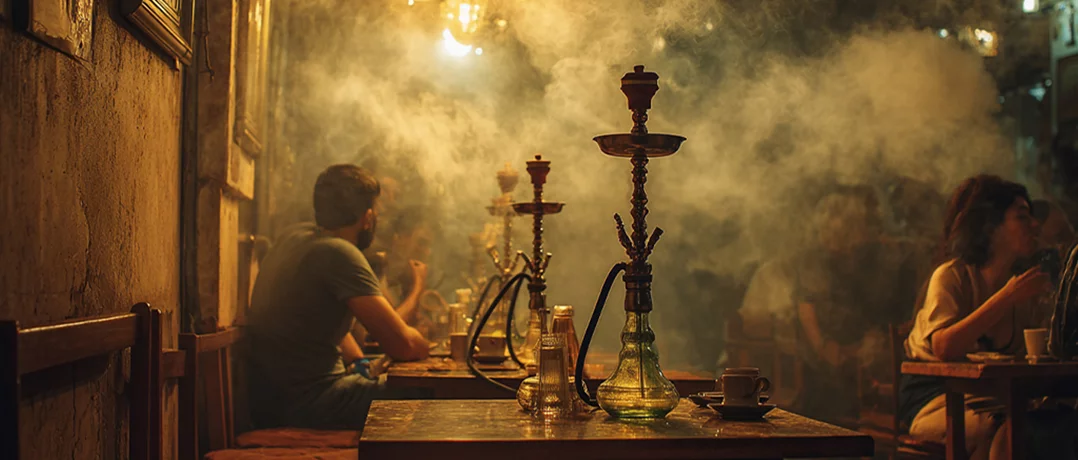
Every year, No Smoking Day is an opportunity to reflect on the global toll of tobacco. In Lebanon, however, the issue is more than a health campaign, it is a public health crisis woven deeply into daily life. From cigarette smoke drifting through cafés to the popularity of waterpipes in social gatherings, smoking remains one of the country’s most widespread habits. The numbers reveal a troubling reality: Lebanon has one of the highest smoking rates in the world, with serious consequences for public health, healthcare costs, and future generations.
A nation of smokers
An estimated 34 percent of Lebanon’s population smokes, placing the country among the highest globally for tobacco consumption. In total, roughly 1.33 million adults in Lebanon are smokers. Surveys conducted by the World Health Organization and other international institutions also show that between 23 percent and 38 percent of Lebanese adults are current tobacco users, depending on the dataset and year.
Smoking in Lebanon is not evenly distributed across the population. Men remain more likely to smoke than women, with about 30 percent of men identified as smokers compared to around 16 percent of women. Yet public health experts warn that the gender gap is narrowing, particularly as waterpipe smoking becomes increasingly common among young women.
The situation is even more concerning among younger age groups. Studies estimate that around 13.5 percent of children aged 10 to 14 already smoke, indicating that tobacco use often begins well before adulthood. Public health specialists say early initiation dramatically increases the risk of lifelong addiction and long-term health complications.
Smoking and stress in a country under pressure
Lebanon’s prolonged crises have also shaped smoking behavior. Years of economic collapse, political instability, and recurring conflict have created a climate of chronic stress. Public health specialists note that in such environments tobacco consumption often rises, as cigarettes and waterpipes become coping mechanisms during uncertainty.
During periods of war and national crisis, smoking frequently becomes intertwined with daily routines, from long nights following the news to gatherings where cigarettes and argileh offer temporary distraction from the pressures of an uncertain future.
The “Argileh” phenomenon
While cigarettes remain widely used, Lebanon is also one of the global epicenters of waterpipe smoking, commonly known as argileh or shisha. In cafés across the country, the sight of groups gathered around waterpipes has become a familiar part of social life.
Many users mistakenly believe that waterpipe smoking is less harmful than cigarettes because the smoke passes through water. Health experts strongly dispute this perception. According to international health research, a single waterpipe session can expose smokers to as much smoke as dozens of cigarettes, along with high levels of carbon monoxide and toxic chemicals.
The normalization of argileh culture has contributed significantly to Lebanon’s high smoking rates, particularly among young adults and university students.
Passive smoking and children
The widespread presence of tobacco smoke in public and private spaces also exposes non-smokers, especially children, to serious health risks. Secondhand smoke contains many of the same toxic chemicals inhaled by smokers, increasing the likelihood of respiratory infections, asthma, and long-term cardiovascular problems.
In Lebanon, where smoking is common in homes, cafés, and public areas, children are often exposed to tobacco smoke from an early age. Public health experts warn that this exposure not only harms children’s health but may also normalize smoking behavior, increasing the likelihood that they will become smokers themselves later in life.
A heavy toll on public health
The health consequences of tobacco use in Lebanon are severe. Data from The Tobacco Atlas and the Global State of Tobacco Harm Reduction indicate that tobacco-related illnesses claim around 5,689 lives each year, representing roughly 17.5 percent of all deaths in the country.
Smoking is a major contributor to some of Lebanon’s most common and deadly diseases. These include lung cancer, which has some of the highest incidence rates in the Arab world, as well as bladder cancer, a disease also unusually prevalent in Lebanon. Tobacco use is closely linked to cardiovascular disease, the leading cause of death nationwide, and to chronic respiratory conditions such as chronic obstructive pulmonary disease (COPD) and emphysema. It also significantly increases the risk of stroke and hypertension. Medical professionals warn that the burden on the healthcare system is already substantial and could grow even heavier in the coming years if smoking rates remain high among younger generations.
The economic cost
Beyond the human toll, tobacco also carries a major economic burden. According to a joint study by the United Nations Development Programme (UNDP) and the World Health Organization titled The Investment Case for Tobacco Control in Lebanon, tobacco-related diseases cost the country more than $140 million each year in healthcare expenses and productivity losses. The report estimates that this represents roughly 1.9 percent of Lebanon’s gross domestic product (GDP), a striking figure for a country already grappling with one of the worst economic crises in its modern history.
Laws that exist but are rarely enforced
Lebanon formally adopted anti-smoking legislation in 2011, banning smoking in indoor public spaces, restaurants, bars, and workplaces. The law also restricted tobacco advertising and required health warnings on cigarette packaging.
More than a decade later, enforcement remains inconsistent. Smoking is still common in many indoor venues, and waterpipes are widely served in cafés and restaurants despite restrictions.
Health experts say weak enforcement, combined with strong social acceptance of smoking, has limited the law’s effectiveness.
A cultural habit
One reason tobacco remains deeply embedded in Lebanese society is its connection to social life. Cigarettes and argileh are often part of gatherings among friends and family, particularly in cafés and restaurants.
In Lebanon, where crises have become part of everyday life, smoking has remained a silent companion to stress, social gatherings, and long nights of uncertainty. But the consequences are far from silent.
Thousands of lives are lost each year, and the burden on an already fragile healthcare system continues to grow. Addressing tobacco use is no longer simply a matter of personal choice, it is a national public health challenge that Lebanon can no longer afford to ignore.
-
-

-
The Beiruter
-
