Lebanon’s private sector contracted sharply in March 2026 as war-driven uncertainty hit demand, output, and exports.




Lebanon’s private sector contracted sharply in March 2026 as war-driven uncertainty hit demand, output, and exports.

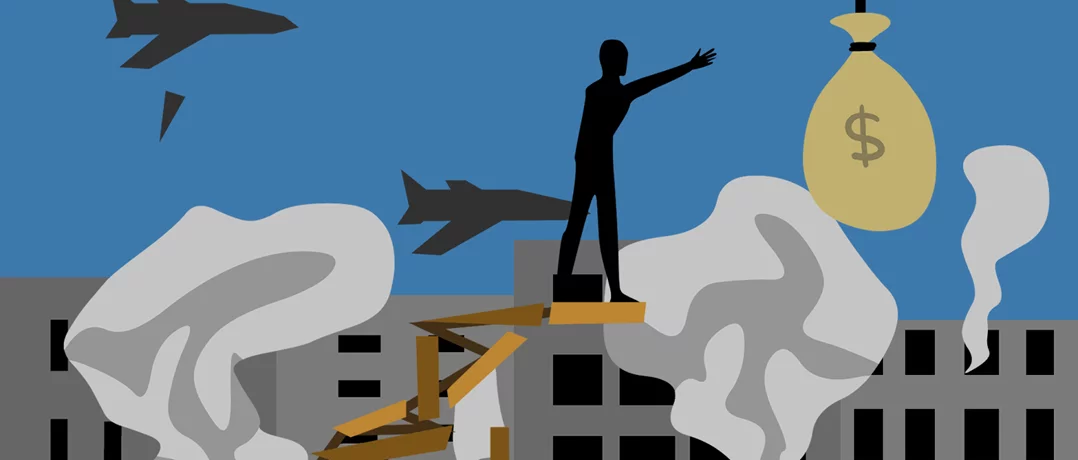
Lebanon’s private sector showed renewed signs of strain in March 2026, as escalating regional tensions and war in the Middle East weighed heavily on business activity. The latest BLOM PMI data points to a sharp slowdown, with declining orders, falling output, and growing uncertainty, underscoring how external shocks continue to expose the country’s fragile economic foundations.
The BLOM PMI for Lebanon for March 2026 showed that “the war in the Middle East has weighed heavily on Lebanese private sector companies… and that what Lebanon needs first and foremost to ensure its full stability and sovereignty is a strong state that alone holds all decisions related to war and peace in the country.”
Commenting on the March 2026 PMI results, Ali Bolbol, Chief Economist and Head of Economic Research at Bank of Beirut and the Arab Countries (BBAC), said: “Amid a war unfolding at Lebanon’s doorstep, the Purchasing Managers’ Index fell to 47.4 in March 2026, down from 51.2 in February 2026, marking its lowest level in 17 months. While this decline was expected, what makes this sharp drop notable is that it almost fully mirrors the level recorded in October 2024, when a similar war largely erupted. All major sub-indices followed the same trend, particularly exports, which fell more sharply to 41.8, largely due to the escalation of conflict in the Gulf region.”
He added: “The only positive point is that employment and wage levels have remained stable — so far. These results once again show that what Lebanon needs above all to ensure its full stability and sovereignty is a strong state that alone controls all decisions related to war and peace in the country.”
Key findings for March were as follows: “After expanding in six of the past seven months, business activity levels in Lebanon’s private sector contracted during the latest survey period. The rate of decline in business activity was generally sharp and the fastest in around one and a half years.
Output declined as sales volumes fell. Survey participants linked the drop in new orders to the war in the Middle East, with some firms reporting that clients chose to cancel or postpone new orders due to the conflict. The rate of decline in new orders in March 2026 was the steepest since October 2024. New orders were significantly affected by business from international clients, as reflected in the sharp drop in new export orders, which was the most pronounced since October 2024.
For the first time since July 2025, backlogs of work at Lebanese private sector firms decreased in March 2026. Notably, companies reported that this reflected the cancellation of new orders due to the war in the Middle East rather than the completion of outstanding work. At the same time, staffing levels declined slightly at the end of the first quarter of 2026.
Lebanese private sector firms scaled back their operations in March 2026. Purchasing activity declined again, with the rate of contraction accelerating to its fastest pace in 16 months. Firms that reduced their purchasing activity during the latest survey period attributed this to efforts to control costs and avoid overstocking. As a result, inventories of purchases fell for the first time since June 2025.”

