



Lebanon exiles narrative through Bishop Paul Sayyah highlights 2000 Israeli withdrawal aftermath, South Lebanon Army, identity, and controversial amnesty debate.
Lebanon’s exiles through the eyes of Bishop Paul Sayyah
Lebanon’s exiles through the eyes of Bishop Paul Sayyah
By The Beiruter | May 27, 2026

Reading time: 8 min
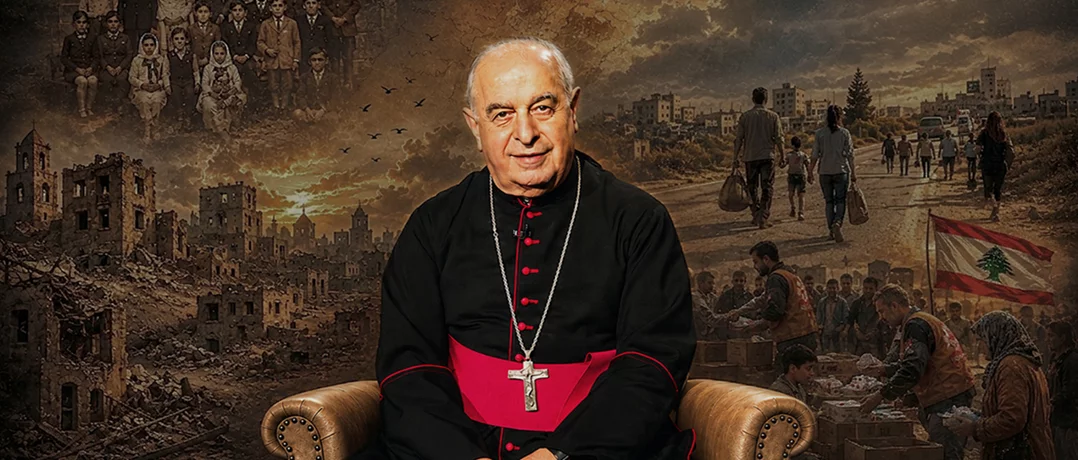
Source: Nida Al Watan
On May 25, 2000, the curtain fell on a pivotal chapter in southern Lebanon. Yet the Israeli withdrawal simultaneously opened the door to one of the most complex and controversial human and political tragedies in our contemporary national history. In those decisive moments, thousands of Lebanese found themselves facing a harsh and uncertain choice after being forced to leave their land, villages, and roots and head toward Israel.
For more than a quarter of a century, a single narrative dominated both popular and official consciousness; one imposed by the forces of the “Resistance Axis,” which sought to entrench a unilateral perspective defining, according to its own logic, who was a “collaborator” and who was a “resistance fighter.” Ironically, this outlook was built upon a religious-political and ideological system unrelated to Lebanese identity. This distortion left its mark on the discourse of the state and its institutions, eventually distorting the image of a genuine Lebanese resistance represented by the “South Lebanon Army,” which emerged in opposition to projects of an alternative homeland during the period when Palestinian organizations controlled the South and parts of Lebanon.
Today, 26 years after those events, we return to those days; to the border strip, the wall, inside Israel, and to a Maronite bishop who became the shepherd and support figure accompanying that tragedy from its very first moments, carrying the suffering of the people and standing by them in the harshest circumstances. He is Paul Sayyah, nicknamed the “Bishop of the Exiled” and the godfather of their cause, who became for many a humanitarian voice and a living conscience standing beside them. He shared in their cross of suffering and conveyed their voice to both the Lebanese and Israeli authorities.
Bishop Sayyah opens the doors to that period, with all its pain, ambiguities, and truths.
Where were you on May 24-25, 2000?
He says: “I was elected bishop in 1996 to serve the Holy Lands,” explaining that “we have two Holy Lands: Lebanon on one side, and the Holy Lands, meaning Palestine, Israel, and Jordan, on the other.” In Israel, the son of Ain el-Kharouba in Metn headed the Maronite Diocese of Haifa and the Holy Lands, a diocese he himself established.
He continues: “At that stage, it was known that Israel was moving toward withdrawing from southern Lebanon, after its Prime Minister at the time, (Ehud Barak), had announced this decision about a year earlier. As the withdrawal date approached, specifically 2 weeks beforehand, I felt the weight of the responsibility placed upon me and the necessity of being present alongside the Lebanese who might find themselves forced to cross the border under difficult and harsh conditions. Therefore, I began working to facilitate their entry, ensure their reception, and assist them as much as possible.”
He adds: “At the time, I began holding several meetings with the Israeli Prime Minister’s Office and with the minister responsible for absorption (the Ministry of Settlement). The last meeting took place on Friday, May 21, 2000, on the basis that another meeting would be held 2 weeks later. But at dawn on Monday, only 3 days later, at 5 in the morning, I received a phone call telling me: ‘Act quickly, people are at the border and the situation is out of control.’ I was then in Jerusalem, and reaching the border required more than 4 hours by car, so I immediately contacted the priests in the southern region to stand beside the people and accompany them. 2 days later, on Wednesday, I went up to the Galilee and began visiting them where they were staying.”
He continues: “The scene was extremely difficult. Some people wanted to leave, while others did not. Everyone was in a state of confusion because events unfolded suddenly. As a result, I focused my contacts and follow-ups between inside Israel and Lebanon, and I spoke with Israeli officials about how to receive the Lebanese, where they would stay, and all related details.”
What about Lebanon?
He answers: “I contacted the Presidency of the Republic and President Emile Lahoud, informing him that people were at the border. Lahoud told me: ‘Try as much as possible to bring them back,’ because he had not forgotten that the core nucleus and majority of the South Lebanon Army’s members were originally from the Lebanese Army and had defended their land and existence.”
He continues: “When I returned to Beirut and headed to Baabda Palace, I carried with me a historic and documented memorandum issued by the Ministry of Defense, calling on Lebanese Army personnel from the region, from towns such as Debel, Ain Ebel, Rmeish, Qlayaa, Marjayoun, and others, to form military groups to defend the residents and villages against Palestinian organizations and the factions allied with them.
During the first years of my stay there, we managed to return no fewer than 2,000 people out of the 7,000 southern Lebanese citizens who had entered Israel. The conditions of those who returned in the initial phase, as well as those who had not left, were relatively better, as the Military Court treated them with a degree of fairness based on the fact that the state itself and the Lebanese Army had sent them to that region. However, those who returned in later phases faced harsher sentences, which, according to what is said, was linked to the growing influence of ‘Hezbollah’ within the Military Court.”
The Church as an inclusive shelter
Bishop Sayyah points out that the majority of the “South Lebanon Army,” as became known, were from the Shiite sect. Nevertheless, he stresses that the Church dealt with all the exiled without any discrimination or distinction between Christians and Muslims, or between their political and social backgrounds. He adds that this approach is not an exception in the Church’s path, but rather part of its core mission based on embracing the human being in and of himself, regardless of religious identity or political affiliation.
Where did they settle?
Initially, they were placed in temporary camps before permanent housing was secured for them. They spread throughout the Galilee region, with the majority coming from the towns of Debel, Ain Ebel, Rmeish, Qlayaa, and others. Schools were then established for them in cooperation with the Israeli authorities, which undertook part of their care due to their prior familiarity with them. Church communities were also created for them: one parish in Acre, another in central Israel, and a third in Kiryat Shmona, extending across the coast, the center, and Upper Galilee. As for the Druze, for example, they settled in Druze-majority areas in the Galilee.
“During my service in Israel, I used to move between these areas carrying messages and aid from families to their relatives in Lebanon, as many people would send verbal messages to their family members, and we would convey them and directly follow up on their situations.”
Bishop Sayyah speaks about how deeply attached the exiles remained to their Lebanese identity, heritage, customs, and traditions, affirming that they were raised on love for Lebanon and had absorbed its identity since childhood.
Further illustrating this reality, it is worth noting that inside Maronite homes in Israel, whether belonging to people of Lebanese origin or non-Lebanese (Israeli only) families, a portrait of the Maronite Patriarch is displayed as an expression of ecclesiastical identity, alongside the Lebanese cedar, symbolizing Lebanon’s spiritual and symbolic presence due to its place in religious consciousness as mentioned in the Bible.
Love for Lebanon was not limited to the exiles or others. Bishop Sayyah notes that during his pastoral service in the Holy Lands, he met many Lebanese Jews and was surprised by the depth of their attachment to Lebanon, which they had never forgotten and toward which they still felt immense passion and profound emotional connection.
In this context, Bishop Sayyah recounts a striking story that encapsulates, through its deep implications, the fragility of ready-made accusations of treason issued by the logic of the “Resistance Axis.” He speaks of one Lebanese nun who, due to her service, used to travel between Lebanon, Jordan, and Israel:
“On one occasion, when she arrived at an Israeli General Security checkpoint, the nun handed her passport to the officer in charge, only to be met with an unexpected reaction. He took the passport and rubbed it against his cheek with tears in his eyes, revealing to her that he was a Lebanese Jew and that Lebanon remained powerfully present in his memory and heart, engraved in his conscience.”
This story is not merely an incidental detail but rather a human and political gateway into the essence of the entire issue. It reveals that the relationship with Lebanon was not erased by borders nor by the harsh labels later imposed upon groups and individuals. If a Lebanese-origin Jew in Israel still presses a Lebanese passport against his cheek with tears in his eyes, then how can thousands of southerners who were born on their land and defended their villages be reduced to a single image; that of “collaborators”?
In conclusion, and based on this testimony that shakes the logic of accusations of treason, what is Bishop Paul Sayyah’s opinion regarding the general amnesty law currently being proposed?
He answers: “I believe amnesty is usually granted to those who committed crimes, which does not apply to the case of the ‘South Lebanon Army.’ It is true that individual violations were recorded, as happens in any military institution subject to the hierarchy of orders and command, but this army, as an entity and military body, cannot be branded as ‘collaborationist.’ Its members are citizens with rights, and the overwhelming majority of them did not fundamentally commit any crime requiring amnesty. Accordingly, it is unjust and mistaken to conflate the file of the exiles and the South Lebanon Army members with the files of drug traffickers or those convicted of criminal offenses.”
-
-

-
The Beiruter
-
