Lebanon’s hotel sector is collapsing under the weight of war and economic crisis, with plummeting occupancy rates driving irreversible losses and threatening livelihoods.




Lebanon’s hotel sector is collapsing under the weight of war and economic crisis, with plummeting occupancy rates driving irreversible losses and threatening livelihoods.

The repercussions of recent events have not been limited to the security and political spheres, but have extended deep into Lebanon’s economy, inflicting heavy losses across most productive and service sectors. From agriculture to industry, and through trade and tourism, it has become clear that the economic wheel is slowing under the weight of successive crises, reflecting the fragility of the country’s economic structure in the face of shocks.
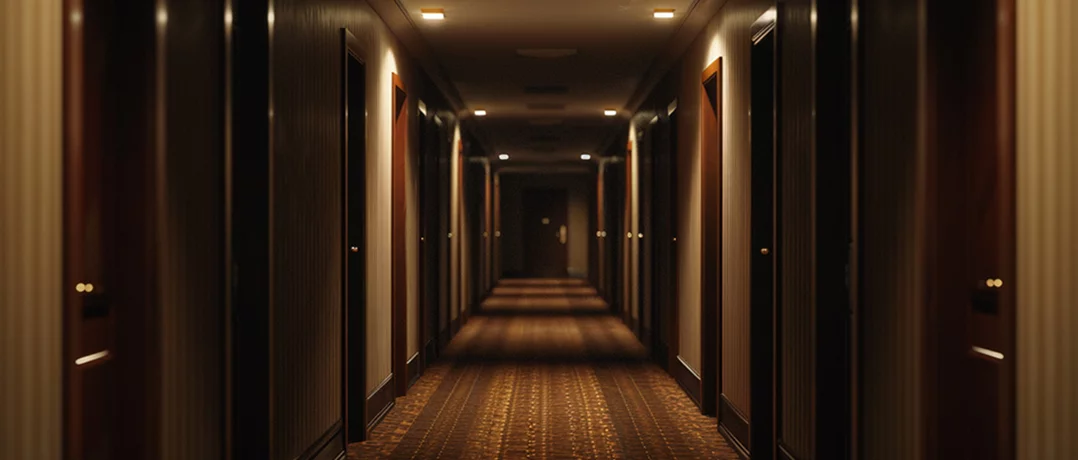
Amid this reality, the hotel sector has emerged as one of the hardest hit, given its nature, which does not allow for delay or compensation. Overnight, empty rooms translate into direct losses, while operating costs continue to rise relentlessly, placing hotel establishments in a harsh equation between survival and absorbing financial bleeding.
The sector had been counting on holiday seasons as an opportunity to recover and offset part of its losses. However, recent developments have unfolded in the opposite direction. Instead of increased activity and higher occupancy rates, the situation has reversed entirely, turning expectations into disappointment as the war imposed a new reality that reshaped all calculations and pushed the sector into one of its most severe crises.
In this context, the head of the Lebanese Hotel Owners’ Syndicate, Pierre Achkar, outlined the sector’s reality through figures and data, revealing the scale of losses and the challenges facing hotels amid declining occupancy rates, a trend that threatens wider repercussions not only for the sector but for the national economy as a whole.
Achkar explained that the hotel sector differs from other economic sectors due to its unique nature, which makes it more vulnerable to direct losses. In agriculture, for example, products may remain usable for a day or two before spoiling, while many industrial sectors, despite facing crises, can store their goods and sell them later when conditions improve.
“In the hotel sector, however, a room that is not rented on a given night represents a final loss that cannot be recovered. Employees still receive their salaries, and electricity runs year-round without interruption, unlike industrial institutions that can regulate or reduce working hours, as well as store production during downturns and sell it later,” he said.
Achkar gave an example:
If a hotel has 100 rooms and only 10 are rented, the occupancy rate is extremely low. In hotel management, operating costs range between 40% and 55% to reach the break-even point, meaning zero profit. When occupancy is around 10%, losses can reach approximately 30%.
He noted that current occupancy rates do not exceed 11%, adding that most establishments located east of Sidon have shut down.
Based on this reality, Achkar stressed that the hotel sector is among the most loss-making sectors so far, emphasizing that the state is also incurring significant losses through it, given that tourism is one of the largest sources of tax revenue.
Regarding the accommodation of displaced people in hotels, Achkar explained that this remains a temporary solution, as displaced individuals tend to rent rooms for a limited period before moving to apartments, which are less costly, especially as indicators suggest that the crisis may be long-term.
On the sector’s ability to endure, Achkar said that hotels do not shut down within a short period such as fifteen days, but can continue operating for two to three months in the hope that conditions may improve. However, this often comes with internal measures, such as reducing staff or reaching agreements to gradually cut salaries, with around 75% paid in the first month, 50% in the second, and 25% in the third.
He concluded by noting that the workforce remains the most affected party in the crisis.
Ultimately, the hotel sector’s crisis does not appear to be a temporary setback, but rather a stark indicator of the deep contraction affecting the Lebanese economy. Continued low occupancy rates, the gradual closure of establishments, and the erosion of the sector’s ability to endure all reflect a troubling reality that extends beyond the sector itself to the entire economic cycle, threatening one of the country’s main sources of income. While hotels attempt to hold on through painful measures, the greatest cost remains human and social, with workers paying the price first. In the absence of quick solutions and as crises deepen, the question remains open as to how long this sector can continue to withstand an increasingly complex economic reality.

