



Escalating tensions at Lebanon’s Masnaa crossing have driven the examining Israel’s threat of strikes, border paralysis, economic risks, emergency measures, and implications affecting Lebanon’s only vital land trade route.
Lebanon’s lifeline at risk: The Masnaa factor

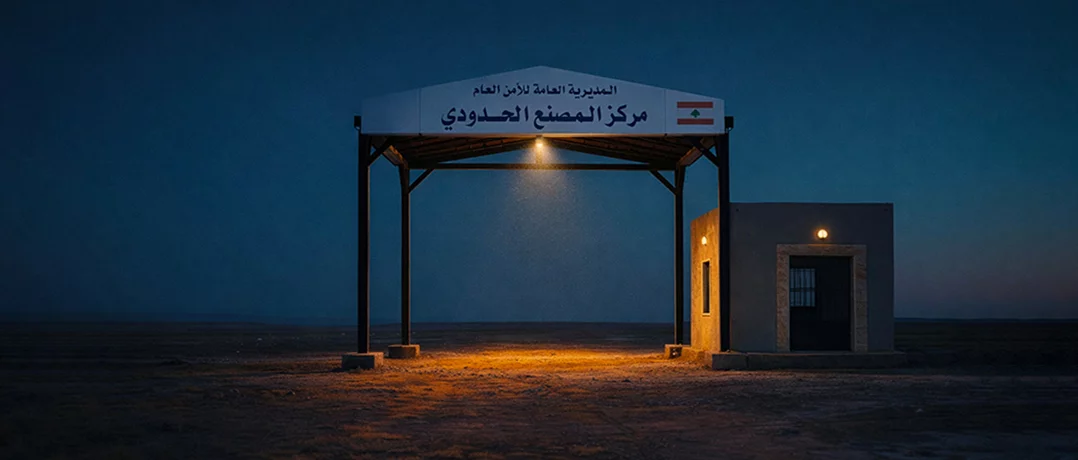
Source: Nida Al Watan – Lucy Parskhian
The paralysis imposed itself on Lebanon’s land border at the Masnaa crossing since the night of Saturday-Sunday, following Israel’s threat against the road extending between the Masnaa crossing on the Lebanese side of the border and the Jdeidet Yabous crossing in Syria, and its warning to those present in the area to evacuate it, “because the army intends to carry out airstrikes on the site soon.”
Israel justified its threat by claiming that “the crossing is used by Hezbollah for military purposes and for smuggling weapons.” However, in reality, the issue raises additional dimensions related to the nature and function of this crossing, especially since the Masnaa crossing currently constitutes the main and almost sole outlet for the flow of people and goods. Thus, its disruption appears closer to an attempt at a land-based strangulation of Lebanon.
This comes at a time when all land crossings have lost their previous security function for Hezbollah, in light of the transformations witnessed in the Syrian arena after the fall of the Assad regime, and the current authority’s tightening control over the borders in opposition to it. This raises questions about the background of the threat and its actual objectives.
A threat with explosive implications
Even by Monday afternoon, Israel had not yet carried out its threat. While media reports spoke of contacts at international levels to freeze this operation over the past two days, the Director General of General Security, Major General Hassan Shqeir, was quoted as saying that an expected international guarantee would halt Israeli operations at Masnaa, as a result of efforts made by Egypt with Israel and the United States, in addition to efforts being made by Syria to reopen it.
However, even if the threat was not followed by an actual strike, its field impact, up to the time of preparing this report, amounted to the scale of a strike itself. Traffic of cars, individuals, and even trucks was cut off on the threatened road since 10 p.m. on Saturday. This transformed the crossing, considered a vital artery linking Lebanon to Syria and, through it, to its Arab surroundings, into a site of active official and security movement, in an attempt to contain the repercussions and find solutions, particularly to ensure the passage of trucks.
Moving toward a state of emergency
From the very first moment of the threat, the Lebanese authorities treated it as an imminent danger and quickly evacuated security and administrative centers, transferring detainees from the holding cells of the Internal Security Forces center in the area. This scene reflected the transition of the crossing within hours from normal operations to a full state of emergency.
This was accompanied by the evacuation of private institutions and broad precautionary measures, while Civil Defense relocated its equipment to nearby areas in anticipation of any targeting, and residents living in the vicinity were also asked to take protective measures.
Meanwhile, the Customs Administration focused its efforts on absorbing the repercussions of the threat on trucks entering Lebanon, whether in transit or coming directly from Syria.
A large number of these trucks were located in the area designated as a “red zone” by Israel on Saturday night. Efforts therefore focused on unloading what could be unloaded in the customs yard located behind the threatened area on the Lebanese side, and transferring some of the trucks accumulated there to the export yard behind the Lebanese General Security center. This facilitated the removal of trucks parked on the international road to the Lebanese yard. At the same time, some truck drivers chose to return to Syria before it also closed its borders.
Measures on an ad hoc basis
By yesterday morning, Lebanese Customs had succeeded in removing most of the trucks stranded on the road. However, the process was not easy, and in its early hours it was accompanied by a state of chaos that some brokers exploited in an attempt to bypass border procedures. The matter is still under follow-up and investigation.
On the other hand, the failure to carry out the threat did not ease the situation. Rather, it kept the area in a state of open anticipation, raising fears that the threat could affect the operational infrastructure of the crossing itself, amid inevitable losses feared by importers and exporters due to the disruption of truck movement; some of which were found to have been stranded at the border since 4 March.
Two levels of anticipated repercussions
What gives this disruption additional weight is the absence of alternatives to the Masnaa land crossing in the Bekaa region. Lebanon’s other crossings are either not equipped to receive goods, as in Al-Qaa, or have been out of service for months, as in Al-Arida and Al-Dabbousieh. This effectively makes the Masnaa crossing Lebanon’s only operational land outlet. Therefore, its closure approaches the threshold of imposing a de facto land blockade on Lebanon.
The tangible repercussions of such a situation appear on two overlapping levels: the first is short-term, represented by direct losses resulting from the disruption of trucks and transit movement, and the official response required to address the logistical crisis.
In this context, the visit yesterday of Brigadier General Misbah Khalil, head of the Higher Customs Council, to the Masnaa area stood out, where he oversaw the exceptional measures and arrangements imposed by the threat. In a statement to journalists, he said: “Customs inspectors and administrators are working with the relevant ministries to facilitate the entry of trucks according to priorities, especially for food supplies and essential needs.” He noted that 300 trucks are currently in the safe area and that efforts are underway to facilitate their affairs. Khalil confirmed that “procedures are proceeding normally, and we are facilitating both routine and exceptional matters within the framework of the law.”
The second level of repercussions is longer-term and is linked to the duration of border closures, whether in Syria or Lebanon, which Khalil said depends on a political decision.
This raises the question of whether Lebanon will remain hostage to uncertainty or succeed in securing official assurances that put an end to this threat. Although Masnaa is a Lebanese border point, its impact extends beyond the immediate geography to affect a wide network of areas connected to import and export activity, making its disruption a matter with both regional and national implications.
-
-

-
The Beiruter
-
