



Lebanon’s religious tourism: A billion-dollar opportunity in waiting
Lebanon’s religious tourism: A billion-dollar opportunity in waiting
By Christiane Tager | February 17, 2026

Reading time: 4 min
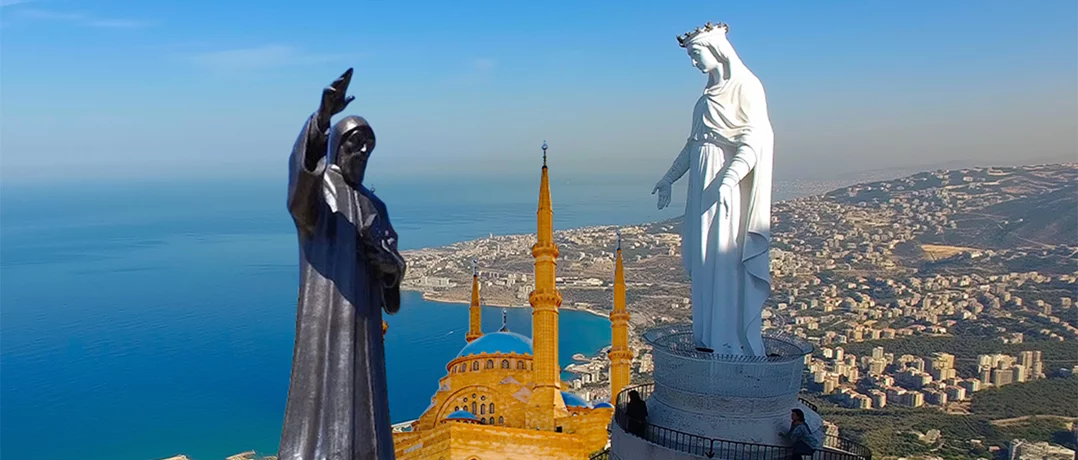
In a country chronically short of foreign currency, religious tourism represents one of Lebanon’s most underexploited economic assets. Christian sanctuaries, Shia shrines, Sunni heritage mosques and Druze spiritual centers collectively attract well over 2 million visits annually yet the sector remains fragmented and strategically unmanaged. Behind spiritual devotion lies a serious economic proposition. A $450m–$750m industry, potentially much more!
Lebanon officially recognizes 18 religious communities, a diversity unmatched in the Middle East. Within just 10,452 square kilometers, the country offers one of the highest densities of sacred sites in the region.
According to Lebanon’s Ministry of Tourism, 1.7 million international visitors entered the country in 2023, generating more than $3bn in tourism revenues. Prior to the 2019 financial collapse, tourism accounted for nearly 20 per cent of GDP, according to the World Travel & Tourism Council.
While no official breakdown isolates religious tourism, industry experts estimate that it accounts for 15 to 25 per cent of total annual arrivals. This implies direct revenues of between $450m and $750m per year.
However, sector analysts argue that, if properly structured, religious tourism alone could generate $1bn annually within five years, particularly by targeting diaspora markets and organized pilgrimage circuits.
Christian pilgrimage: Over 1.5 million annual visits
The shrine of Our Lady of Lebanon in Harissa attracts an estimated 1 to 1.2 million visitors per year, according to ecclesiastical authorities. Roughly: 65 to 70 per cent are Lebanese residents, 30–35 per cent are foreign visitors or diaspora pilgrims, according to religious authorities.
The Monastery of Saint Maron in Annaya, home to Saint Charbel’s tomb, receives an estimated 700,000 to 800,000 visitors annually, with diaspora pilgrims representing nearly 40 per cent during peak seasons.
Seasonal impact is measurable: Hotel occupancy in Keserwan can increase by 20 to 30 per cent during major religious celebrations.
Average pilgrim spending is estimated between $120 and $250 per visit, depending on accommodation.
Combined, Christian religious tourism alone may generate $250m to $350m annually, according to private sector tourism operators.
Shia religious gatherings: Scale without monetization
The Mausoleum of Sayyida Khawla in Baalbek and other shrines attract significant flows. During Ashura and Arbaeen: Gatherings in southern Lebanon and the Bekaa mobilize 50,000 to 150,000 participants annually, according to local organizers.
Approximately 80 to 90 per cent of attendees is domestic. Cross-border visitors (primarily from Iraq and occasionally Iran) account for an estimated 10 to 15 per cent during stable years.
Because many pilgrims stay with relatives or within community networks, monetization remains limited.
Economists estimate that if Lebanon captured even $300 per foreign pilgrim through structured hospitality packages, Shia religious tourism could generate an additional $100m to $150m annually.
Sunni heritage: Dormant urban potential
The Mohammad Al-Amin Mosque in Beirut and the Al-Omari Grand Mosque receive steady flows of regional visitors, particularly from Gulf countries during stable periods. Tripoli, home to more than 40 Mamluk and Ottoman mosques, is frequently compared by heritage specialists to smaller-scale versions of Fez or Aleppo in architectural density.
Yet annual organized religious-tourism packages in northern Lebanon remain below 10,000 structured visitors per year, a fraction of potential capacity.
Tourism consultants estimate that with proper infrastructure and security guarantees, Tripoli alone could attract 200,000 heritage-religious visitors annually, generating $80m to $100m in direct local revenues.
Druze sites: Small scale, high local impact
Sites such as Khalwat al-Bayada primarily attract community-based and diaspora visitors. Annual visitation is estimated between 80,000 and 120,000 visits, with limited foreign participation. Though modest in scale, these visits support: rural guesthouses, local agriculture and small retail commerce
For regions such as the Chouf and Hasbaya, even a 10 per cent increase in structured religious tourism could significantly stabilize local economies.
A billion-dollar scenario
Tourism economists outline three potential development scenarios for Lebanon’s religious tourism sector.
Under a conservative scenario, religious tourism would continue to account for 15 to 20 per cent of total arrivals, generating annual revenues in the range of $500m to $700m.
A more ambitious structured scenario, built on moderate investment, stronger branding and the creation of organized pilgrimage circuits, could increase the sector’s share to 20 to 25 per cent of arrivals, raise per-capita spending, and lift annual revenues to between $800m and $1bn.
Under a fully developed regional pilgrimage hub scenario supported by targeted diaspora engagement and international partnerships Lebanon could attract up to 2.5 million total visitors annually, with religious tourism revenues exceeding $1.2bn per year.
Such expansion would represent an additional 3 to 5 per cent of GDP, generate thousands of direct and indirect jobs, and provide a stable source of foreign currency inflows.
Structural weaknesses
Despite the potential, major constraints persist, no official segmented religious tourism data, ageing infrastructure, limited digital promotion, no integrated national pilgrimage strategy and security sensitivity affecting perception
Lebanon currently competes without coordination in a global religious tourism market worth hundreds of billions of dollars annually.
Since 2019, Lebanon has endured one of the deepest economic contractions globally. Religious tourism offers structural advantages: anchored in place, tied to diaspora loyalty, resistant to outsourcing and culturally embedded.
If strategically managed, it could become: a stable source of foreign currency, a tool for regional economic recovery and a bridge between diaspora and homeland
In a fragile economy, faith may represent not just spiritual resilience but a viable economic strategy.
