



Lebanon’s Security Forces stand ready as war escalates
Lebanon’s Security Forces stand ready as war escalates

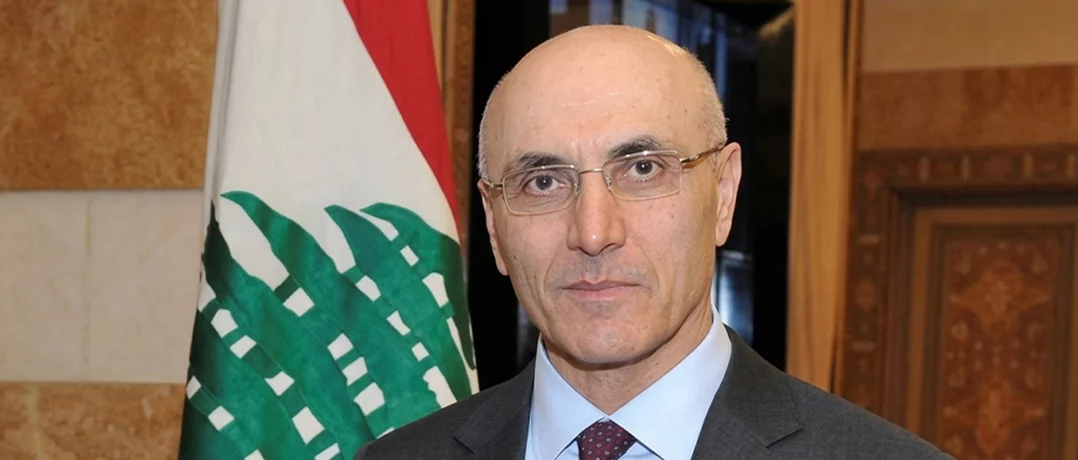
As military tensions escalate across the region and Israeli attacks on Lebanon continue, fears are mounting over potential internal security repercussions that could threaten what remains of the country’s fragile stability. Repeated warnings about the risks of security breakdowns or the exploitation of chaos to ignite internal strife have placed renewed attention on Lebanon’s security institutions and their ability to maintain order during one of the most sensitive periods in the country's modern history.
In this context, The Beiruter spoke with Lebanese Interior and Municipalities Minister Ahmad Al-Hajjar to assess the current state of security preparedness and how the Lebanese state and its institutions are preparing to confront mounting security challenges at a time when the country appears to be standing on the edge of a volcano.
Security institutions on full alert
Asked to what extent Lebanon’s security agencies have been placed on high alert to protect what remains of internal stability and prevent any potential security breakdown, Al-Hajjar was unequivocal. Internal stability, he said, is what the Lebanese state and all Lebanese rely on in any circumstance.
Internal stability is the starting point. As long as Lebanese remain united, I believe the country can emerge from any crisis.
Unity among Lebanese citizens, he added, is also the foundation for resolving every crisis the country faces. As long as Lebanese remain united, he asserted, the country will be able to withstand even the most difficult circumstances.
Al-Hajjar noted that the country’s security agencies are fully carrying out their duties and remain in a state of complete readiness. Whenever he attends meetings of the Central Internal Security Council, he said, he feels reassured by the level of awareness, close monitoring and operational presence demonstrated by Lebanon’s security institutions on the ground; something that, in his words, strengthens confidence in the safety of Lebanese citizens.
At the same time, the minister acknowledged that the security challenges facing the country are extremely serious and that many developments remain outside the state’s control amid large-scale attacks occurring by air, sea and land. Diplomatic efforts, he said, are being pursued on all fronts, while security agencies continue to implement government decisions and carry out all tasks assigned to them.
He stressed that he remains in continuous coordination with all security bodies. When interventions on the ground take place, including arrests or precautionary security measures, these actions are carried out in direct coordination with the judiciary, which oversees all procedures undertaken by the security agencies, whether in their capacity as judicial police or in maintaining public order and enforcing government decisions.
A country facing war and internal risks
When asked about Lebanon’s historically fragile internal cohesion, and the fact that many of the country’s past conflicts have been ignited by internal strife, Al-Hajjar acknowledged that the country is currently facing an extremely delicate moment.
While some security incidents have occurred in certain areas and have been contained, concerns remain that instability could spread and potentially overwhelm the state’s ability to control the situation.
Al-Hajjar insisted, however, that the Lebanese state and its security institutions, including the Lebanese Armed Forces (LAF), the Internal Security Forces (ISF), General Security, and other agencies, possess sufficient capability and presence to assert control across Lebanese territory. The decisive authority in this matter, he said, ultimately rests with the Lebanese state.
Lebanon, he noted, is currently experiencing a major crisis and is effectively facing a state of war. For that reason, security measures are already being implemented on the ground and will continue to evolve in response to developments.
At the same time, he expressed strong confidence in the awareness of the Lebanese people. “The people are the benchmark,” he said, noting that the state exists to serve its citizens. He expressed confidence that Lebanese society possesses the sense of responsibility and solidarity necessary to support one another, particularly during times of crisis.
According to the minister, the state builds upon this public awareness in its efforts to overcome the crisis and eventually move toward rebuilding, or completing the construction of, the state on sound foundations. Key institutions, including the ministries of interior, justice and defense, he added, remain fully engaged in monitoring developments and carrying out their responsibilities.
The State’s authority cannot be reversed
Lebanon’s decision, Al-Hajjar said, remains clear and firm: the state must assert its authority across all Lebanese territory through its own sovereign institutions alone. That process began from the first day, he noted, and the government has already taken decisions that will be implemented progressively depending on developments on the ground.
There is no turning back from this.
The minister stressed that his responsibility is to work alongside Lebanon’s government leadership, including the president and the prime minister, as well as the broader state institutions.
At the same time, Al-Hajjar said Lebanon is facing an ongoing attack. The state, he said, continues to support and protect its citizens and defend the country on every level, through diplomatic channels, security measures on the ground, and by standing alongside the Lebanese population.
Asked whether additional security plans or measures might be under preparation behind the scenes to reassure the public, Al-Hajjar rejected the notion of secrecy. “Everything is clear,” he said, stressing that security agencies maintain constant presence and coordination.
All security information, he explained, is placed at the disposal of authorities, and a major coordination meeting among all security agencies had been held earlier that day. Such coordination, he added, is ongoing and cumulative, leaving no room for complacency.
Despite mounting crises, Lebanon continues to endure
Al-Hajjar concluded by acknowledging that the crisis facing Lebanon is extremely serious. Nevertheless, he said the state will remain present and will continue supporting Lebanese citizens, expressing hope that the country will eventually emerge from the current crisis.
Regarding the trajectory of the war, the minister noted that no conflict lasts forever. “Wars eventually end,” he said. Lebanon, he added, has endured many crises throughout its history. While crises may intensify, Lebanon endures and so does the Lebanese people, in all their communities, regions and diversity.
Crises may intensify, but Lebanon has always endured hardship. Lebanon remains, and the Lebanese people remain in all their communities, regions and diversity.
In conclusion, Al-Hajjar reiterated that Lebanon is passing through a difficult period amid war and regional tensions. Yet he stressed that the Lebanese state will remain present through its security and military institutions to accompany citizens and safeguard internal stability. While acknowledging the magnitude of the pressures facing the country, he highlighted that the unity and awareness of the Lebanese people remain essential to overcoming the crisis.
-
-

-
The Beiruter
-
