

Hezbollah’s evolution into a powerful Iran-aligned armed actor continues to draw Lebanon into unwanted wars and reignite debates over sovereignty and state authority.
Lebanon’s unwanted wars

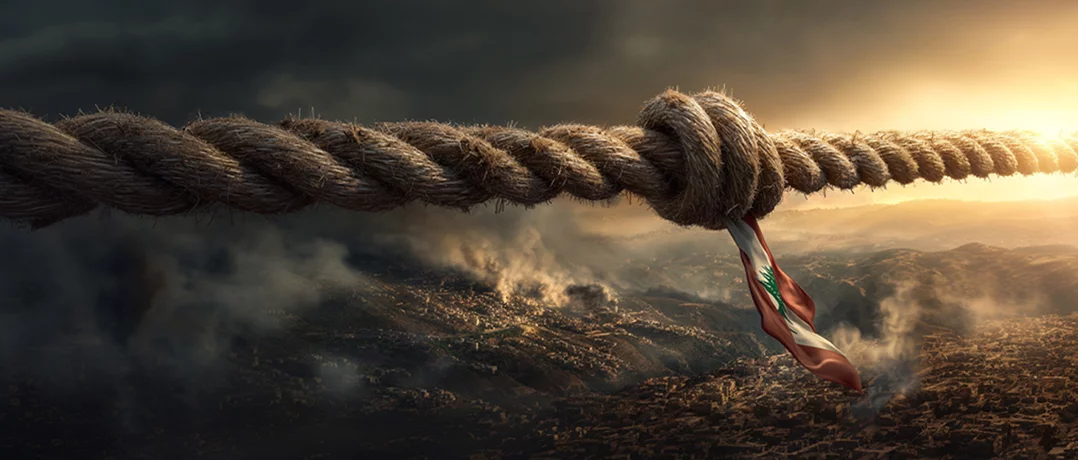
For decades, Hezbollah has stood at the center of Lebanon’s political and security landscape. Established in the midst of domestic and regional upheaval, the Shiite group evolved into what many observers once described as the most powerful non-state armed group in the Middle East. It has exercised influence that often rivals, and at times eclipses, the Lebanese state itself, serving as an outlaw and a “State within a State.”
Yet the group now faces a critical point. As it initiated, once more, a support front from Lebanese territories against Israel, Beirut finds itself confronting a battle it did not choose. These developments have intensified long-standing domestic and international debates over Hezbollah’s weapons, its allegiance to Iran, and its role in dragging Lebanon into conflicts many Lebanese say they do not want.
The origins and foundations of Hezbollah
Hezbollah emerged in the early 1980s amid the chaos of the Lebanese War (1975-1990). Israel’s 1982 invasion of Lebanon, aimed at expelling Palestinian fighters, coupled with the establishment of the Islamic Republic in Iran following the 1979 revolution, created the immediate environment in which Hezbollah coalesced. Inspired by Ayatollah Ruhollah Khomeini’s doctrine of Wilayat al-Faqih (guardianship of the jurist), a group of Lebanese Shiite clerics and militants, supported by Iran’s Islamic Revolutionary Guard Corps (IRGC), organized a novel armed group: Hezbollah.
From the outset, Hezbollah framed itself as a resistance force against Israeli occupation and Western influence. Its early operations included attacks on United States (US) and French military targets in Beirut in 1983. Hezbollah’s ideology is rooted in Khomeinist political theology. In 1985, it released an open letter (its manifesto) pledging allegiance to Iran’s supreme leader and calling for the eradication of Israel. While the group later adopted a more pragmatic tone in its 2009 political document, highlighting democracy and national unity, it has consistently maintained that its ideological foundations remain unchanged.
Central to Hezbollah’s worldview is the concept of “resistance.” The organization portrays its military wing not as a militia but as a legitimate force defending Lebanon from Israeli aggression. This narrative, however, proved to be obsolete as Israel withdrew from Lebanon in 2000 and its activities targeted the Lebanese themselves on 7 May 2008 and Tayyouneh clashes in November 2021.
Moreover, Hezbollah’s resistance doctrine extends beyond Lebanese borders. It positions itself within Iran’s so-called “Axis of Resistance,” aligning with Tehran and allied movements across the region. The group is widely regarded as Iran’s most successful proxy. Tehran provides substantial financial assistance, weapons, and training. Iranian support enabled Hezbollah to amass a vast arsenal of rockets and missiles. Beyond funding, the relationship is ideological and operational. Hezbollah fighters have trained alongside Iranian forces, and the group has played a pivotal role in advancing Iran’s regional agenda. In Syria, for example, Hezbollah intervened decisively to support President Bashar al-Assad during the civil war, helping preserve a strategic corridor linking Tehran to the Mediterranean.
In practice, this has meant that Hezbollah’s strategic priorities frequently align with Iranian regional objectives rather than strictly Lebanese national interests.
Dragging Lebanon into unwanted wars
Hezbollah’s unilateral military actions, which often did not consult the Lebanese State and people, have repeatedly exposed Lebanon to devastating conflict. Indeed, the group’s regional commitments have drawn the country into wars not decided by national consensus.
The 2006 war with Israel erupted after Hezbollah abducted 2 Israeli soldiers in a cross-border raid. The ensuing month-long war left more than a thousand Lebanese dead and inflicted massive damage on infrastructure. While Hezbollah portrayed the outcome as a “divine victory,” many Lebanese questioned the cost.
In 2008, Hezbollah turned its weapons inward, seizing parts of West Beirut after the government moved against its telecommunications network. This marked a defining moment, demonstrating that the group was prepared to use force domestically to secure political gains.
Even when the group engaged in the Syrian Civil War (2011-2024), it took the decision by itself, with consequences impacting the Lebanese landscape and its relations with neighboring countries.
Furthermore, the most recent escalation began on 8 October 2023, when Hezbollah launched cross-border attacks in solidarity with Hamas amid the Gaza war. Months of exchanges with Israel culminated in a large-scale Israeli campaign in 2024 that targeted Hezbollah’s leadership and military infrastructure.
Today, after issuing what turned out to be false promises of refraining from engaging in any support front, Hezbollah has once again unilaterally initiated an armed conflict with Israel without referring to the Lebanese legitimate authorities and its people.
In conclusion, over decades, Hezbollah evolved from a clandestine militia into a dominant political-military actor with regional reach. Yet its presence has also been a source of division. The group is accused of undermining sovereignty and dragging the country into destructive wars. Hence, the debate over its arms is no longer theoretical; it lies at the heart of Lebanon’s struggle to define authority, sovereignty, and peace.
-
-

-
The Beiruter
-
