



Lebanon’s youth step into politics

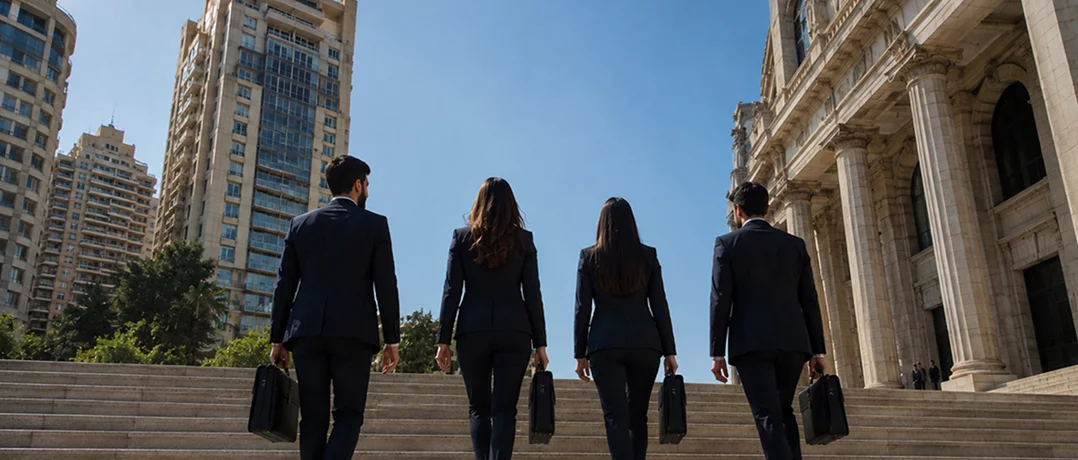
At a moment when Lebanon’s Parliament was extending its own term for two more years amid sharp criticism, thousands of young Lebanese were participating in a different political exercise , one centered on a simple but important question: can politics in Lebanon be done differently?
For years, Lebanon’s youth have largely remained outside the circles of power, caught between frustration, protest movements, political boycotts, and growing disillusionment. But recently, a different kind of initiative emerged, one that sought not merely to criticize politics, but to involve young people directly in practicing it.
This is where the “YMP II” project, known as the Youth Mock Parliament, stood out. Rather than organizing conventional youth forums or discussions, the initiative created a realistic simulation of parliamentary life in Lebanon. Elections, political debates, parliamentary committees, drafting laws, and voting sessions were all replicated in an effort to reconnect young people with public life and democratic participation.
Lebanon today is facing more than an economic collapse or a financial crisis. It is also suffering from a severe crisis of trust , especially between the younger generation and the political system itself. Many young Lebanese grew up witnessing corruption, political deadlock, economic breakdown, and mass emigration. For them, politics increasingly appeared to be a closed system driven by sectarianism and entrenched interests rather than merit or reform.
What made this initiative different was its attempt to move beyond criticism and provide a practical alternative. More than 400 young men and women from across Lebanon received training in citizenship, governance, electoral systems, political communication, campaign management, and democratic participation. The idea behind the project was clear: a new political culture cannot emerge without preparing a generation capable of engaging seriously in public affairs.
One of the project’s most notable achievements was the organization of electronic elections through polling centers established in partnership with academic and civil society institutions. At a time when the Lebanese state continues to debate reforms such as megacenters, electronic modernization, and electoral updates, a youth-led initiative succeeded in implementing a modern voting model that attracted tens of thousands of participants.
Equally significant was the emphasis placed on political debates. In Lebanon, elections are often shaped by sectarian loyalties and partisan affiliations more than by political programs or policy discussions. By organizing live public debates between young candidates and broadcasting them on social media, the project promoted a different political culture, one based on dialogue, accountability, and the competition of ideas.
The experience also extended beyond election day itself. Following the vote, the elected “youth MPs” entered a legislative phase where they received parliamentary training inside the Lebanese Parliament and participated in simulated legislative sessions discussing draft laws and governance mechanisms. In doing so, young participants experienced the workings of state institutions not as distant observers or protesters, but as future contributors to political life.
Of course, a project like this alone will not transform Lebanon’s political system overnight. Yet its importance lies elsewhere: in planting the seeds of a different political mindset within an entire generation. In a country overwhelmed by distrust and institutional paralysis, initiatives of this kind may represent an important starting point for rebuilding confidence in public life.
Because rebuilding a country does not begin only with economic plans or constitutional reforms. It also begins by rebuilding the relationship between young people and politics between a generation that no longer wants to watch from the sidelines, and a nation that urgently needs those willing to shape its future.
-
-

-
The Beiruter
-
