

In the historic village of Bsous, Italy and Lebanon's centuries-old cultural ties resurface in a tribute to the universal values of Saint Francis of Assisi, marking 800 years since his death.
Light and dust: Ancient ties renewed

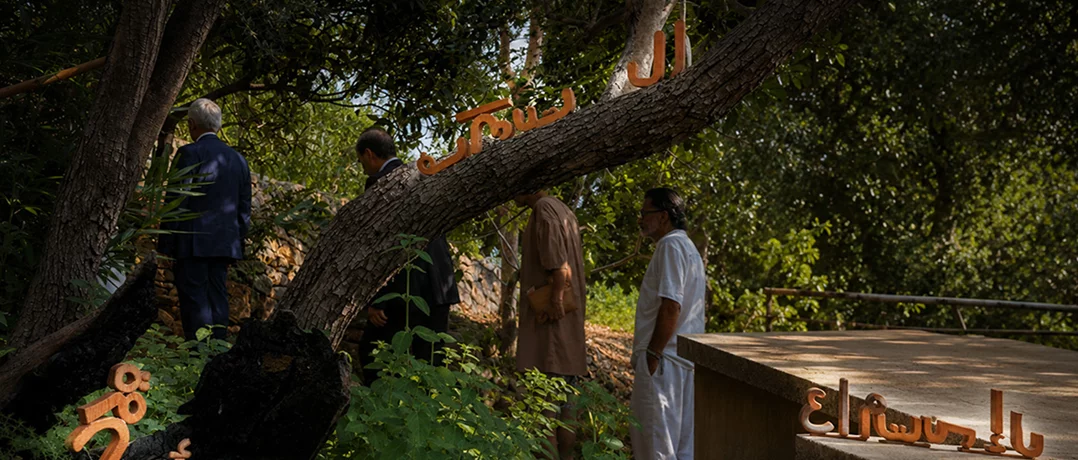
“What remains of a human life eight centuries later?" As visitors stroll past painted white banners hung among the vines, climb meandering stairs alongside Arabic calligraphy carved into stacked wooden blocks, and enter a stone hall lined with suspended origami birds, they're invited to consider the question through the wisdom of Saint Francis of Assisi, 800 years after his passing. The immersive exhibit, titled "Light and Dust" and on view until 30 July, weaves the multimedia works of Lebanese artists into the gardens of the Silk Museum in Bsous, offering a space for peace and contemplation just a short drive from Beirut.
A celebration of timeless values
Though built around the honoring of a saint, the exhibit is intentionally non-confessional and avoids preaching at viewers. Instead, works emphasize values that resonate regardless of faith, language, or era.
The fluttering banners display Saint Francis's words about kindness and supporting one's neighbor indiscriminately, written in Arabic, French, English, and Italian to carry his message across linguistic divides. Another work focuses on the value of peace: sculptor Arlette Sauveur used upcycled materials to construct birds, perched atop long iron legs throughout the vegetation. According to curator Soula Saad, the art references the birds that once sat atop Saint Francis while he administered communion, their trust a testament to his embodiment of non-harm.
An appreciation for nature is a throughline in both the life of Saint Francis and the art itself. "Saint Francis was an environmentalist before it was trendy," recounted Italian Ambassador Fabrizio Marcelli. By incorporating the landscape of Bsous into the installation alongside repeated bird imagery and materials like wood, the artists spotlight the often-forgotten beauty of the living world.
Art as a point of Italian-Lebanese partnership
The project emerged from the continued partnership between Italy, the birthplace of Saint Francis, and Lebanon. Angelo Gioè, director of the Italian Cultural Institute of Beirut, led the project's conceptual direction, while artist and documentary director Soula Saad curated the installation, connecting artists who reflected Lebanon's diversity around a shared vision.
Soula credits the Institute's "effervescent" support for Beirut's art scene: the organization once facilitated Italian artists coming to Beirut for creative collaboration, and even as conflict forced the program's pause, it has continued its engagement with Lebanon's ever-energetic artistic community. Together, Gioè and Saad created the only Eighth Centenary celebration among Italy's global cultural institutes centered on contemporary art.
The Italian Embassy further emphasized the country’s continued patronage of Lebanese art. "Italy and Lebanon share a history and mutual appreciation for the arts that goes back to ancient times," Ambassador Marcelli told The Beiruter.
A vibrant message of "cultural resistance" from Lebanon
Soula described Lebanon’s continued creativity as a form of "cultural resistance," refocusing attention on the diverse, robust experiences of the people instead of the war inflicted upon them. "In Lebanon, I feel a need to create. It's vital to transform all that is indigestible around me into something I can share."
The celebration of Saint Francis in Lebanon feels particularly important, as it highlights values of peace and tolerance at a time when the country is scarred by war. Soula sees the art as a way to amplify what she loves about Lebanon and hopefully, break through pessimism projected by global media.
"I'm not here to correct anything, but to emit what I believe is a truer image of who we are. I create art in part to explain why people keep coming back, even under the bombs."
-
-
-
Soraya JohnsonJunior research/writer
Focusing on political analysis, economic trends, and investigative reporting.
-
