Israeli strikes and ceasefire violations raise fears and cause residents in southern Lebanon to sell homes.




Israeli strikes and ceasefire violations raise fears and cause residents in southern Lebanon to sell homes.

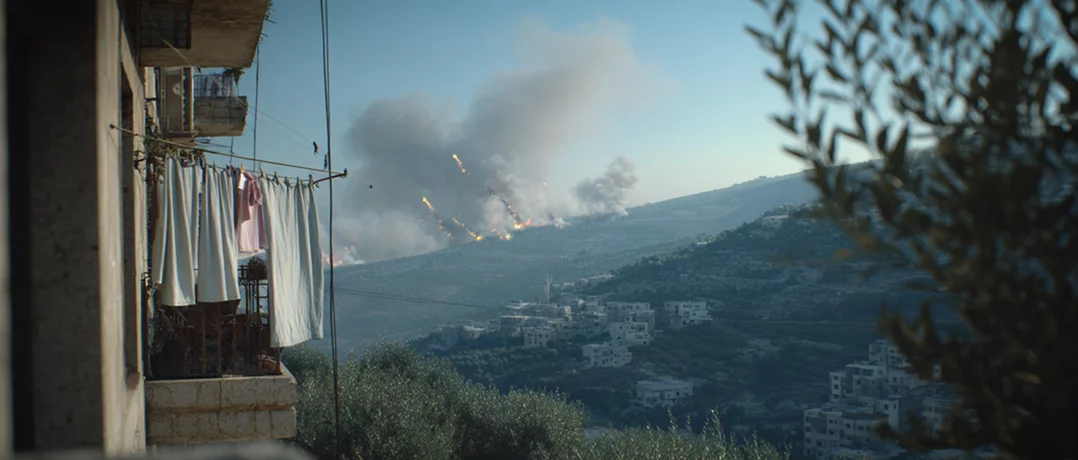
Recently, the Gaza ceasefire witnessed mutual violations by Hamas and Israel. The flare-up, which was the most serious test yet to the ceasefire, coupled with the intensified Israeli airstrikes on the southern Lebanon, have raised questions and fears in Lebanon regarding the country’s prospects.
The ambiguous future led to increased concerns amongst the Lebanese population, particularly those residing in areas with high-risk of being targeted: South Lebanon and the southern suburbs of Beirut.
At its core, a “scorched-earth policy” is a military strategy which refers to a deliberate action to destroy anything that might be useful to an enemy while advancing through or withdrawing from an area. It represents a declaration that no resources will be left for the enemy’s benefit, which even includes decimating resources, infrastructure livelihoods (such as destroying crops, plants, civilian and industrial buildings).
From here, what Israel seems to be achieving in southern Lebanon is the exact aforementioned policy. Its targets have recently shifted from mere Hezbollah military posts (including weapon and ammunition storages) to encompassing the agricultural sector as well as civilian and industrial facilities used in reconstruction efforts. Last week’s intense bombardments caused extensive destruction in cement factories and industrial workshops, while the South Lebanon Water Establishment reported that the airstrikes “hit and destroyed the institution’s strategic fuel depot, resulting in the total loss of its contents.”
As for Israel’s intentions, two contending narratives or explanations arise. The first claims that Tel Aviv’s goal from this policy is to pressure Hezbollah and the Lebanese state towards disarming the group. It believes that reconstruction and the return of the remaining displaced southerners to their villages remain suspended and contingent on the exclusivity of arms in the hands of the sovereign and legitimate Lebanese state. On the other hand, the second narrative claims that Israel’s goal is to perpetuate an irreversible displacement crisis in southern Lebanon. They believe that following October 7, 2023, Tel Aviv is bound to create not only demilitarized buffer zones along its borders, but rather an uninhabitable one as well in order to be able to conduct reconnaissance and monitoring activities in the region. Some go even further to suggest that its intentions aim towards establishing “Greater Israel,” a biblical ambition to create the “Land of Israel” (in Hebrew “Eretz Yisrael”) from the river of Egypt unto the great river, the river Euphrates (thus including all of Lebanon). While some may not adopt such a maximalist approach, they believe that Tel Aviv has ambitions with regards to southern Lebanon (until the Litani River), recalling the northern Kingdom of Israel (12th-8th centuries) and Zionist’s demands during the early 20th century.
With the threat of war looming on the horizon, many residents of Beirut’s southern suburbs have feared for their belongings and houses. Numerous property selling have been reported, despite prices plummeting dramatically by around 20% to 40% compared to previous years. Nevertheless, the area’s homeowners have preferred selling their apartments and houses to avoid a catastrophic loss in case of an all-out war. They believe that recovering part of their properties’ prices remains appealing and better than losing it entirely due to a potential Israeli airstrike.
The homeowners’ fears come as many have yet to receive full compensation due to the previous 2023-2024 war with Israel. They have only received temporary housing and furniture allowances, amid growing economical and transportation constraints imposed on Hezbollah and Iran.
Alas, the current local and regional developments do not signal promising prospects for these regions or their residents. As Hezbollah continues to reject disarmament and Israel persists in its devastating targeted airstrikes, reconstruction efforts, return of displaced as well as perpetual peace seem highly unlikely.

