

Maha is the only Arab woman recognized on the 2026 Forbes Accessibility 200 list, which spotlights global changemakers advancing a more inclusive future. Through her initative ABLE, or Accessibility for a Bolder Learning Experience, Maha builds accessibility solutions that open paths toward bright and independent futures for Lebanon’s disabled.
Maha Zouwayhed makes Forbes' accessibility 200

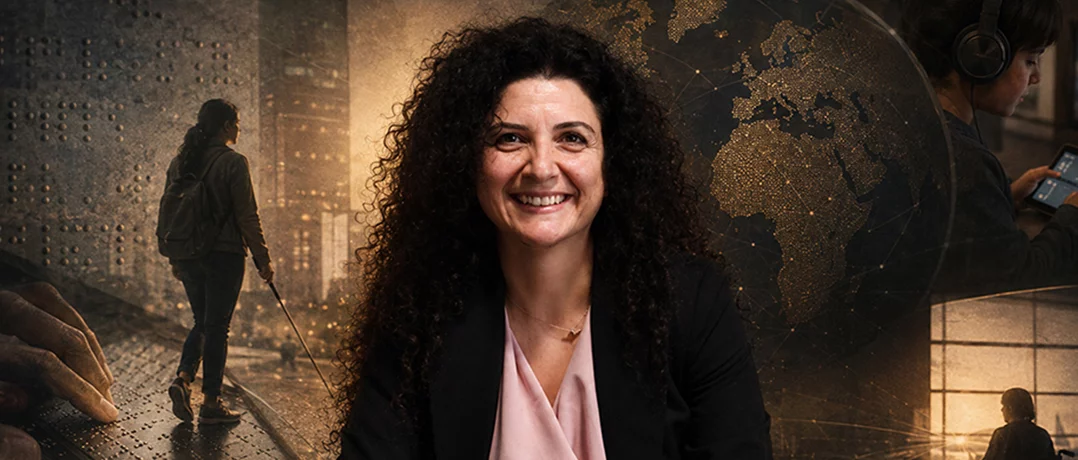
According to the Lebanese Civil Society Coalition, about 400,000 people, or 10% of the Lebanese population, live with disabilities. Whether because of social stigma or fear of having their children mistreated, families are often unable to integrate them into society safely. Educational institutions that elsewhere facilitate skill building and social integration often fail to do so in Lebanon, serving as the first of many barriers to children with disabilities growing up and fulfilling their potential.
Maha is leading an international initiative known as ABLE (Accessibility for a Bolder Learning Experience) that seeks to tear down these barriers. She recognizes the potential of many people with disabilities if given the proper environment to succeed. Deploying her experience integrating IT solutions for businesses, and now serving as Director of Digital Accessibility at AUB, she has led ABLE for seven years, collaborating with partners across the globe and earning her a spot on the 2026 Forbes Accessibility 200 list.
Maha describes the barriers addressed by ABLE as twofold: technical and cultural challenges. Technical solutions can be fairly simple to implement, with transformative impacts on students' lives. Whether it's blind students having braille keyboards or deaf students having access to text-to-speech software, students are able to stay and graduate college unlike before. One CS student had previously been told he would have to leave the department because of his accessibility needs; once ABLE connected him with the needed resources, he was able to thrive, and is now publishing his first paper.
 Photo credit: Maha Zouwayhed
For Maha, the larger challenge has been cultural. Many institutions claim to be inclusive while deprioritizing tangible solutions. ABLE has taken multiple steps to improve awareness of communities of persons with disabilities and their needs. At its annual summit, students and business leaders alike can participate in simulations of how people with disabilities — from the blind to the dyslexic — experience the world. Dialogues between the impaired and others also improve understanding of their needs. Maha stresses that many of the reforms ABLE advocates for are low-cost and simply require a greater understanding the community of persons with disabilities.
Maha emphasizes that, humanitarian motivations aside, accessibility benefits everyone. The EU, US, UK, and other countries have strictly enforced disability regulations, so if innovators in Lebanon make their workplaces more accessible now, they can more easily transition into international environments. Maha also stresses the need for Lebanese government laws to adopt existing international frameworks, as better enforcement mechanisms would incentivize more businesses to become accessible.
She views her Forbes recognition as "further proof that collective effort brings impact." Whether through providing free consultations on accessibility to the government or by continuing to work with an enthusiastic international community of accessibility advocates, she is working toward a more inclusive Lebanon.
Ultimately, she hopes her work serves as a reminder that Lebanon cares about inclusion. "I want every parent to know there are solutions for their kids and not to give up on them."
-
-

-
The Beiruter
-
