



Qatar has launched a major investment and aid push in Lebanon, combining economic, energy and security support with diplomatic engagement to bolster stability and state institutions.
Major Qatari investment push in Lebanon

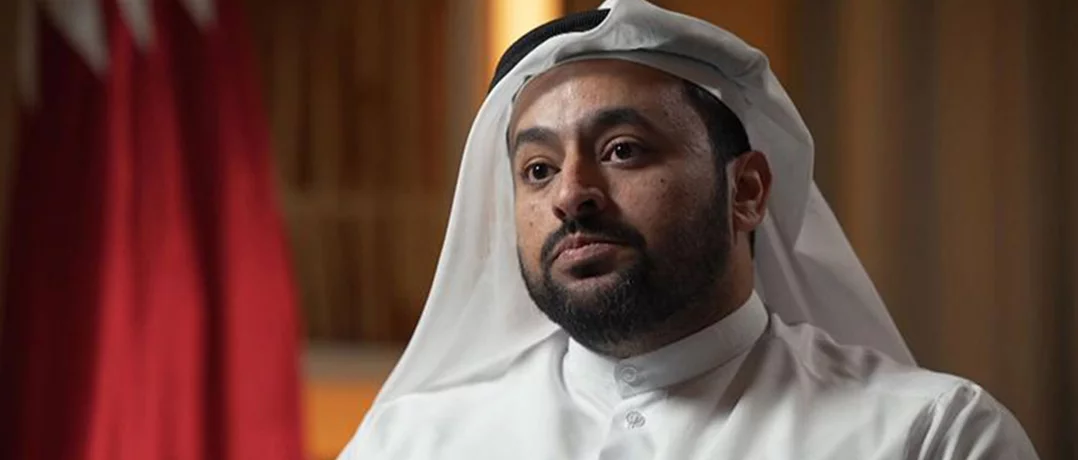
Lebanon received a significant diplomatic and economic boost with the visit of Qatar’s Minister of State at the Ministry of Foreign Affairs, Mohammed bin Abdulaziz al-Khulaifi.
The visit reflects Doha’s renewed commitment to supporting Lebanon’s stability at a critical juncture, through a comprehensive package of financial assistance, development projects and political engagement.
High-level meetings in Beirut
During his visit, Minister al-Khulaifi met with Lebanon’s top leadership, including President General Joseph Aoun, Speaker of Parliament Nabih Berri and Prime Minister Nawaf Salam, who hosted the Qatari official at an official luncheon.
The visit also included meetings with the Commander of the Lebanese Armed Forces (LAF), General Rodolphe Haykal, and senior security officials, underlining the central role of security and institutional stability in Qatar’s approach to supporting Lebanon.
Economic, social and energy cooperation
The discussions focused on a broad range of assistance and cooperation initiatives. Qatar has expressed its readiness to expand its support in key sectors such as the economy, healthcare and education; “offering 185 scholarships to support the educational achievement of Lebanese youth, and a project to rebuild the Karantina Hospital, which was damaged by the explosion,” according to Minister al-Khulaifi.
Beyond immediate needs, the talks explored longer-term economic and investment cooperation, with an emphasis on sustainable development and infrastructure rehabilitation. The visit coincided with the announcement of major Qatari-funded projects across Lebanon. The Qatari aid and grants, worth millions of dollars, will be distributed across all regions. These projects span energy, water, infrastructure and reconstruction.
Particular attention was given to energy and electricity, an area of urgent need for Lebanon which has been suffering for decades in this vital sector. Lebanese officials have requested Qatari assistance in addressing electricity shortages, including support for securing Qatari gas transiting through Syria to increase power generation, as well as other energy-related projects. In this regard, Minister al-Khulaifi stated that “we are providing $40 million to support electricity and an economic project to support the same sector.”
Support for the Lebanese Army and security forces
The most sensitive and strategic file on the agenda concerns Qatar’s assistance to the LAF. Existing support was expanded and may also extend to the Internal Security Forces (ISF). This comes ahead of the upcoming international conference to support the Lebanese Army and ISF on 5 March 2026, with the preparations scheduled to be held in Doha in 15 February 2026, amid crucial participation from the 5 countries most engaged in Lebanese affairs (United States, France, Egypt, Qatar and Saudi Arabia), alongside other donor states.
The Doha discussions could mark the beginning of a new phase in military and security assistance, including gradual increases in financial support aimed at improving soldiers’ and officers’ salaries. The objective is to restore the dignity of military pay and ensure that members of the armed and security forces are not forced to seek additional employment to sustain their livelihoods. Minister al-Khulaifi asserted that the support is due to the LAF being “a key national institution and to enable it to carry out its national duties.”
Stability, diplomacy and regional engagement
Qatar’s engagement is closely tied to its broader efforts to preserve stability in Lebanon. Doha has been actively involved in diplomatic efforts, alongside the United States (US), to contain Israeli military actions, press for a halt to hostilities and help create conditions for withdrawal and the end of occupation. The visit also touched on prospects for regional economic cooperation involving Lebanon, Qatar and Syria. Additionally, Minister al-Khulaifi announced “the launch of the Voluntary Return Support Project for Syrians, with the cost of the first phase of this project amounting to $20 million.”
It is worth noting that Qatar has long been engaged in the Lebanese scene, most notably in reconstruction efforts after the Lebanese War (1975-1995) and the 7 May 2008 conflict. Regarding the latter, Doha was also involved in mediating between various contending parties in the country, whereby it held the Lebanese National Dialogue Conference, which ultimately led to the signing of the Doha Agreement on 21 May 2008. This was a pivotal moment in Lebanon’s political landscape as it aimed to end the political crisis and restore civil peace by forming a national unity cabinet, with March 8 alliance retaining the “blocking third;” a norm which persisted until the formation of Nawaf Salam’s cabinet in February 2025.
In conclusion, Minister Al-Khulaifi’s visit signals a strong Qatari commitment to Lebanon at a time of profound economic and political challenge. By combining humanitarian support, strategic investment and diplomatic engagement, Qatar is positioning itself as a key partner in Lebanon’s path toward stability, recovery and renewed confidence in state institutions.
-
-

-
The Beiruter
-
