



Iran’s strategic infrastructure and security forces form the core of a regime-survival strategy and feature prominently in Western military planning.
Mapping potential Iranian targets ahead of escalation
Mapping potential Iranian targets ahead of escalation
By Ziad Bitar | January 29, 2026

Reading time: 5 min
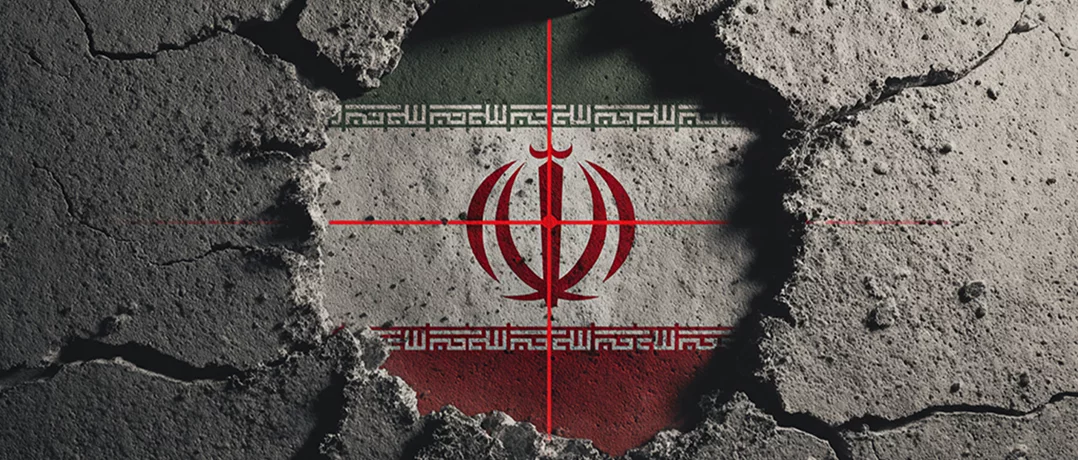
Iran possesses a complex network of oil facilities, strategic ports, and central military and political institutions that play a pivotal role in managing the national economy and maintaining internal and external stability. According to assessments by Western research centers and statements by U.S. officials, this infrastructure is considered among Iran’s most sensitive assets, typically included in pressure scenarios or confrontation planning in the event of any potential military escalation between the United States and Iran.
In this context, political analyses, including those by the Foundation for Defense of Democracies (FDD), indicate that Iran’s oil installations, vital ports, and military and political decision-making centers are routinely placed within what is known as a “target bank” in any potential military confrontation with Washington. This perception was reinforced following public statements by U.S. President Donald Trump, in which he hinted at the possibility of military intervention or the use of force to overthrow the Iranian regime.
At the apex of Iran’s military command structure sits Supreme Leader Ali Khamenei, who serves as commander-in-chief of the armed forces and exercises absolute authority over all military and security formations in the country. From this position, Khamenei defines Iran’s grand strategy, which for decades has focused on two primary objectives: preserving the existing regime and exporting its revolutionary ideology beyond Iran’s borders.
Within this framework, Khamenei has overseen the development of Iran’s armed forces and adapted their structure and roles to carry out multiple missions aligned with this strategy, both domestically and regionally. In parallel, he has invested sustained efforts in entrenching a culture of total loyalty and direct submission to the Supreme Leader within the military establishment, viewing it as a cornerstone of regime stability and continuity.
By contrast, neither the president nor the defense minister falls within the direct military chain of command. Their roles in military affairs remain operationally limited and are confined to shaping national security policy through indirect channels, primarily access to the Supreme Leader and participation in the Supreme National Security Council. Direct involvement in military operations or the conduct of war lies outside their effective authority.
The Ministry of Defense and Armed Forces Logistics is responsible for managing Iran’s military-industrial base, including weapons manufacturing, procurement, sales, and logistical support. However, it does not exercise command authority over combat forces themselves.
Despite the existence of a clear formal hierarchy fully subordinated to the Supreme Leader, Iran’s military decision-making does not rely solely on official structures. Informal influence networks and personal relationships play a significant role, a reality reflected on several occasions when Khamenei issued direct orders to military branch commanders, at times bypassing bureaucratic channels altogether.
Within this system, Iran’s armed forces are divided into three main branches, all directly subordinate to the Supreme Leader, underscoring the highly centralized nature of military authority in Iran and confirming that ultimate military decision-making remains concentrated in the hands of a single individual, who serves as the central pillar of governance and national security.
The three branches of Iran’s armed forces
Iran’s armed forces consist of three primary branches under the Supreme Leader: the Islamic Revolutionary Guard Corps (IRGC), the Artesh (conventional armed forces), and the Law Enforcement Command (LEC). The Supreme Leader relies on two key coordinating bodies: the Armed Forces General Staff (AFGS), responsible for strategic guidance and military policy, and the Khatam al-Anbiya Central Headquarters, which oversees joint operations, command, and control during warfare. Within this structure, operational command flows directly from the defense minister to military leadership.
Islamic Revolutionary Guard Corps (IRGC)
Established after the Islamic Revolution to protect the regime and consolidate clerical control, the IRGC has evolved into a dominant political, security, and economic actor. It oversees missile and drone production and manages Iran’s so-called “Axis of Resistance.”
Artesh (Conventional Armed Forces)
Predating the revolution and formerly known as the Imperial Iranian Army, the Artesh is often referred to as Iran’s regular military. It is considered less ideological than the IRGC and is primarily tasked with defending the country and safeguarding its territorial integrity. The Artesh possesses the majority of Iran’s manpower and platforms, including tanks, helicopters, fighter aircraft, naval vessels, and submarines.
Law Enforcement Command (LEC)
Iran’s main internal security and police force, the LEC is responsible for maintaining public order and internal stability. Its units include border guards, preventive police, operational forces, and special riot-control units. It has also operated abroad in support of Axis of Resistance elements.
Force structure and capabilities
Ground Forces
Smaller and lighter than the Artesh, Iran’s ground forces are organized into 32 regional units capable of operating independently. They are equipped to suppress internal protests and confront external threats, managing roughly 50 brigades composed of light infantry, armored, and mechanized units concentrated along western and eastern borders. These forces have participated in Syria in support of the Assad regime and played roles in suppressing domestic protests.
Naval Forces
A non-conventional naval force responsible for operations in the Persian Gulf and the Strait of Hormuz. It employs fast attack boats, naval mines, missiles, and drones to disrupt foreign naval movements. Operating in the Indian Ocean and the Caspian Sea, it shares responsibility for the Strait of Hormuz with the IRGC and has recently expanded its operational reach beyond territorial waters through advanced vessels and forward bases.
Aerospace Forces
Operating domestically modified Western aircraft and relying on Russian—and more recently Chinese, aviation platforms, these forces manage Iran’s missile and drone programs and support national air defense.
Air Defense Forces
Established in 2019 as the newest branch of the Artesh, the air defense forces operate domestic systems and Russian platforms such as the S-300, alongside locally modified Soviet-era systems.
Basij Organization
A paramilitary organization tasked with recruiting and mobilizing regime loyalists. The Basij is embedded throughout Iranian society and plays a key role in internal repression, propaganda, and social control.
Intelligence Organization
Formed after the 2009 protests, it focuses on internal surveillance and counterinsurgency, with limited external activity.
Quds Force
The IRGC’s external operations arm, responsible for supporting Iranian-backed armed groups in Lebanon, Palestine, Yemen, Iraq, Syria, Afghanistan, Pakistan, and Bahrain.
Iran’s military-industrial complex
Defense Industries Organization (DIO)
Established in 1981 under the Ministry of Defense, the DIO oversees the design and production of military equipment. Iran’s modern military industry dates back to 1925 and has expanded to include small arms, tanks, aircraft, missiles, drones, ships, and submarines. Following the revolution and the Iran-Iraq War, multiple industrial firms were consolidated under the DIO to ensure production continuity and self-sufficiency. The organization exports weapons to Iranian allies such as Hamas and Hezbollah and operates joint projects in Syria, Yemen, and Tajikistan.
Iran Aircraft Manufacturing Industries (HESA)
Founded in 1974 in Isfahan, HESA leads Iran’s aircraft and drone manufacturing efforts. Its products include civilian and military aircraft, helicopters, and strategic drones such as Shahed-129, Karrar, and Ababil. HESA exports to countries including Russia, Palestine, Lebanon, Syria, Yemen, Ghana, Somalia, and Venezuela. The company has been sanctioned by the United States for its role in drone and fighter production supporting the IRGC.
Iran Aircraft Industries (SAHA)
Established in 1961, SAHA specializes in aircraft maintenance, engine manufacturing, and airframe development. Its exports support Iranian allies’ military capabilities across multiple regions.
PANHA (Iran Helicopter Support and Renewal Company)
Founded in 1976, PANHA is Iran’s primary helicopter maintenance and manufacturing firm. It has developed domestic helicopters and drone engines and exports to several allied countries.
Qods Aviation Industries
Founded in 1985, Qods specializes in reconnaissance, surveillance, attack, and training drones. Its early models were used during the Iran-Iraq War. In August, Canada imposed sanctions on the company and associated individuals for human rights violations and supplying drones to Russia for use in Ukraine.
Iranian Marine Industries (SADRA) and ISOICO
These entities specialize in shipbuilding, offshore oil and gas installations, ports, and coastal defense. ISOICO operates near Bandar Abbas and forms part of Iran’s largest maritime industrial zone, established in 2001 across 1,100 hectares to support shipbuilding and offshore infrastructure.
