



Britain’s MI6 chief warns that Putin is stalling peace in Ukraine while waging hybrid warfare against the West.
MI6 chief warns of growing Russian threat

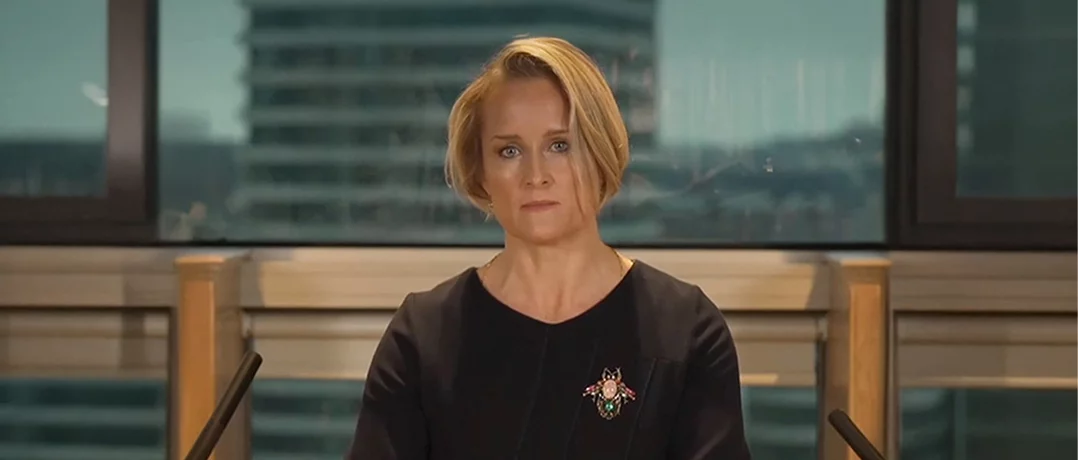
Britain’s foreign intelligence chief has issued a stark warning that Russian President Vladimir Putin is deliberately prolonging efforts to end the war in Ukraine while pursuing a broader strategy aimed at weakening Western cohesion.
In her first public address since assuming leadership of MI6, Blaise Metreweli argued that Moscow is exploiting the space between peace and open warfare, using hybrid tactics to pressure Ukraine and test NATO’s resolve at a critical diplomatic moment.
Stalling peace and testing the West
According to Metreweli, Russia is “dragging out negotiations” while remaining committed to subjugating Ukraine rather than reaching a genuine settlement. She framed the conflict as no longer confined to conventional battlefields, but as part of a wider confrontation in which Russia probes Western defenses through actions that remain just below the threshold of war. This approach, she warned, allows Moscow to maintain pressure while avoiding the consequences of direct escalation.
Her remarks came as international efforts to revive peace talks intensified, with Ukraine’s allies seeking to balance military support for Kyiv against mounting pressure, particularly from Washington, to move toward a negotiated settlement. In this context, Metreweli’s assessment suggests that Russia sees diplomacy less as a path to compromise and more as a tool to buy time and reshape the strategic environment.
Hybrid warfare and the “export of chaos”
A central theme of the MI6 chief’s speech was Russia’s use of hybrid warfare.
Metreweli accused Moscow of sponsoring cyberattacks on critical infrastructure, engaging in disinformation campaigns, and carrying out acts of sabotage and intimidation across Europe. She also cited aggressive activities at sea and in the air, including drone incursions near major airports.
Describing this behavior as the “export of chaos,” Metreweli argued that such actions are not accidental but integral to Russia’s foreign policy. The objective, she suggested, is to erode trust within democratic societies, stretch security resources, and normalize instability until Western governments are forced to adjust their calculations.
Technology and the changing nature of conflict
Metreweli emphasized that rapidly evolving technology has transformed intelligence work and conflict itself. With a background in technology and innovation, she highlighted the growing importance of cyber capabilities, artificial intelligence, and data analysis alongside traditional human intelligence. In her words, modern intelligence officers must be as fluent in computer code as they are in foreign languages.
She also warned that disinformation is increasingly targeting societies “from the inside,” manipulating perceptions and undermining social cohesion. In this environment, the front line is no longer distant but present in everyday digital and informational spaces.
A broader western security alarm
The MI6 warning aligns with a series of recent statements from Western defense officials. British military leaders have echoed concerns that Russia’s long-term objective extends beyond Ukraine to challenging and dividing NATO itself. Recent sanctions imposed by the UK on Russian and Chinese entities over cyber and information warfare underscore the sense that hybrid threats are now a central feature of global competition.
Alas, Metreweli’s speech paints a picture of a world entering a prolonged period of strategic uncertainty, where peace and war increasingly blur. By accusing Putin of stalling peace talks while destabilizing the West through hybrid tactics, Britain’s top spy has underscored the challenges facing Ukraine’s allies. The message from London is clear: avoiding war remains the goal, but maintaining peace will require greater resilience, technological adaptation, and sustained unity in the face of a determined and unconventional adversary.
-
-

-
The Beiruter
-
