

Energy Minister Joe Saddi lays out a hard-line reform roadmap to rescue Lebanon’s electricity sector from debt, decay, and dysfunction.
Minister Joe Saddi’s power sector reset

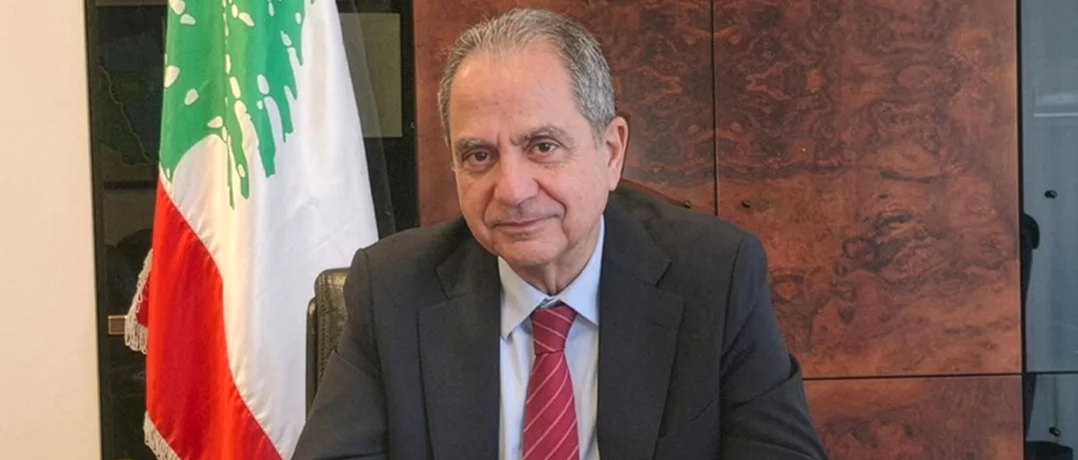
Taking over one of Lebanon’s most troubled ministries amid an unprecedented economic and institutional collapse, Lebanese Minister of Energy and Water Joe Saddi does not shy away from the scale of the challenge.
In an exclusive interview with The Beiruter, Saddi outlines the short-term realities, long-term reforms, and structural obstacles facing Lebanon’s electricity sector, while emphasizing that his mandate is not about temporary fixes, but durable solutions.
A ministry burdened by 15 years of failure
“This is obviously a very difficult ministry, particularly given the legacy of the last 15 years,” Saddi says. “From day one, I made it clear that I did not come to fix one or two additional hours of electricity, but to put the sector on a sustainable, long-term path.”
The first decision, he explains, was to halt the accumulation of further public debt simply to purchase fuel. Over the past 15 years, Lebanon has spent nearly $25 billion on fuel for electricity generation; an amount that would exceed $35 billion today when interest is factored in. Added to this is more than $1.2 billion in debt owed to the Iraqi government.
In addition, “Electricité du Liban (EDL) began buying and paying for its fuel from its own collections,” Saddi stresses. “State loans and subsidies have thus ceased. Ultimately, it is taxpayers who bear the cost of these debts,” since the latter come from the people’s wallets.
Short-term reality: limited supply, massive losses
In the short term, Saddi acknowledges the hard limits of the system. He affirms that Lebanon’s “existing production capacity can provide anywhere between 8 to 10 hours of electricity per day at best, while demand is nearly three times higher.” So, “EDL currently supplies about one-third of national demand,” he explains. “This means that improving collection is absolutely critical.”
At present, EDL collects only 60% of what it is owed. Around 10% of electricity is lost due to technical issues stemming from an outdated grid, while 30% of losses are caused by theft; a problem widespread across the country. From here, Saddi stresses that “we are exerting maximum pressure on EDL, with the support of the Lebanese security forces, to confront this issue,” adding that “electricity theft is not a marginal problem, but rather an existential one.”
Long-term solutions: production, gas, renewables, modernization and trust restoration
When asked about durable solutions, Saddi outlines a multi-track strategy.
Increasing production capacity
To begin with, the ministry is working on increasing production capacity. Existing power plants are more than 30 years old, inefficient, and costly to operate. From here, the ministry is working to secure investment for two new power plants (powered by gas), each with a capacity of 825 megawatts (MW), to be built in Deir Ammar in the north and Zahrani in the south. To attract investors and achieve its intended goal, the ministry is pursuing two parallel tracks. The International Finance Corporation (IFC), part of the World Bank Group, has been mandated to advise the government on tendering one plant alongside a Floating Storage and Regasification Unit (FSRU) to enable gas operation. Simultaneously, discussions are ongoing with friendly Gulf countries to attract similar investments.
Alongside conventional power generation, the ministry is also pushing renewables. Of the 11 renewable energy licenses granted in 2022 and long stalled, four have been revived and are now progressing under new ownership. Decisions regarding extensions for the remaining licenses will be based on concrete progress; depending on how active the owners of these licenses are with respect to establishing them on the ground and making them operational. Moreover, the ministry is “also in talks with several investors for utility-scale solar farms,” Saddi adds, pointing to the Bekaa Valley as a particularly suitable region.
Transitioning to natural gas
Equally important is the transition away from fuel oil toward natural gas.
“This is essential,” Saddi says, given that “natural gas is cheaper, far less polluting, and the market is more transparent (this is a way for us to get away from all the contracts on fuel that are more opaque)”
To ensure energy security, Lebanon is pursuing two gas supply options simultaneously: importing Liquified Natural Gas (LNG) through an FSRU, as well as reviving the Arab Gas Pipeline in cooperation with Jordan and Syria. Thus, technical studies are underway to assess damage sustained during the Syrian war and identify necessary repairs and funding.
The reason why the ministry is working on both gas supply options is due to the strategic significance of Lebanon having security of supply, rather than being dependent solely on one source of energy. “Relying on a single source is strategically dangerous,” Saddi notes, while “diversification is key.”
Rehabilitating the grid and modernizing control
Another priority for the ministry is rehabilitating Lebanon’s aging transmission and distribution grid. Saddi revealed that talks are ongoing with an Arab fund to secure financing on favorable terms. Indeed, he warns that “increasing production without fixing the grid would be pointless” (since it will not be able to take advantage of the increase production capacity).
Additionally, Parliament recently approved a $250 million World Bank loan aimed at strengthening EDL’s operational capabilities. This includes establishing a national control center, deploying advanced metering infrastructure (AMI), rehabilitating the Achrafieh substation damaged in the 2020 Beirut port explosion, and allocating $90 million for a 150 MW solar plant in the Bekaa.
Institutional reform and restoring trust
Perhaps the most symbolic reform has been the establishment of the Electricity Regulatory Authority (ERA), more than two decades after it was mandated by Law No. 462/2002.
“This was essential,” Saddi says. “Not only because it is the law, but because independent regulation keeps the sector away from political interference (as we have seen how much this sector, in particular, has suffered from politics over the last 15 years) and restores credibility with investors.” Indeed, given that this sector has had a bad reputation, which has accumulated over the years, establishing the ERA was a symbol to reestablish trust in the sector with potential investors and friendly countries.
The reform roadmap also includes unbundling the sector, with EDL eventually becoming a transmission company, alongside private generation and distribution entities. The ERA has already begun working with the World Bank to define a distribution strategy, with key decisions expected in 2026.
Finally, EDL itself will need to undergo corporatization, modernization and reformation. Saddi notes that “we have opened applications for a new board of directors,” claiming that the ministry “needs professional, apolitical individuals who can oversee this transformation.”
Fuel supply and strategic reserves
Addressing concerns over gas oil reserves and a recently reissued 6-month fuel tender (to be relaunched after 21 days, since 22 December 2025, due to the submission of only a single bid), Saddi emphasizes that electricity supply remains stable in the short term.
“We are diversifying our sources and securing fuel on multiple fronts,” he says. Saddi also asserts that there was an attempt to disrupt the provision of fuel to EDL to force it into shutdowns. However, the ministry able to take the right measures at the right time. From here, it is working on securing the fuel on 2 fronts: while the long-term tender was reissued after receiving a single bid, the ministry continues to rely on short-term monthly and bimonthly tenders to ensure continuity. Despite this fact, Saddi believes that “the 6-month tender offers greater stability, and we hope it succeeds.”
The ministry’s major hurdles and obstacles
Reflecting on the past year, Saddi identifies three major hurdles: lack of trust, severe staffing shortages, and institutional decay.
First and foremost, Saddi claims that there is a lack of trust in the sector and ministry. This is why “we have been working hard on being transparent and fulfilling our promises.”
Secondly, “when we took over, nearly 85% of ministry positions were vacant,” Saddi says, with “skilled manpower representing a serious challenge.”
Thirdly, the ministry had to deal with institutions whose boards of directors’ mandates have expired years ago. From here, Saddi affirmed that “we have begun reviving them, from appointing a new CEO at the Bekaa Water Authority to preparing new boards for water establishments in Beirut abd the Bekaa as well as for EDL.”
Beyond rampant corruption in governmental institutions, Saddi points to years of mismanagement and missed opportunities. “Instead of spending $2 billion to build large power plants, $25 billion was wasted on fuel during the past 15 years.”
Ultimately, he concludes, tackling electricity theft and improving collection is non-negotiable. Saddi believes that in the short term, the challenge is to increase the rate of collection and reduce losses when it comes to the sale of electricity. He claims that “investors need to know that EDL can collect enough revenue to sustain itself. Without enforcement, reform is impossible.” Hence, one of the main challenges that the sector is facing is ensuring that EDL has the capability and the willingness, together with the Lebanese security forces and the judiciary, to deal with those issues.
In conclusion, while the challenges facing Lebanon’s electricity sector remain formidable, Saddi’s roadmap underscores a shift from crisis management to systemic reform. From halting debt accumulation and increasing production capacity to transitioning toward natural gas, rehabilitating the grid, and restoring institutional governance, the ministry’s approach seeks to rebuild credibility and attract long-term investment. Yet, as Saddi repeatedly stresses, success ultimately hinges on enforcement, improved collection, and political will. Without addressing electricity theft and restoring confidence in EDL’s ability to function as a viable utility, even the most ambitious reforms risk stalling, leaving Lebanon’s energy future unresolved.
-
-

-
The Beiruter
-
