



Lebanon’s Ministry of Culture is digitizing BAAL, the country’s leading archaeological journal, to preserve and globally expand access to decades of Lebanese heritage research.
Ministry of Culture secures grant for BAAL digital archive
Ministry of Culture secures grant for BAAL digital archive
By The Beiruter | May 22, 2026

Reading time: 3 min
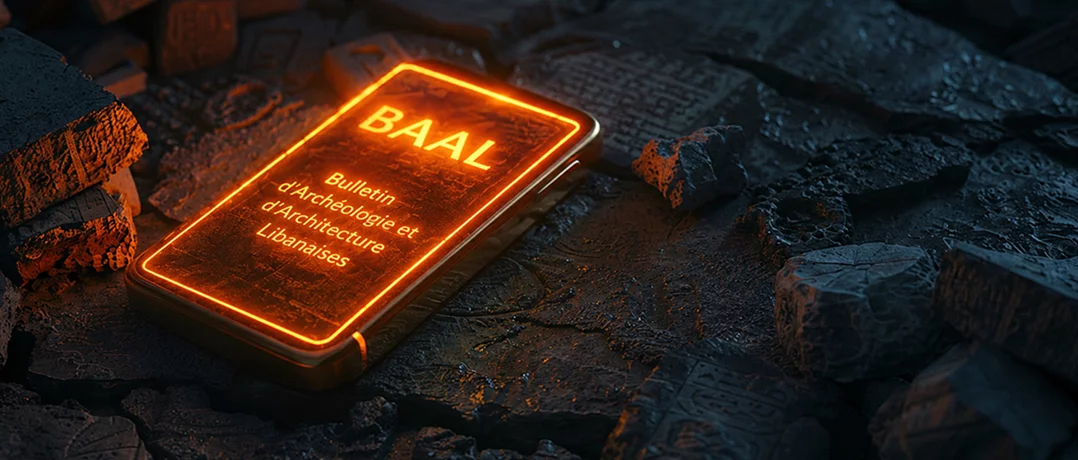
Lebanon's Ministry of Culture has announced that it has received a grant from the Honor Frost Foundation to support the development of a dedicated digital platform for BAAL magazine, one of the country's most important archaeological and scientific publications. The platform will be designed to preserve, publish, and provide broad public access to the journal's existing archives, as well as future issues and new content.
The initiative marks a meaningful step in Lebanon's effort to safeguard and disseminate its archaeological knowledge at a time when digital access to academic resources has never been more essential. The Ministry told The Beiruter that the grant "represents an important step toward strengthening one of the most prominent scientific and archaeological publications in Lebanon and the region, and making it accessible to a broader audience", including researchers, students, and the general public both within Lebanon and internationally.
A journal at the heart of Lebanese archaeology
BAAL, short for Bulletin d'Archéologie et d'Architecture Libanaises, is an annual or semi-annual journal published by the Directorate General of Antiquities under the direction of the Ministry of Culture. The first volume was issued in 1996, and the journal publishes research papers, excavation reports, and archaeological surveys. As the required first place of publication for all archaeological survey and excavation work conducted in Lebanon, BAAL is considered a critical resource in the study of the Levantine past, spanning from Prehistory to Modernity. Even the journal's name carries historical weight: the acronym is a play on the name of the ancient Canaanite and Phoenician deity Ba'al, literally meaning "lord."
Since its launch, BAAL has served as the primary scholarly record for major archaeological discoveries, excavations, and research related to Lebanese cultural heritage and the broader Eastern Mediterranean. Its archives represent decades of irreplaceable scientific documentation, material that, until now, has remained largely inaccessible to anyone outside specialist academic circles or those physically present in Lebanon.
A long-standing partnership
The grant comes from the Honor Frost Foundation, a UK-registered charity with deep roots in Lebanon's archaeological landscape. Founded in 2011 following the death of pioneering underwater archaeologist Honor Frost, the Foundation's mission is to promote the advancement and research, including publication, of maritime archaeology, with a particular focus on the eastern Mediterranean, specifically Lebanon, Syria, Cyprus, and Egypt.
The Honor Frost Foundation has long combined efforts with the Directorate of Antiquities and the Ministry of Culture in Lebanon in order to contribute to the study, inventory, protection, conservation, and management of the country's maritime heritage. This new grant extends that collaboration into the digital realm, addressing the pressing need to make Lebanon's scientific record available to a global audience.
The Foundation's investment in Lebanon has been substantial. Chair of its Board of Trustees Alison Cathie has previously noted that since 2012, the Foundation has had projects and educational activities in Lebanon amounting to over $4.78 million, funding maritime archaeological research along the Lebanese coast in Sidon, Tyre, Batroun, Anfeh, Deir al-Natour, Kharayeb-Adloun, Zahrani, Koubba, and Byblos.
Digitizing Lebanon's national memory
The Ministry framed the new platform within its broader strategy to modernize Lebanon's cultural infrastructure. The initiative falls within wider efforts to enhance the digital infrastructure of culture, preserve national memory, and expand access to heritage documentation and scientific publications through modern tools and platforms, goals that take on added urgency given Lebanon's ongoing economic and institutional challenges.
By moving BAAL's archives online, the Ministry aims to ensure that decades of scholarly work, much of it documenting sites and artifacts that face mounting threats from urban development, neglect, and instability, can survive and remain accessible regardless of what happens on the ground. The platform is also intended to host future publications and new content, positioning BAAL as a living, growing resource rather than a static archive.
The Ministry concluded its announcement by expressing gratitude to the Honor Frost Foundation for its "continued commitment to protecting, documenting, and promoting Lebanon's and the region's maritime and archaeological heritage", a commitment that this latest grant makes tangible in a new and lasting way.
For Lebanon's research community and the wider world of Eastern Mediterranean scholarship, the digital platform promises to open a window onto some of the most significant archaeological work ever conducted in the Levant, finally putting it within reach of anyone with an internet connection.
-
-

-
The Beiruter
-
