



What appears as a demographic shift in Mkalles is in fact the economic outcome of deindustrialization, falling land values, and the disappearance of productive work.
Mkalles: How economic collapse redrew Lebanon’s communal map
Mkalles: How economic collapse redrew Lebanon’s communal map
By Christiane Tager | January 29, 2026

Reading time: 4 min
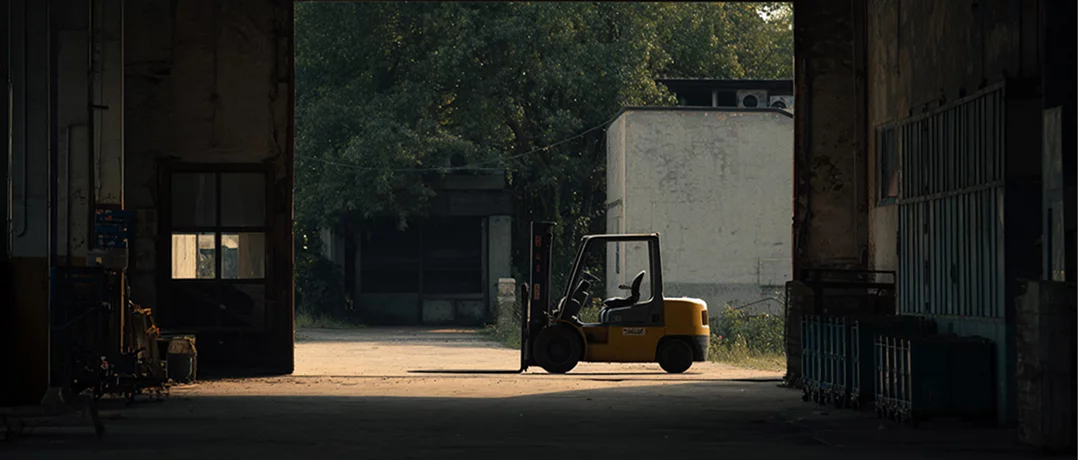
Lebanon’s crisis is often discussed through politics, banking collapse and national economic indicators. But one of its most lasting impacts has been the slow destruction of the country’s productive sectors the industries that once sustained communities, jobs and a functioning middle class.
Mkalles offers a rare case study of that collapse.
Once the industrial engine of Beirut’s eastern suburbs and a stronghold of Christian-owned manufacturing, Mkalles has been quietly but profoundly reshaped over the past three decades. What appears today as a demographic shift is, in fact, the result of a long economic unravelling driven by industrial decline, capital flight, collapsing land values and the absence of public policy.
Once one of Lebanon’s most structured industrial zones, the area’s transformation shows what happens when manufacturing declines, capital leaves, and the state withdraws from economic planning. The story of Mkalles is not simply about a neighborhood changing hands, but about an industrial ecosystem disappearing and with it, the social and economic stability it once provided.
What changed Mkalles was not politics or ideology, but the disappearance of productive economic life.
In the 1970s and 1980s, Mkalles stood as one of Lebanon’s most structured industrial clusters. More than 300 industrial and semi-industrial units operated in the area, the vast majority owned by Christian families with deep local roots.
The zone specialized in textiles and garments nearly 40% of activity alongside furniture and carpentry, printing presses, light mechanical industries and packaging. Together, these businesses employed several thousand workers, sustaining a stable middle class and feeding supply chains across the country.
“Back then, every warehouse produced something,” recalls a former textile manufacturer. “Mkalles didn’t just serve Beirut. It worked for all of Lebanon.”
Exodus and deindustrialization
The civil war marked the beginning of a slow reversal. But it was during the 1990s and 2000s that the decline accelerated. Christian emigration intensified, driven by insecurity, shrinking margins and the erosion of industrial competitiveness.
Municipal and professional estimates suggest that nearly 50% of Christian property-owning families in Mkalles sold their assets or left the country between 1990 and 2010.
At the same time, local industry collapsed.
More than 70% of textile workshops closed within two decades, crushed by Asian imports. Furniture makers suffered from falling purchasing power. Printing presses weakened under digitalization. With no access to credit, no customs protection and no industrial policy, small and medium-sized manufacturers shut down one after
another. “There was simply nothing to help us survive,” says a former business owner. “The state disappeared when we needed it most.”
Falling land values, changing hands
Deindustrialization rapidly translated into a real estate shock. Between 2005 and 2018, industrial rents in Mkalles reportedly fell by 30% to 40%, making the area one of the most affordable industrial zones near Beirut.
This shift opened the door to a new population, primarily from Beirut’s southern suburbs and South Lebanon, drawn by proximity to the capital, lower rents and residual job opportunities.
“Mkalles made sense economically,” explains Ali a trader who moved into the area in the early 2000s. “It was cheap, accessible and already connected.”
Factories gave way to warehouses. Production was replaced by storage. The workforce changed accordingly.
A demographic shift rooted in economic vacuum
Today, more than 65% of Mkalles’ active population is Shiite, compared with a clear Christian majority until the early 1990s. The area now hosts fewer than 150 active industrial units, most of them small-scale.
Dominant activities include logistics, wholesale trade and informal workshops with low value added. While economic activity remains visible, it generates fewer skilled jobs, lower wages and limited growth prospects.
Crucially, the Shiite majority did not settle in Mkalles as part of a communal strategy. It filled a vacuum left behind by industrial collapse, emigration and capital withdrawal.
The missing state
At no stage did the Lebanese state attempt to manage or redirect this transformation. There was no industrial reconversion plan, no land-use regulation, no urban or economic vision.
“This is not a community issue,” says a former industrialist. “It is the result of a total failure of economic policy.”
Mkalles evolved without governance, without protection and without strategy.
Mkalles’ trajectory mirrors that of Lebanon itself: an abandoned industrial base, a departing middle class, distressed real estate and a social recomposition driven by economic necessity rather than choice.
The area did not change because one community replaced another. It changed because production disappeared, the state withdrew and industry was left to die.
The real question today is not who occupies Mkalles but whether Lebanon still has the capacity to turn it into something more than a zone of economic survival.
Without vision, Mkalles will remain a symbol of lost potential. With strategy, it could once again become a structured economic hub, for all.
