



More than just a game: The politics of sport
More than just a game: The politics of sport

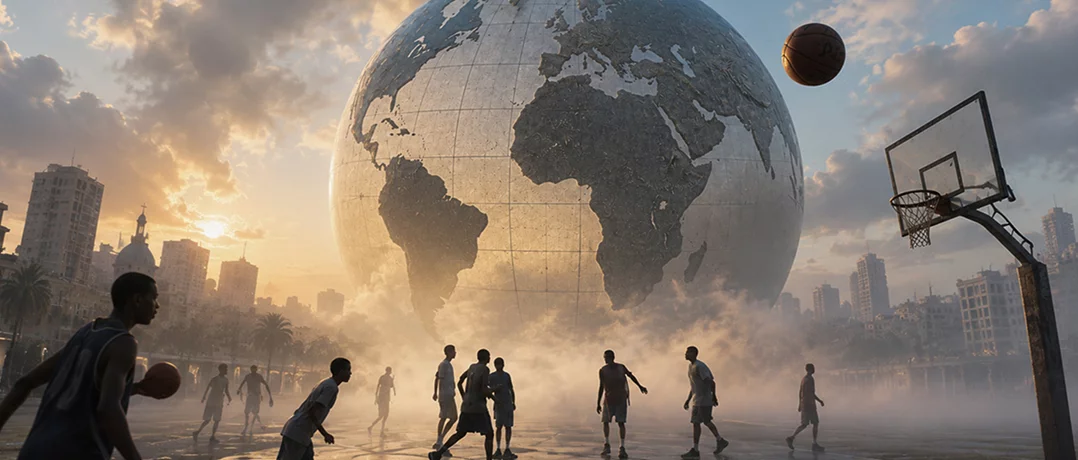
The origins of both politics and sport, in an organized and formalized manner, can be traced back to ancient civilizations; namely to ancient Greece. Indeed, the term “politics” originates from the Greek word “polis,” signifying “city-state” or a society with a sense of community (such as Athens and Sparta), whereas the first Olympic Games were held in Olympia, Greece in 776 B.C.E. as part of a festival to honor the Greek god Zeus. Every 4 years, thousands came from all over the Greek world to witness and participate in the Ancient Olympic Games, bringing victory and honor not just to individual athletes but to their entire polis as well; a recurring phenomenon witnessed contemporarily with the FIFA World Cup, for instance.
While sport is often characterized by inclusivity, impartiality, and fairness in competition, it has always been intertwined with politics. For as French educator and co-founder of the International Olympic Committee (I.O.C.), Baron Pierre de Coubertin, once observed:
Athletics can bring into play both the noblest and the basest passions… they can be used to strengthen peace or to prepare for war.
From here, to what extent are politics and sport inseparable in both domestic and international affairs?
Sport as a force for unity, diplomacy, and political influence
Sport could be used as a force for good; be it for individual nation-states or for the international community and humanity as a whole.
Fostering national and global unity:
Sport’s ability in fostering and reinforcing both national identity and global unity stems from the shared experiences, collective emotions, and mutual interactions among the citizens of the state and that of the wider world. Indeed, if we were to focus on national unity, when athletes compete under their national flags, they become representatives of an entire nation and its aspirations rather than individuals merely pursuing personal achievements. Major international tournaments, such as the FIFA World Cup and the Olympic Games generate unprecedented expressions of patriotism and national pride, with medals and trophies regarded as collective national accomplishments and symbols of national prestige.
Even during periods of unrest, political uncertainty, or economic hardship, sporting success serves as a source of national optimism and social cohesion. Lebanon’s national basketball team, for instance, has generated widespread national unity and pride despite prolonged political and economic crises, given the repeated continental runner-up finishes it managed to reach (particularly in the 2001, 2005, 2007, and 2022 FIBA Asia Cup finals), as well as its participation in the FIBA Basketball World Cup 4 times in the 21st century (in 2002, 2006, 2010, and 2023).
 Members of the United States (U.S.) and Chinese table tennis teams at the Great Wall of China during the historic 1971 “Ping Pong Diplomacy” exchanges, a landmark sporting initiative that helped pave the way for the normalization of U.S.-China relations.
An instrument of diplomacy and soft power:
Unlike traditional diplomacy, which primarily relies on formal negotiations, official state representatives, and governmental institutions, sports diplomacy operates through cultural exchanges, people-to-people interactions, and symbolic gestures capable of fostering dialogue. While they rarely resolve disputes in and of themselves, such initiatives can contribute to creating a more favorable political environment in which diplomatic engagement becomes possible.
Perhaps the most widely cited example is the so-called “Ping-Pong Diplomacy” between the United States (U.S.) and the People’s Republic of China (P.R.C.) in 1971. At a time when official diplomatic relations were virtually nonexistent, exchanges involving American and Chinese table tennis players, particularly Glenn Cowan and Zhuang Zedong, helped reduce decades of political hostility and mutual distrust. More importantly, these sporting encounters demonstrated that dialogue could begin outside conventional diplomatic channels, thus paving the way for U.S. President Richard Nixon’s historic visit to China in 1972 and the signing of the Shanghai Communiqué; which marked a significant step in the normalization of U.S.-China relations that eventually occurred in 1979.
Beyond facilitating interstate dialogue, governments have also come to recognize sport as an effective means of projecting soft power and enhancing their international standing, image-building, and reputation before a global audience.
The 2022 FIFA World Cup in Qatar serves as a perfect example. Aside from organizing the first FIFA World Cup to be hosted in the Middle East, Qatar sought to reinforce its international profile, diversify its economy, attract tourism, showcase its cultural heritage and organizational competence, and further establish itself as a regional diplomatic actor and commercial hub; especially following the Gulf Cooperation Council (G.C.C.) Crisis of 2017-2021. Nevertheless, the tournament also attracted widespread criticism concerning labor conditions and human rights. This demonstrates that while global sporting events provide states with unprecedented international visibility, they simultaneously expose them to greater scrutiny.
Sport as a reflection of existing socio-political divisions and conflicts
While it is true that sport possesses the capacity to unite societies and facilitate cross-national dialogue, it can also serve as an extension of existing socio-political divisions and conflicts, at both the local and international levels; thus mirroring the environment in which they take place. As armed conflicts became an anomaly within the contemporary world order and the establishment of the United Nations (U.N.) in 1945, theoretically at least, countries have frequently sought alternative arenas to project political tensions, geopolitical rivalries, and national prestige.
 F.C. Barcelona’s supporters holding up the Catalan flag and letter signs that read, “We will be free,” in support of the independence of Catalonia during a match against Athletic Club at Camp Nou stadium in Barcelona, Spain in 2014.
Geopolitical competition and political propaganda:
Throughout modern history, governments have recognized the immense symbolic value of international sporting events and success. The latter have been considered as influential arenas and opportunities to prove national superiority, shape international perceptions, and reinforce political legitimacy.
Perhaps no other sporting event better illustrates this issue than the 1936 Berlin Olympic Games. At a time when the Nazi Party under Chancellor Adolf Hitler had already come to power in Germany in 1933, the party sought to present the country as a modern, disciplined, and powerful nation, legitimize the Third Reich before a global audience, while simultaneously promoting the 19th-century pseudoscientific theory and ideology of the so-called biological superiority of the “Aryan” race (primarily known as “Aryanism”).
In addition, sport has contributed to the escalation of interstate tensions. A notable example is the 1969 “Football War” (known in Spanish as “La Guerra de Fútbol”) between El Salvador and Honduras during the qualifying match in Mexico City for the 1970 FIFA World Cup. The 100-Hour War that ensued was primarily driven by underlying, long-standing socio-economic tensions; particularly land ownership and immigration disputes.
Similarly, international sporting events have increasingly been used as a tool for political pressure or even been transformed into an ideological battlefield. On the one hand, during the apartheid era in South Africa (1948-1994), the latter was excluded from the Olympic Games and various other global sporting competitions as a pressuring tool to end its institutionalized system of racial segregation. On the other hand, the 1980 Moscow Olympics boycott by the U.S. and over 60 allied countries following the Soviet invasion of Afghanistan in 1979 prompted a similar retaliation by the Soviet Union (U.S.S.R.) and many of its Eastern Bloc allies concerning the 1984 Los Angeles Olympics.
The interplay between politics and sport persists till this very day. Preparations for the 2026 FIFA World Cup, jointly hosted by the U.S., Canada, and Mexico, have generated debate regarding the implications of U.S. immigration policies and visa restrictions for visitors, journalists, and participants from certain countries; especially Iran in light of the recent U.S.-Israel-Iran war.
 The Scottish newspaper The National depicts Italy manager Roberto Mancini wearing the iconic blue face paint of William Wallace from the film Braveheart, portraying him as Scotland’s “final hope” of preventing England from winning UEFA Euro 2020.
Domestic identity politics:
At the domestic level, sport does not necessarily create or agitate pre-existing rivalries, but it does often contribute to reflecting, reinforcing, and publicly displaying deeper political, ethnic, religious, or regional identities embedded within pluralistic societies. This becomes more apparent when local sporting teams tend to represent certain communal constituencies.
Consider, for instance, the historic rivalry between the two Spanish football powerhouses in La Liga: F.C. Barcelona and Real Madrid. For decades, the former has represented Catalan identity and its right to self-determination, while the latter has traditionally been associated with the Spanish central state and national unity. This issue clearly mirrors the constitutional debate within Spain regarding the Catalan independence conundrum.
Another notable example concerns the United Kingdom (U.K.). Although being a de jure unitary state, London is comprised of 4 constituent nations: England, Scotland, Wales, and Northern Ireland. Each of the latter maintains separate national football teams instead of uniting under a single national team representing the entirety if the U.K., with sporting rivalries being fierce and deeply rooted in history and cultural identities. A perfect manifestation of this long-standing rivalry is the so-called “Anyone But England” (A.B.E.) sporting phenomenon whereby fans from Scotland, Wales, and Northern Ireland root for whichever team is playing against England in international tournaments; most notably during the UEFA European Championship and the FIFA World Cup. Many A.B.E. supporters cite historical grievances stemming from perceived English dominance; be it in politics, governance, and even media coverage.
When examining the Lebanese case, the picture is no different. Considered a deeply pluralistic society encompassing 18 officially recognized sectarian communities, domestic socio-political rivalries and differences have managed to intersect with sport itself. The Decathlon Lebanese Basketball League, one of the country’s most popular local sporting competitions, has often reflected political and sectarian affiliations associated with particular clubs and their supporters. Although basketball remains a source of national entertainment and athletic excellence, clubs have often been associated with particular communal, sometimes even political, identities. Prominent teams such as Al Riyadi Beirut Club, Sagesse Sports Club, and Homenetmen Beirut derive their support mainly, though not exclusively, from Muslim (namely Sunnis), Christian, and Armenian constituencies, respectively. Sporting encounters between Al Riyadi and Sagesse, for example, carry immense weight and symbolism given not only their athletic success and competence, but also the distinct historical experiences and communal identities between the two clubs and their corresponding fan bases.
 The opening ceremony of the 2026 FIFA World Cup at Mexico City’s Estadio Azteca, featuring the FIFA World Cup Trophy amid a large-scale ceremonial display that underscored football’s global appeal and its role in fostering international unity and cultural exchange.
To conclude, sport has never truly existed independently from politics. The two are inherently interconnected because both revolve around identity, power, representation, legitimacy, and collective belonging. Recognizing this relationship is hence essential to understanding why sporting events continue to influence, and be influenced by, international relations and domestic politics alike. For as the official anthem of the 2026 FIFA World Cup, titled “DNA,” noted:
This is more than just a game, it’s our DNA.
-
-

-
Anthony ChamounResearcher/WriterFocusing on Political Science and International Affairs.
-
