



Interview with political analyst Dr. Mohamed Chtatou examines the landmark Morocco-France treaty and its political, economic, and strategic implications and significance.
Morocco and France set for landmark strategic treaty
Morocco and France set for landmark strategic treaty
By The Beiruter | July 17, 2026

Reading time: 5 min
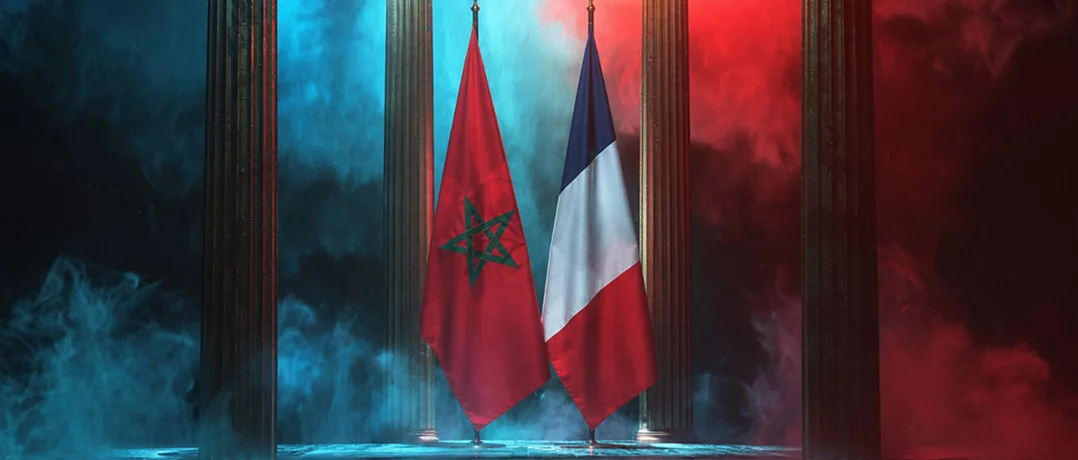
Morocco and France are preparing to enter a new chapter in one of North Africa’s most consequential bilateral relationships. During a forthcoming State Visit by King Mohamed VI to France, the 2 countries are expected to sign a historic strategic treaty that could fundamentally reshape their political, economic, and diplomatic partnership for decades to come.
The agreement, first proposed by French President Emmanuel Macron in 2024 and confirmed by Moroccan and French officials in 2026, goes well beyond previous bilateral accords. Rather than focusing on individual sectors, it seeks to establish a long-term strategic framework encompassing diplomacy, investment, security, regional cooperation, and shared geopolitical priorities.
To understand the significance of this treaty, The Beiruter spoke with Professor of education science at the university in Rabat and international political analyst, Dr. Mohamed Chtatou.
From a post-colonial relationship to a new strategic framework
According to Dr. Mohamed Chtatou, the treaty represents a historic turning point because it seeks to replace the framework that has governed Moroccan-French relations since the 1955 La Celle-Saint-Cloud Agreement, negotiated on the eve of Morocco’s independence.
He explains that for nearly 70 years, bilateral relations evolved within a post-colonial framework that many viewed as reflecting an unequal balance of influence. The forthcoming treaty, by contrast, aims to establish a relationship based on sovereign equality and long-term strategic coordination.
This treaty seeks to close the chapter opened by the 1955 La Celle-Saint-Cloud Agreement and replace a post-colonial framework with a relationship based on sovereign equality.
Unlike the 22 sectoral agreements signed during President Emmanuel Macron’s visit to Rabat in 2024, which focused on infrastructure, energy, transportation, and investment, the new accord introduces a comprehensive 30-year roadmap inspired by landmark European treaties, such as the 1963 Élysée Treaty between France and Germany and the 2021 Quirinal Treaty between France and Italy.
A central innovation, Chtatou notes, is the creation of a permanent joint commission composed of 12 members responsible for overseeing bilateral cooperation and protecting the partnership from changes in government or political leadership.
Perhaps most importantly, the treaty formally incorporates France’s recognition of Morocco’s sovereignty over the Sahara as one of its foundational principles, making it the first strategic agreement of this level that France has concluded with a non-European partner.
Western Sahara: The turning point in bilateral relations
Dr. Chtatou argues that France’s evolving position on Western Sahara became the decisive factor that transformed Moroccan-French relations over the past 2 years.
For many years, Paris maintained what he describes as a carefully balanced position between Morocco and Algeria, seeking to preserve relations with both countries while avoiding explicit recognition of Morocco’s sovereignty claims.
That approach changed progressively. The first major shift came in July 2024, when President Emmanuel Macron informed King Mohamed VI that France considered Morocco’s Autonomy Plan the only credible basis for resolving the dispute. Although welcomed in Rabat, that position still stopped short of an unequivocal recognition of Moroccan sovereignty.
The following 2 years witnessed a much deeper evolution. French officials increasingly affirmed that the future of the territory falls under Moroccan sovereignty while anchoring their position in United Nations Security Council (UNSC) Resolution 2797 (2025). Paris also expanded its diplomatic and consular presence in Morocco’s southern provinces and intensified official visits and development cooperation in the region.
According to Chtatou, these developments were not isolated diplomatic gestures. Rather, they fundamentally reshaped bilateral relations because Morocco had made recognition of its sovereignty over the Sahara the principal benchmark by which it evaluates international partnerships.
Recognition of Morocco’s sovereignty over the Sahara has become the benchmark by which Rabat evaluates the credibility of its international partnerships.
As France’s position became clearer, negotiations on the strategic treaty accelerated, demonstrating the close connection between the Sahara issue and broader political, economic, and security cooperation.
Political, economic, and strategic implications
Chtatou believes the treaty represents a significant political upgrade in Morocco’s relationship with France. Rather than treating Rabat as simply another traditional partner, the agreement formally recognizes Morocco as France’s principal strategic partner outside Europe while embedding support for Morocco’s autonomy initiative within a permanent institutional framework rather than a temporary political position.
Morocco is moving from the status of a traditional partner to that of a sovereign strategic partner whose priority is formally recognized by France.
Economically, the roadmap reportedly envisages investments worth approximately €10 billion over the next 3 decades. Cooperation is expected to expand across the automotive, railway, defense manufacturing, maritime transport, renewable energy, and industrial sectors; where French companies already maintain a significant presence. At the same time, Morocco intends to preserve its broader strategy of diversifying international partnerships, ensuring closer ties with France do not come at the expense of growing cooperation with the United States (U.S.), Gulf countries, or other global partners.
Closer cooperation with France does not mean Morocco intends to abandon its openness to other global partners, particularly the English-speaking world and emerging economies.
Strategically, Chtatou argues that the treaty reflects France’s broader effort to redefine its role in Africa following the decline of its influence across the Sahel. Rather than attempting a direct return to the region, Paris increasingly sees Morocco as a trusted gateway to Africa through Rabat’s extensive diplomatic, commercial, and financial networks.
For Morocco, the agreement strengthens its ambitions to serve as a bridge between Europe and Africa while reinforcing initiatives such as the Atlantic Initiative for the Sahel States. Nevertheless, Chtatou cautions that France’s closer alignment with Morocco may further complicate its already strained relationship with Algeria, particularly as Paris increasingly prioritizes Rabat within its Maghreb policy.
A partnership built for the long term
Although official statements describe the treaty as the beginning of a new era, Chtatou believes its long-term success will depend on implementation rather than symbolism.
He notes that the agreement is deliberately designed to outlast Macron’s presidency through permanent institutions and a 30-year strategic vision. Nevertheless, future political changes in France, Morocco’s commitment to preserving its strategic autonomy, and growing competition from other international powers (including the U.S., China, Russia, and Gulf countries) will all influence how effectively the partnership develops.
Hence, the agreement has the potential to redefine bilateral relations between France and Morocco. Whether this ambitious vision ultimately succeeds, however, will depend not only on political commitment in Rabat and Paris but also on how both countries navigate an increasingly competitive international environment over the coming decades.
-
-

-
The Beiruter
-
