



How Lebanon's ancient art of preservation turns summer's abundance into winter's comfort, and why village festivals are keeping it alive.
Mouneh the living pantry

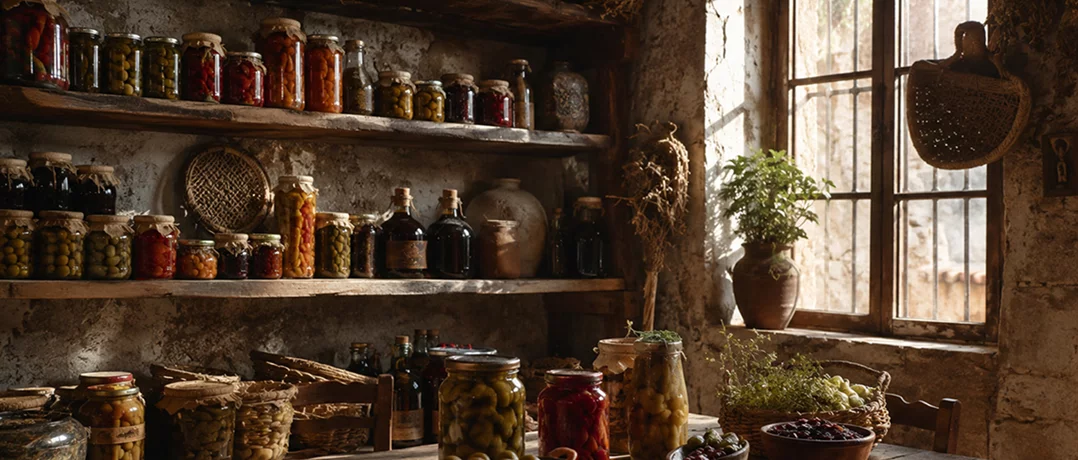
In a world dominated by global brands and endless consumer choices, one tradition continues to hold its place in almost every Lebanese home: mouneh. Mouneh is the the traditional Levantine practice of preserving seasonal harvests, like fruits, vegetables, herbs, and dairy, at their peak ripeness.
For many Lebanese, whether at home or abroad, no shopping list feels complete without jars of homemade olive oil, thyme, jams, pickles, or makdous. Every year, families set aside part of their budget, and often precious suitcase space, to stock up on these homemade staples, choosing them over heavily marketed products because they offer something no brand can replicate: the taste of home.
What began as a way to preserve food for the winter has evolved into something far greater. Mouneh has become a symbol of identity, memory, and belonging, one that continues to connect generations of Lebanese to their villages, their families, and the country they call home.
The festivals that keep the tradition alive
What began as rural survival became something richer over time. Families and neighbors gathered during harvest season to prepare large quantities of preserves together, turning the effort into a communal ritual that tied communities to one another and to the land.
Across Lebanon's mountain villages, summer festivals have become essential to mouneh's survival. They give producers, most of them women who have been making these preserves for decades, a direct path to buyers who understand what they are looking at. Sellers stack their stands with glass jars catching the light: amber jams, violet pickles, dark molasses, pale green oil. For many of these women, the festivals represent a meaningful source of income that validates the months of labor behind each jar. For buyers, no commercial alternative comes close. The transparency and rootedness re precisely what mass-produced goods cannot replicate, no matter how their labels are designed.
The lineup is wide. Some of the produce include mrabbeh el-teen, fig jam cooked with anise; kabis el-lift, pickled turnips; banadoura mjaffafe, sun-dried tomatoes left on rooftops for days; dibs el-kharrob, dense carob molasses simmered for hours; olives in lemon and thyme; kamar el-deen, apricot paste sheets dried flat and eaten through winter. Recipes pass from grandmother to mother to daughter through the gesture of tasting the brine, knowing by eye when things are ready.
"I Never Missed a Season"- Souhayla Hanna, Hasroun
Souhayla Hanna has been selling fruit mouneh from her home in Hasroun, a village in the North, for longer than most of her neighbors can remember. She is known for her dried figs and apples, her apricot paste, and confiture that draws people back year after year.
She recalls being just eight years old when she first helped prepare jam. While she was too young to be trusted near the fire, she was allowed to stir the pot and observe the process closely. “In Hasroun, you grow up learning this before you learn anything else about cooking,” she says. She is now 67 years old.
During the late summer harvest season, her days begin before sunrise. By six in the morning, she is already checking the trees, picking and sorting fruit before birds reach them. By eight, the jam is simmering on the stove. The process demands patience and attention; readiness is determined not by a timer but by experience. “You know when it’s ready by the way it falls off the spoon,” she explains.
That emphasis on instinct is central to her craft. According to Souhayla, a good jam begins with fruit that is ripe but not overly soft. Sugar is added gradually, and she avoids commercial pectin altogether. Properly cooked with the right fruit, she says, the jam sets naturally. Asked for her recipe, she laughs. “There is no recipe. There is only patience and the right fruit.”
What began as a household tradition eventually became a small business. About fifteen years ago, municipal organizers encouraged her to bring her products to a local summer festival. She arrived with a selection of homemade preserves and sold out before noon. Since then, she has participated every season. While the additional income is welcome, she says the real reward comes from seeing visitors connect with familiar flavors. “They taste my fruits and fall in love. They always ask for more.”
Among this year’s creations, the one she treasures most is a small batch of rose confiture made from blooms picked at dawn. Only twelve jars were produced. “Some things I keep small to keep them special,” she says, echoing a lesson passed down by her mother: “Better ten perfect jars than a hundred ordinary ones.”
“The locals always support me, no matter what,” she says. “Even in difficult years, they come, they buy, they encourage you to continue.” But she is candid about the instability behind the celebration. Some years are strong, she explains, while others are shaped by Lebanon’s wider economic and political situation, which directly affects how much people are able to spend. Still, she notes that the festival remains a constant source of community support, especially from residents who return each summer or never left the village at all.
Her most popular product, she says, is her confiture. “People come back asking for it specifically. Some even wait for it every year,” she adds. Beyond commerce, the festival is also a social space. Traditional music plays through the streets as families walk between stalls, tasting and chatting, turning the event into something closer to a village gathering than a market. “There is music, there is life,” Souhayla says. “For a few days, we are all extremely happy.”
A tradition that lives on
Mouneh remains both practical and joyful, the satisfaction of a jar that seals, the happiness of opening in December something that still tastes like August. In villages like Hasroun, as long as women like Souhayla set up their tables on summer mornings, the tradition will be shared, tasted, and carried forward.
-
-

-
The Beiruter
-
