



Advances from vinyl and cassette tapes to smartphones and streaming changed not only how music is distributed, but how it is experienced.
Music in the streaming age

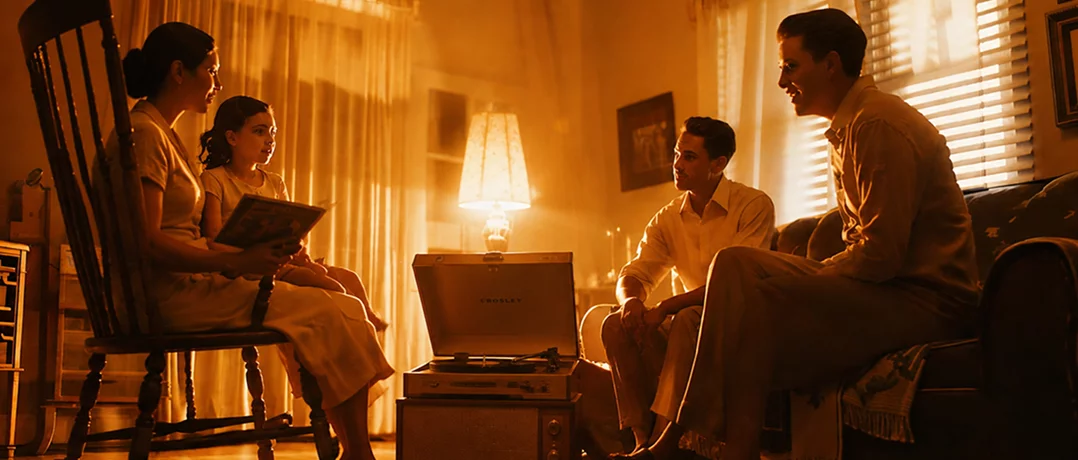
Listening to music was once an exercise in patience. In an age when mobile phones have become vast libraries that accompany listeners everywhere, it is easy to forget that only a few decades ago the act of listening itself was shaped by anticipation and scarcity rather than the immediacy and endless choice that define it today.
Today, however, a single tap on a streaming platform allows listeners to move from a song by Fairuz to the latest global release or even a live concert broadcasted from another continent. How, then, did the world move from the age of radio and records to the era of digital streaming and music on demand?
From shared ritual to personal soundtrack
During the first half of the twentieth century, the spread of radio broadcasting ushered in a new era in the way people listened to music. Before that, listening had been largely confined to live performances, phonographs, and gramophone records whose circulation remained limited. As radio expanded, musical performances began to be transmitted live over the airwaves, with artists performing in studios alongside orchestras while audiences listened in real time.
Broadcasters such as the British BBC, which began transmissions in 1922, played a central role in shaping this new experience by bringing music directly into millions of homes. Radio became a gateway to the wider world of music and entertainment, and families gathered around their sets, both at home and in cafés, to follow concerts and musical programs in what was unmistakably a communal experience.
As sound recording technologies advanced during the mid-twentieth century, vinyl records became more widespread, allowing songs to be recorded in advance and replayed outside the framework of live broadcasts. Companies such as Columbia Records and the American electronics and recording company RCA played a major role in expanding the reach of recorded music. In the Arab world, recordings by iconic artists including Umm Kulthum and Mohammed Abdel Wahab became fixtures of domestic life, and listening shifted from waiting for songs to be broadcast to deciding when and how to hear them.
The cassette revolution
The 1950s and 1960s brought another important development in the history of music consumption: the rise of transistor-powered portable radios. No longer confined to the living room, it could accompany listeners into streets, cars, and public spaces, giving the experience a more personal dimension without entirely losing its communal character.
Although reel-to-reel tape recorders, which offered superior sound quality, appeared around the same time, their use remained largely limited to studios and professional settings. The real revolution came with the cassette tape in the 1960s and their widespread adoption during the 1970s and 1980s. Cassettes fundamentally altered the listener's relationship with music, making it possible to record songs and replay them whenever desired rather than waiting for radio broadcasts.
In the Arab world, cassette tapes democratized musical culture on an unprecedented scale, spreading through homes, cars, and shops. For many listeners, the era was defined by the familiar ritual of rushing to press the record button when a favorite song came on the radio, only to have the announcer's voice introducing the artist and title unintentionally preserved on the tape. With the introduction of the Walkman in the late 1970s, listening became an increasingly private experience, accompanied by headphones during commutes and walks.
Television simultaneously acquired growing importance in reconfiguring the public's relationship with music. Performances were no longer simply heard but watched as well. In Lebanon, programs such as Studio El Fan, which rose to prominence in the 1970s, introduced a new generation of performers, while similar musical shows and televised concerts flourished throughout the Arab world. Major performances became collective cultural events watched in homes and cafés, reinforcing music's place as a shared social experience.
The 1990s brought the compact disc, which represented a significant leap in sound quality compared with cassette tapes. Portable devices such as the Discman made this new format easier to carry, ushering in an era of greater audio fidelity while gradually reducing problems associated with tape deterioration and distortion.
The digital transformation
The greatest shift, however, arrived with the digital revolution of the late 1990s. The MP3 format enabled music to be compressed and distributed online, while Napster, a pioneering file-sharing service launched in 1999, transformed the circulation of songs by allowing users to exchange files directly over the internet. This development sparked a global debate over copyright and the future of the music industry. Two years later, the introduction of the iPod, with its famous slogan "1,000 songs in your pocket," cemented the transition toward portable digital music.
The rise of smartphones and streaming platforms completed the transition. Listeners no longer relied on broadcasters, record stores, or physical media to determine what they heard. They chose the song, the moment, and even the mood. Recommendation algorithms also became part of the experience, suggesting music tailored to individual tastes, as though each listener possessed a private radio station of their own.
The transformation changed not only the technologies through which music is consumed, but also the way people relate to it. Songs once associated with scarcity and anticipation became available on demand, with millions of tracks accessible within seconds. Between the age of radio, which gathered families around a single voice, and the era of digital platforms, which offer each listener a personalized soundtrack, the history of modern music mirrors a broader social shift: from the collective to the individual, from waiting to immediacy, and from scarcity to choice.
-
-

-
The Beiruter
-
