



Nabil Fahmy: The Arab League’s new chief
Nabil Fahmy: The Arab League’s new chief
Nabil Fahmy’s appointment as Arab League Secretary-General highlights his diplomatic background, the League’s structural limits, internal divisions, and the prospects for strengthening Arab cooperation.
By The Beiruter | March 30, 2026

Reading time: 4 min
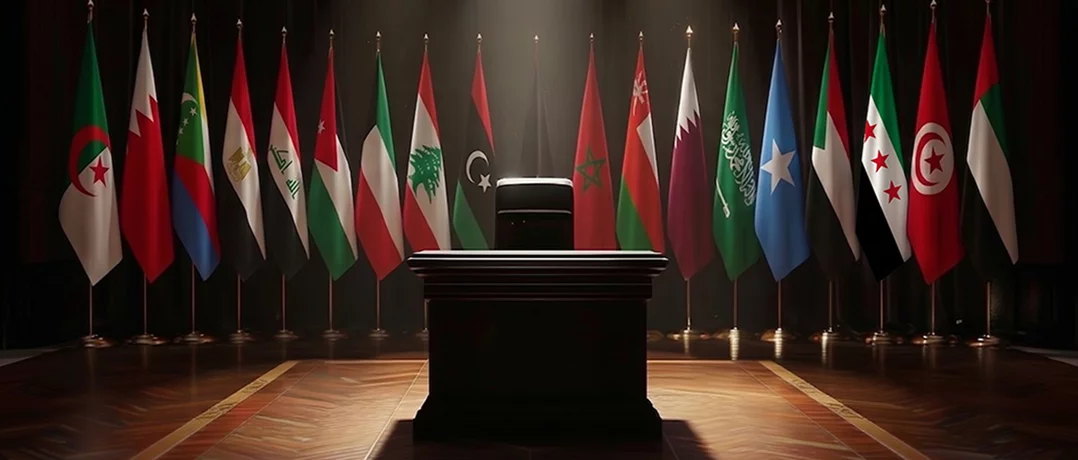
The appointment of Nabil Fahmy as Secretary-General of the League of Arab States (LAS) marks a significant moment for a body long challenged by internal divisions and limited effectiveness. Taking office in July 2026, Fahmy succeeds Ahmed Aboul Gheit at a time of acute regional instability, including open regional involving the United States (US), Israel, Iran, and its Arab neighbors.
His nomination, backed unanimously by Arab foreign ministers, reflects both continuity in leadership traditions and cautious optimism about the League’s future role in regional diplomacy.
Nabil Fahmy: Diplomatic background and profile
Nabil Fahmy brings to the position decades of diplomatic experience and intellectual engagement in international relations. A former Egyptian foreign minister (2013-2014), he also served as Egypt’s ambassador to Washington for nearly a decade, gaining extensive exposure to global power politics and multilateral diplomacy. Beyond government service, Fahmy founded the School of Global Affairs and Public Policy at the American University in Cairo (AUC), underscoring his commitment to policy-oriented scholarship.
Fahmy’s diplomatic legacy is further reinforced by his family background. He is the son of Ismail Fahmy, who resigned in protest against President Anwar Sadat’s historic 1977 visit to Jerusalem. This legacy reflects a tradition of principled diplomacy, which may shape Fahmy’s approach to contentious regional issues.
His appointment also follows the longstanding convention that Egypt, as host of the Arab League headquarters in Cairo, nominates the Secretary-General. While this tradition ensures continuity, it has also drawn criticism for limiting broader regional representation within the organization’s leadership.
The Arab League: Structure and historical context
Founded in 1945, the Arab League was envisioned as a platform for coordination among Arab states on political, economic, and cultural matters. Its founding members (including Egypt, Iraq, Lebanon, Saudi Arabia, and Syria) sought to foster unity while preserving national sovereignty. However, this balance has proven difficult to maintain.
The League operates on a consensus-oriented model, where decisions are binding only on states that accept them. While this structure respects sovereignty, it has significantly constrained the organization’s ability to enforce collective decisions or implement unified policies. As a result, the Arab League has often been criticized as ineffective, particularly during major regional crises.
Historically, the League has experienced moments of both relevance and marginalization. It played a symbolic role in promoting the Palestinian cause, notably through the 2002 Arab Peace Initiative in Beirut. Yet it struggled to present unified positions during pivotal conflicts such as the Gulf Wars, the Iraq War in 2003, and the Syrian Civil War (2011-2024). These inconsistencies have reinforced perceptions of institutional weakness.
Enduring divisions within the Arab League
The challenges facing the Arab League are deeply rooted in political, ideological, and strategic divisions among its member states. During the Cold War (1945-1990), rivalries emerged between pro-Western monarchies and revolutionary republics aligned with the Soviet Union. These tensions evolved into broader geopolitical competitions, including leadership rivalries between regional powers such as Egypt, Iraq, and Saudi Arabia.
In recent decades, new fault lines have emerged. Sectarian tensions (particularly between Sunni-majority states and those aligned with Shiite Iran) have complicated efforts at collective action. The rise of non-state actors, including militant groups and proxy forces, has further fragmented regional security dynamics.
Additionally, diverging foreign policy priorities have weakened cohesion. The normalization of relations with Israel by several Arab states under the Abraham Accords created significant divisions within the League, particularly regarding the centrality of the Palestinian issue. Similarly, differing positions on conflicts in Syria, Libya, and Yemen have highlighted the absence of a unified strategic vision.
Institutional limitations compound these divisions. The League lacks enforcement mechanisms, and its reliance on voluntary compliance often results in inaction. Even when consensus is reached, implementation frequently depends on the political will of individual states rather than collective commitment.
Can Fahmy bridge the divide?
Nabil Fahmy assumes leadership at a time when the need for effective regional coordination is more urgent than ever. The ongoing war, coupled with broader geopolitical shifts, demand a more cohesive Arab response and a collective defense approach. Fahmy’s diplomatic experience and academic background may equip him with the tools to navigate these complexities.
One potential strength lies in his pragmatic approach to foreign policy. Fahmy has previously stressed the importance of balanced diplomacy, dialogue, and institutional reform. If translated into practice, this could help revitalize the League’s role as a forum for conflict resolution and strategic coordination.
However, structural constraints remain significant. The Secretary-General’s authority is inherently limited, and meaningful change would require the political will of member states to prioritize collective interests over national agendas; given that states remain the primary actor in international relations. Without such commitment, even the most capable leadership may struggle to achieve tangible results.
Fahmy’s success may therefore depend on incremental progress rather than sweeping transformation. Strengthening mechanisms for consultation, enhancing economic cooperation, and promoting confidence-building measures among member states could represent realistic starting points.
Whether Fahmy can help guide this transition remains uncertain, but his appointment offers a renewed opportunity to confront the enduring question of Arab collective action in a rapidly changing regional landscape.
-
-

-
The Beiruter
-
