



Nelson Mandela’s enduring legacy offers timeless lessons on leadership, reconciliation, justice, and democratic institution-building that resonate far beyond South Africa.
Nelson Mandela’s enduring legacy beyond South Africa
Nelson Mandela’s enduring legacy beyond South Africa
By The Beiruter | July 18, 2026

Reading time: 5 min
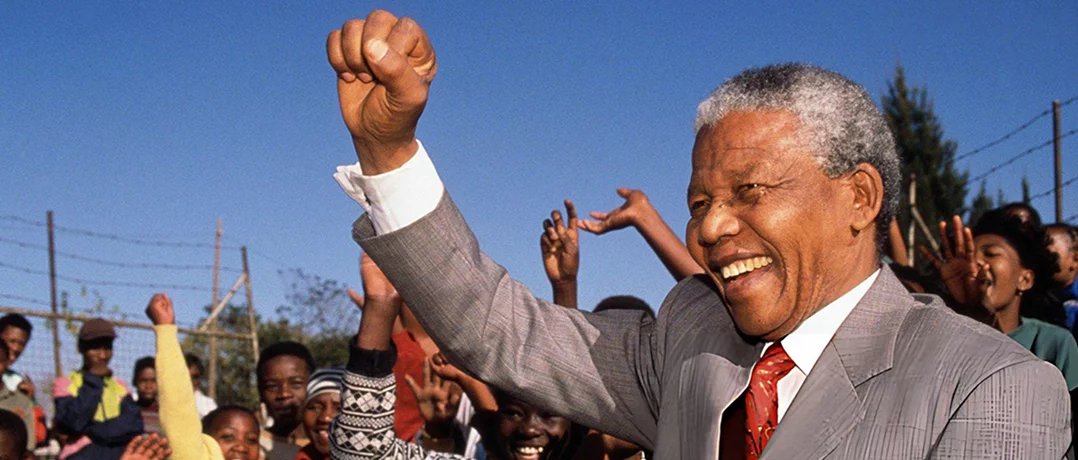
Few political figures of the 20th century have left a legacy as profound and enduring as Nelson Mandela. Across the world, his name has become associated with courage, equality, reconciliation, and the unwavering defense of human dignity.
Mandela devoted his life to dismantling South Africa’s apartheid system; a legal framework that institutionalized racial discrimination and denied the Black majority their fundamental rights. After spending 27 years in prison for his political beliefs, he emerged not seeking revenge but reconciliation, ultimately becoming South Africa’s first democratically elected Black president in 1994.
The apartheid system: Institutionalized racial discrimination
Apartheid became official government policy after South Africa’s National Party came to power in 1948. Although racial discrimination had existed for decades under colonial and white minority rule, apartheid transformed segregation into a comprehensive legal system.
The Black majority was denied political representation, stripped of voting rights, and forced to live in designated townships separated from white communities. Strict laws regulated where Black South Africans could live, work, study, and travel. They were required to carry passbooks to enter areas reserved for whites, while interracial marriages and relationships were prohibited. Economic opportunities, education, healthcare, and land ownership were also determined by race.
The apartheid regime relied heavily on state repression. Peaceful demonstrations were often met with arrests, imprisonment, censorship, and lethal force. The 1960 Sharpeville Massacre, in which police killed dozens of peaceful protesters, became a turning point that convinced many activists that peaceful resistance alone was no longer sufficient.
International condemnation gradually intensified through sanctions, diplomatic isolation, cultural boycotts, and growing global solidarity with South Africa’s liberation movement.
Nelson Mandela’s journey from activist to president
Born on 18 July 1918 in the village of Mvezo, Mandela belonged to the Thembu royal family of the Xhosa people. Although his birth name was Rolihlahla, his teacher later assigned him the English name “Nelson;” a common colonial practice at the time.
His political awakening began while studying at the University of Fort Hare, where he participated in student protests against institutional injustice. After moving to Johannesburg, he studied law, became one of South Africa’s first Black lawyers, and joined the African National Congress (ANC) in 1943.
Initially committed to nonviolent civil disobedience inspired by leaders such as Mahatma Gandhi, Mandela helped organize campaigns against discriminatory laws. However, after years of brutal government repression and the banning of peaceful political activity, he concluded that armed resistance had become unavoidable. In 1961, he helped establish Umkhonto we Sizwe (“Spear of the Nation”), the ANC’s armed wing.
Mandela was arrested in 1962 and later sentenced to life imprisonment during the Rivonia Trial. His courtroom speech became one of history’s defining declarations of human rights, concluding with the famous words that the ideal of a democratic society
“is an ideal for which I am prepared to die.”
For the next 27 years, Mandela remained imprisoned, spending 18 of those years on Robben Island under harsh conditions. Yet imprisonment elevated rather than diminished his international stature. The global “Free Nelson Mandela” campaign transformed him into the world’s most recognizable political prisoner and a symbol of resistance against injustice.
Reconciliation instead of revenge
When Mandela was released in February 1990, many feared South Africa would descend into racial civil war. Instead, Mandela chose negotiation over retaliation.
Working alongside the last white-minority president of South Africa President F.W. de Klerk, Mandela led complex negotiations that dismantled apartheid and paved the way for South Africa’s first multiracial democratic elections in 1994. Both leaders received the Nobel Peace Prize in 1993 for their efforts.
As president, Mandela focused not only on political transformation but also on national healing. Rather than pursuing widespread retribution against former apartheid officials, he established the Truth and Reconciliation Commission, allowing victims to tell their stories while encouraging accountability and restorative justice.
His decision to embrace reconciliation became one of his greatest achievements. Mandela understood that defeating oppression required more than replacing one ruling group with another; it demanded the construction of democratic institutions founded on equality, constitutionalism, and respect for human rights.
Mandela’s enduring global legacy
Mandela retired after serving a single presidential term in 1999, reinforcing the importance of democratic succession rather than personal rule. Even after leaving office, he remained active in promoting peace, combating HIV/AIDS, supporting children’s welfare, and mediating international conflicts.
Today, Mandela is remembered not only as South Africa’s first Black president but as a global moral leader whose influence extends far beyond politics. The United Nations (UN) recognizes his birthday, 18 July, as Nelson Mandela International Day, encouraging people worldwide to dedicate time to community service.
His legacy rests on several enduring principles: equality before the law, respect for human dignity, forgiveness without forgetting injustice, and the belief that democratic institutions must protect all citizens regardless of race, ethnicity, or religion.
What can Lebanon learn from Nelson Mandela?
Although Lebanon’s challenges differ significantly from South Africa’s racial apartheid system, Mandela’s experience offers valuable lessons for a country struggling with sectarian divisions, institutional weakness, and recurring political crises.
First, Mandela demonstrated that lasting stability requires strong national institutions. Lebanon’s long-term stability similarly depends on strengthening state institutions that serve citizens equally, regardless of religious affiliation.
Second, Mandela proved that reconciliation cannot succeed without justice. Lebanon continues to grapple with unresolved historical grievances, from the Lebanese war to more recent socio-political tensions and conflict, that have often remained politically sensitive. A credible commitment to accountability and truth-telling can strengthen public trust and national unity, while simultaneously healing persistent wounds.
Finally, Mandela’s greatest lesson concerns leadership itself. His humility, willingness to compromise, and commitment to democratic governance remind societies that genuine leadership is measured not by personal power but by the ability to unite divided communities around shared values and institutions.
To conclude, Mandela’s story transcends the history of South Africa. It is a universal lesson about leadership, sacrifice, and the difficult transition from oppression to democracy. His life demonstrates that sustainable peace cannot be achieved solely through political victories, but through justice, inclusion, and the willingness to build institutions that serve all citizens equally. These principles remain relevant to countries facing deep social and political divisions, including Lebanon.
-
-

-
The Beiruter
-
