



Lebanon is preparing to reconnect with the Eastern Mediterranean through a new ferry network linking Jounieh to Cyprus, Syria, and Turkey, marking the country’s first major regional maritime transport revival in nearly two decades.
New maritime routes to link Jounieh with Cyprus, Syria, and Turkey
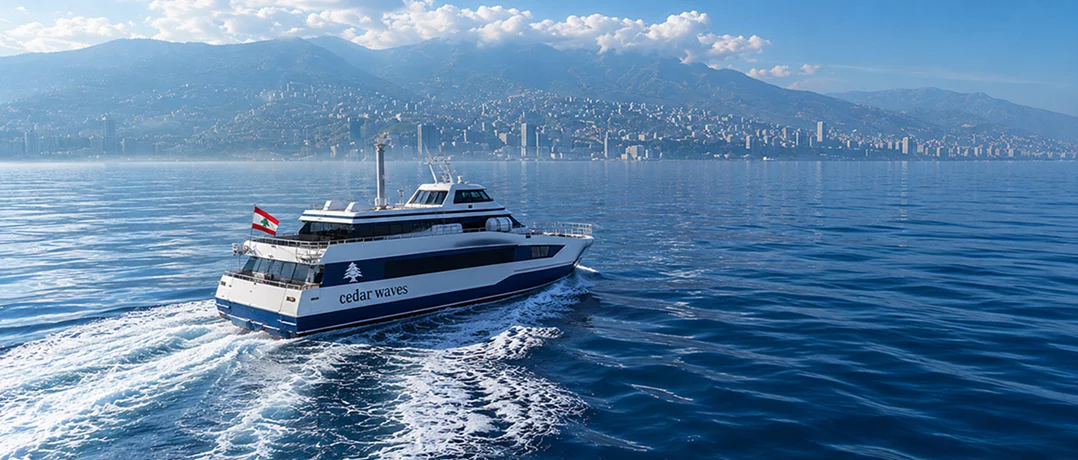
After nearly two decades of isolation at sea, Lebanon is preparing to reopen its maritime horizon. A new ferry service departing from the Port of Jounieh, the scenic coastal city just fifteen kilometers north of Beirut, is set to reconnect Lebanon with three regional neighbors: Cyprus, Syria, and Turkey. The launch marks one of the most significant developments in Lebanese transport infrastructure in recent memory, and a hopeful signal for a country long battered by economic and political turmoil. The service will be operated with the inaugural departure now confirmed for 9 June 2026.
The routes
The core route will connect the port of Jounieh with the port of Larnaca in Cyprus, with a journey time of around three hours and fifty-nine minutes. Departures from Lebanon will run every Wednesday and Sunday at 9 am, and every Friday at 10 am, arriving in Larnaca shortly before 1 pm Beirut time. Beyond Cyprus, the network will also link Latakia in Syria and Mersin in Turkey, turning the service into a broader maritime transport hub for the Eastern Mediterranean region.
The proposed Jounieh–Mersin crossing is expected to take around five and a half hours, while connections to Latakia in Syria would take approximately three hours. Together, the four destinations form a web of sea connections that Lebanon has not had access to in the regular, scheduled sense for close to two decades.
A long time coming
The project was originally conceived in 2021 by Neemat Frem, Member of Parliament and CEO of the INDEVCO Group. Frem's plan fulfills a long-standing vision of his father, the company's founder, to establish a direct maritime link between Lebanon and Europe through Cyprus. While the ferry line was initially envisioned as a strategic backup, especially in the event of conflict or a closure of Lebanon's main airport, it has since evolved into a broader ambition of easing pressure on air travel and offering a direct, reliable sea connection.
The road to launch was not smooth. The terminal infrastructure at Jounieh was only finalized in September 2025, making it commercially unfeasible to launch a seasonal service at that earlier stage. Authorities worked through months of security assessments, customs procedures, and port infrastructure upgrades before the green light was given.
Fares and the case for sailing
One of the most compelling aspects of the new service is pricing. Indicative one-way fares to Larnaca start at around €88 for a standard ticket, rising to €144 for a Plus option and €163 for a Lounge class. Sailings to Turkey cost roughly €153 to €255, while fares to Syria range from about €125 to €139 depending on the travel date.
These figures represent a significant drop from earlier projections. The fares are considerably lower than the initial estimates of €230 to €320 and could prove a competitive alternative to air travel over the summer season. For context, flights between Beirut and Larnaca frequently cost between €160 and €235 one way during peak periods. While a plane covers the distance in just thirty minutes, the ferry offers a four-hour scenic Mediterranean crossing with greater luggage flexibility and, for many travelers, a charm that air travel simply cannot match.
The significance
The strategic importance of this ferry link goes beyond leisure travel. As Lebanon's border with Israel remains firmly closed and travel through Syria has historically been complicated, most people have traveled in and out of the country by air via Beirut Airport. This over-reliance on a single gateway created serious vulnerabilities during periods of conflict. A reliable sea route through Jounieh, situated in a more sheltered part of the Lebanese coast, adds resilience to the country's international connectivity.
The ferry initiative is also expected to stimulate economic growth and tourism. With Cyprus receiving around five million tourists annually, the new line could encourage travelers to extend their itineraries with a visit to Lebanon. For Lebanese nationals, it opens an accessible corridor toward Europe at a time when such options are deeply valued.
The ferry service is expected to strengthen economic and cultural ties between Cyprus and Lebanon, a restoration of a connection that once existed but was lost to the pressures of history. For now, the focus is on getting the service running. If Lebanon can maintain a reliable schedule through the summer, the case for expanding routes and frequency will make itself.
-
-

-
The Beiruter
-
