



Lebanon’s coastline is home to a collection of islands, each carrying its
own history, landscape and ecological significance. From the northern islands
to El Zireh off Sidon, these lesser-known places reveal a different side of
Lebanon’s relationship with the sea.
Nine islands shaping Lebanon's coast
Nine islands shaping Lebanon's coast
By Yara Saliba | September 18, 2026

Reading time: 5 min
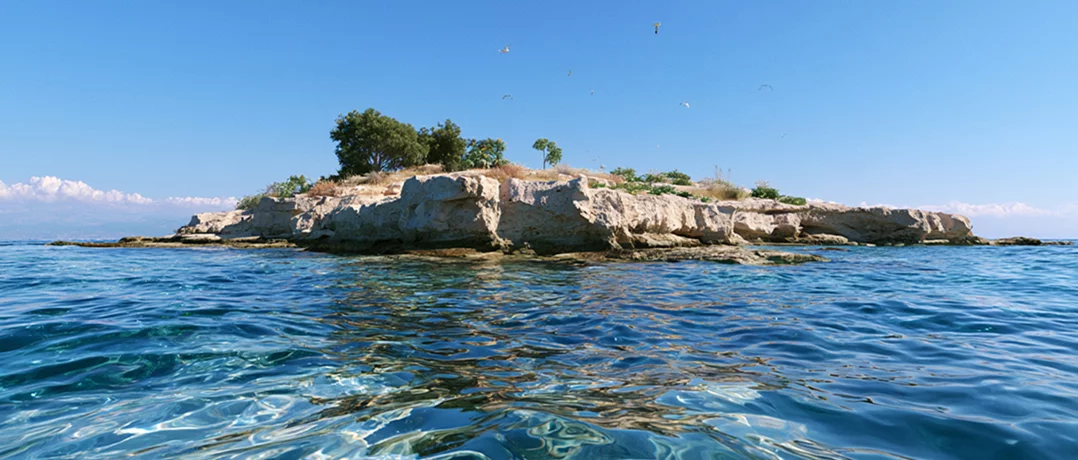
Lebanon may be known for its mountains, cities and historic sites, but its Mediterranean coast hides another side of the country: its islands.
Off the coast of El Mina in Tripoli lie nine islands, each with its own character, from the protected Palm Islands to smaller rocky islets used by fishermen and visitors. Farther south, El Zireh Island in Sidon stands as another reminder of Lebanon’s long relationship with the sea.
Among Lebanon’s northern islands, however, the Palm Islands stand out not only for their natural environment, but also for the way they have become part of Tripoli’s tourism experience.
Palm Island: nature, history and the sea
According to Lebanon’s Ministry of Environment, the Palm Islands Nature Reserve was established under Law No. 121 on March 9, 1992, and includes three main islands: Palm (Nakhil), Sanani and Ramkine (Fanar). The reserve lies approximately 5.5 kilometers northwest of Tripoli and includes surrounding marine waters. The Ministry describes the islands as an important habitat for wildlife, including endangered loggerhead turtles and migratory birds.
Palm Island, also known as Rabbit Island or Jazirat El Aranib, is the largest of the three. According to the Ministry’s material, the island contains a freshwater well, old salt-making areas and the remains of a church dating to the Crusader period.
During his interview with the Beiruter, tourist guide Samer AbdelHay said that one of the island’s main attractions is its landscape. He describes its beach as particularly distinctive for its light-colored sand, mixed with rocky areas. The island also offers visitors the possibility of swimming and spending the day by the sea, while boats can be hired for excursions around the islands.
Its name is also tied to the rabbits historically associated with the island. Abdelhay, said that rabbits were brought to the island during the French mandate and that people believe they are present there, although he noted that he had not personally seen them by recently.
But Palm Island is not simply a beach destination. Its protected status has helped preserve an ecosystem that is home to threatened wildlife. The Ministry notes that the islands are among Lebanon’s important breeding grounds for the endangered loggerhead turtle, while 156 species of migratory birds use the islands as a resting place. Its waters also contain fish, sea sponges and other marine life.
A closer look at Lebanon’s islands
While Palm is known for its sandy shores and natural features, Ramkine adds a distinct historical dimension to the reserve, with an old lighthouse that was restored to operate using solar energy, alongside underground galleries and cannon emplacements dating from the French Mandate period. Sanani, meanwhile, is largely characterized by its rocky landscape.
Beyond these three protected islands, El Mina is home to nine islands, forming a wider landscape along Tripoli’s coast. According to Abdelhay, these include Abdul Wahab Island, the closest to the mainland and accessible by a bridge; El Billan, named after a plant growing there and known for a small cavern on its western side; El Rmayleh, which has sandy beaches; El Ashak, also known as El Tenieh (the Second); El Telteh (the Third), described as flat and rocky; and El Rabha (the Fourth), also known as El Maatih (the Cut-Off), which Abdelhay described as the smallest and a place used by fishermen for docking.
Abdelhay also mentioned smaller islets to the Beiruter, known as Ghanquin, Al-Samneh and Al-Gharqa. He described some of these as close enough to one another to swim between, recalling that he himself used to swim from one island to another.
South of Tripoli, El Zireh Island in Sidon offers a different kind of island experience. Visit Saida describes it as a marine archaeological monument and the last remnant of the ancient city of Sidon. Underwater discoveries suggest that it served as an external port in ancient times, with archaeological evidence dating back more than 2,200 years.
From the sea to the city
For Abdelhay, Palm Island has long been part of Tripoli’s summer tourism, rather than a recent trend. He says the island has attracted visitors for years, while the growing availability of boat excursions has made trips there more organized. Located about 25 minutes from the mainland by boat, Palm Island can be visited by those who want to spend the day on the island or by visitors who simply swim around the surrounding waters from their boat.
The island can also turn a visit to Tripoli into a wider day of tourism. Abdelhay recalls groups who initially came for Palm Island but decided to add a tour of the city’s old quarters, historic sites and local food. For example, he guided many groups through the old city in the morning, followed by breakfast and a food tour, before they continued to the island in the afternoon.
This connection makes Palm Island more than a destination reached by boat. For visitors, it can become one part of a full Tripoli experience, linking the city’s history and food with its coastline and marine environment. At the same time, the island’s appeal depends on preserving the natural qualities that draw visitors in the first place. The reserve is protected by environmental regulations, and access is limited mainly to the summer season, while visits outside that period require permits for educational, research or official purposes.
Palm Island therefore represents a particular kind of tourism for Tripoli: one where the sea, wildlife, history and the city itself are not separate attractions, but parts of the same journey.
-
-

-
Yara SalibaJunior Writer/Translator
-
