



From Gandhi to global movements, non-violence has emerged as a powerful force capable of defeating injustice and reshaping societies as well as history itself.
Non-violence: The power to change history

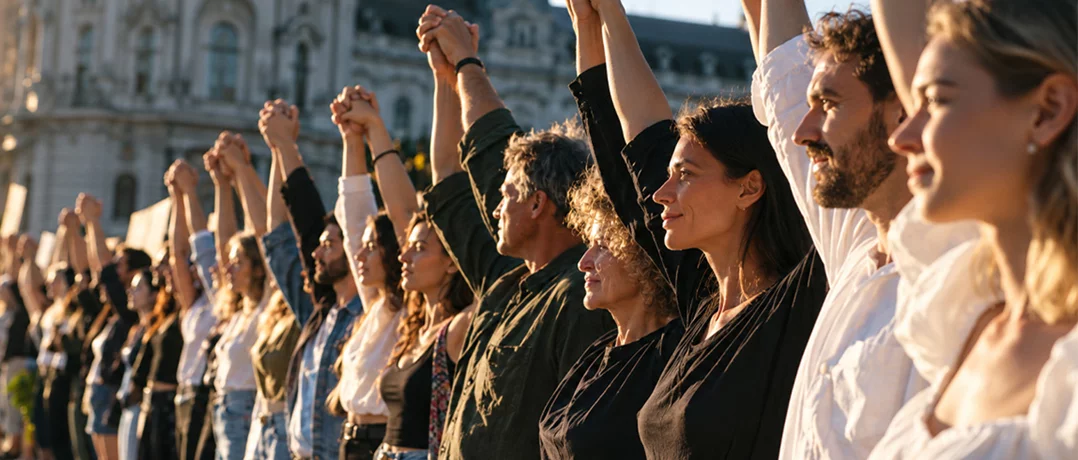
Every year on 2 October, the international community observes the International Day of Non-Violence, a United Nations (U.N.) observance dedicated to promoting peace, tolerance, and the peaceful resolution of conflicts. The date coincides with the birth anniversary of Mahatma Gandhi, the leader of India’s independence movement whose philosophy of non-violence transformed political activism and inspired some of the most influential civil rights and democratic movements of the twentieth century.
The day was established by the United Nations General Assembly (U.N.G.A.) through Resolution A/RES/61/271, adopted on 15 June 2007 by more than 140 U.N. member states, to disseminate the message, significance, and relevance of non-violence through education and public awareness.
At a time when armed conflicts, political polarization, terrorism, hate speech, and social divisions continue to affect societies around the world, the observance serves as a reminder that lasting peace depends not only on ending violence but also on promoting justice, dialogue, and respect for human rights and dignity.
Mahatma Gandhi’s legacy and the philosophy of non-violence
Mohandas Karamchand Gandhi (1869-1948), widely known as Mahatma Gandhi, remains one of history’s most influential advocates of peaceful resistance. During India’s struggle for independence from British colonial rule, Gandhi developed a philosophy based on the principles of Ahimsa (non-violence) and Satyagraha (“holding firmly to truth” or “truth-force”). It combined moral conviction with political strategy, demonstrating that organized, non-violent action could successfully challenge and eventually overcome injustice and oppression.
One of the defining examples of Gandhi’s strategy was the Salt March of 1930, during which he led thousands of Indians on a 240-mile march to challenge Britain’s monopoly on salt production. The campaign became an international symbol of peaceful civil disobedience and demonstrated that disciplined non-violent resistance could mobilize millions and influence global public opinion.
For Gandhi, the methods used to pursue justice were as important as the goals themselves; similar to the relationship between jus ad bellum (refers to the conditions under which States may resort to war or to the use of armed force in general) and jus in bello (regulates the conduct of parties engaged in an armed conflict) in International Humanitarian Law (I.H.L.). He thus believed that
Just means lead to just ends.
The transformative power of non-violence
Non-violence is often misunderstood as passivity or the avoidance of conflict. In reality, it is an active and strategic method of pursuing political and social change without resorting to physical violence. More than a moral principle, it has proven to be one of history’s most effective tools for advancing justice, expanding rights, and achieving lasting political transformation.
Political scientist Professor Gene Sharp, one of the leading scholars on non-violent resistance, defined non-violent action as a technique through which people reject both submission and violence while continuing to engage in political struggle. Rather than avoiding conflict or injustice, non-violent action confronts it through organized collective action that withdraws public cooperation from oppressive systems.
A central principle of non-violent resistance is that governments and institutions ultimately depend on the cooperation and consent of the people they govern. By peacefully refusing to cooperate with unjust policies or authorities, citizens can weaken the legitimacy and effectiveness of oppressive systems without resorting to force.
Accordingly, non-violent action generally falls into three broad categories: protest and persuasion, non-cooperation, and non-violent intervention. These methods have been successfully employed by democratic, civil rights, labor, environmental, and human rights movements across the world.
The effectiveness of non-violence lies not only in its methods but also in its ability to produce sustainable change. Unlike violence, which often fuels cycles of retaliation and deepens divisions, peaceful resistance creates opportunities for dialogue, negotiation, and reconciliation. Rather than seeking to destroy opponents, it aims to transform relationships, address injustice, and preserve human dignity.
Non-violent movements also encourage broad public participation. Because they do not rely on weapons or military strength, they allow people from all backgrounds (including women, students, workers, older persons, and persons with disabilities) to participate actively in campaigns for justice and reform. Their inclusive, disciplined, and peaceful nature often strengthens its legitimacy, shifts public opinion, and attracts wider domestic and international support than violent uprisings.
Moreover, non-violence strengthens democratic societies by protecting the rights to peaceful assembly, freedom of expression, and civic participation, while promoting tolerance, respect for diversity, and constructive dialogue.
The principles of non-violence also contribute directly to the U.N.’s vision of sustainable peace and align closely with Sustainable Development Goal (S.D.G.) 16, which promotes peaceful and inclusive societies, access to justice, and effective, accountable institutions.
When peaceful movements changed the course of history
History offers numerous examples demonstrating that peaceful resistance can produce profound political and social change. Among them are the following:
The Cedar Revolution (Lebanon, 2005):
The Cedar Revolution on 14 March 2005 was a largely peaceful mass movement that emerged after the assassination of former Prime Minister (P.M.) Rafic Hariri on 14 February 2005. Through demonstrations and civil mobilization, hundreds of thousands of Lebanese demanded freedom, sovereignty, accountability, and the withdrawal of Syrian forces after their 15-year occupation of Lebanon. The movement ultimately contributed to Syria’s military withdrawal from Lebanon in April 2005.
The Velvet Revolution (Czechoslovakia, 1989):
Student demonstrations, peaceful protests, and nationwide strikes led to the collapse of communist rule in Czechoslovakia after more than 40 years. The transition to democracy occurred with remarkably little violence, earning the movement its name.
The American Civil Rights Movement (United States, 1950s-1960s):
Inspired by Gandhi’s philosophy, Martin Luther King Jr. (1929-1968) led peaceful campaigns against racial segregation through marches, boycotts, sit-ins, and acts of civil disobedience in the United States (U.S.). Landmark events such as the 1963 March on Washington and the Selma to Montgomery marches contributed to the adoption of the Civil Rights Act of 1964 and the Voting Rights Act of 1965, transforming the legal landscape of the U.S. During his acceptance speech, on the occasion of the award of the Nobel Peace Prize in Oslo on 10 December 1964, Martin Luther King Jr. asserted that
Civilization and violence are antithetical concepts.
Educating for peace: Building a future beyond violence
The U.N. increasingly recognizes that preventing violence requires addressing its root causes through education. Global Citizenship Education (G.C.E.D.) seeks to equip learners with the knowledge, values, and skills needed to respect diversity, uphold human rights, resolve disputes peacefully, and participate responsibly in civic life.
The importance of education was reinforced by the U.N. Secretary-General’s Plan of Action to Prevent Violent Extremism (2015) and United Nations Security Council (U.N.S.C.) Resolutions 2178 (2014) and 2250 (2015), which highlighted quality education, youth participation, intercultural dialogue, and inclusive societies as essential tools for preventing violence and radicalization.
Within this context, the International Day of Non-Violence is more than a commemoration of Mahatma Gandhi’s birth. It reminds the world that choosing peace is not a sign of weakness, but one of the strongest foundations for achieving lasting peace, justice, development, and meaningful political change. In an age marked by persistent conflicts, rising polarization, and growing intolerance, the principles of non-violence remain as relevant as ever.
-
-

-
Anthony ChamounResearcher/WriterFocusing on Political Science and International Affairs.
-
