



Disputes over nuclear inspections have emerged as one of the major challenges to renewed U.S.-Iran diplomacy and future nonproliferation efforts.
Nuclear inspection dispute challenges U.S.-Iran talks
Nuclear inspection dispute challenges U.S.-Iran talks
By The Beiruter | June 25, 2026

Reading time: 5 min
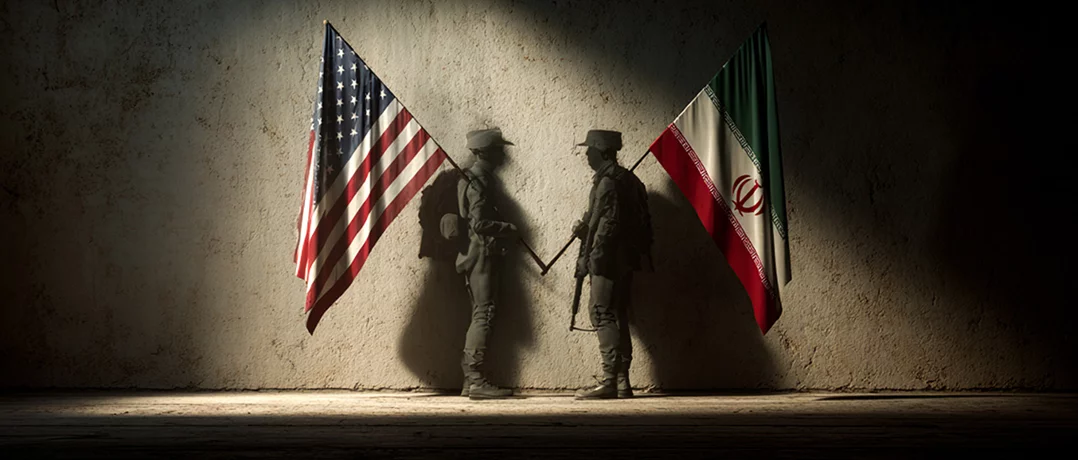
Conflicting statements have emerged between the United States (U.S.) and Iran regarding the scope and timing of international nuclear inspections, exposing the fragility of the recently announced framework understanding.
While U.S. President Donald Trump has maintained that Tehran agreed to extensive and long-term inspections of its nuclear facilities, Iranian officials have firmly denied making any such commitment. The disagreement has become one of the major public tests of the temporary understanding reached following negotiations in Switzerland, where both sides launched a 60-day technical process intended to pave the way toward a broader agreement after months of regional conflict.
Nuclear verification emerges as the first major dispute
The most immediate point of contention concerns the future role of inspectors from the International Atomic Energy Agency (IAEA); the United Nations (U.N.) body responsible for monitoring nuclear activities worldwide. President Trump asserted that Iran had agreed to allow inspections of its nuclear facilities “at the highest level” and for an indefinite period, presenting the arrangement as a significant diplomatic achievement.
According to the U.S. administration, restoring comprehensive international monitoring is an essential condition for continuing negotiations. Trump warned that further diplomatic engagement would not proceed without Iranian compliance, adding that IAEA inspectors would return to Iranian facilities “at the appropriate time.” At the same time, President Trump indicated that the future inspection mechanism could extend beyond the IAEA itself. He suggested that American nuclear experts could participate alongside IAEA inspectors in examining Iranian facilities, signaling Washington’s intention to establish an even more comprehensive verification regime than existed under previous agreements.
Iran, however, has rejected this characterization. Foreign Ministry spokesman Esmail Baghaei stated that Tehran neither met with IAEA Director General Rafael Grossi during the Swiss talks nor agreed to any new inspection arrangements. He stressed that Iran remains committed only to its existing obligations under the Nuclear Non-Proliferation Treaty (NPT) and its safeguards agreement with the IAEA.
Iranian officials also argued that the discussions in Switzerland did not yet enter substantive negotiations over the nuclear program itself. Indeed, Baghaei and Deputy Foreign Minister Kazem Gharibabadi reiterated that Iran remains committed only to its existing obligations under the NPT and its safeguards agreement with the IAEA, insisting that broader political and economic commitments must first be implemented before nuclear issues are addressed in detail. In this sense, Iran has hardened its public position by making clear that the return of international inspectors remains conditional upon reaching a comprehensive agreement with the U.S.
Grossi confident inspections will resume
Despite the contradictory positions expressed by Washington and Tehran, IAEA Director General Rafael Grossi has expressed confidence that inspections of Iranian nuclear facilities will ultimately resume.
Speaking during a visit to Japan’s Fukushima Daiichi nuclear power plant, Grossi stated that IAEA inspectors would return to Iranian uranium enrichment facilities once the necessary implementation arrangements are completed.
“Whether it happens the day after tomorrow, next week, or in 10 days, it will happen,” Grossi told reporters, stressing that inspections remain an essential component of the temporary U.S.-Iran understanding.
Grossi’s comments suggest that, despite the political disagreements, the IAEA expects verification activities to resume once diplomatic negotiations move beyond the current preliminary stage.
Lessons from the 2015 nuclear agreement
The renewed dispute inevitably recalls the Joint Comprehensive Plan of Action (JCPOA), the landmark nuclear agreement reached in 2015 between Iran and 6 world powers.
The JCPOA imposed strict limits on Iran’s uranium enrichment activities, reduced its stockpile of enriched uranium, and subjected key nuclear facilities to continuous monitoring by the IAEA. In return, Iran received relief from international economic sanctions.
Supporters argued that the agreement significantly extended the time Iran would need to produce enough fissile material for a nuclear weapon, commonly referred to as “breakout time.” Critics, however, maintained that the deal contained important weaknesses, including sunset clauses that allowed certain restrictions to expire over time and limitations on inspectors’ access to military sites suspected of hosting undeclared nuclear activities.
The U.S. withdrew from the agreement during Trump’s first administration in 2018, arguing that the deal failed to permanently prevent Iran from acquiring nuclear weapons and did not address its ballistic missile program or regional activities. Iran subsequently expanded uranium enrichment, reduced cooperation with international inspectors, and gradually moved beyond several of the agreement’s nuclear limits.
The current negotiations therefore seek not only to restore confidence but also to establish a verification regime that both sides consider more effective than the mechanisms established under the JCPOA.
Preventing nuclear weapon development remains the core objective
Despite disagreements over implementation, both Washington and Tehran publicly maintain that diplomacy remains preferable to military confrontation.
For the U.S. and its allies, the overriding objective is to ensure that Iran cannot develop a nuclear weapon. American officials have repeatedly argued that rigorous inspections, timely access to nuclear sites, and continuous monitoring are indispensable components of any future agreement.
Senior members of the Trump administration have asserted that any new arrangement must provide inspectors with broader authority than existed under the 2015 accord, including the ability to conduct inspections whenever and wherever concerns arise. Officials argue that effective verification, rather than declarations alone, is necessary to reassure the international community that Iran’s nuclear activities remain peaceful. It is also worth noting that among the primary reasons behind Trump’s decision to withdraw from the 2015 nuclear deal was the fact that Tehran’s regional proxies and ballistic missiles program were not properly addressed. Since coming to office, the president has been keen to incorporate the two aforementioned issues in any comprehensive agreement. Therefore, the U.S. administration has, in principle, raised its demands beyond mere inspection measures to include Iran’s regional role and influence.
Iran continues to insist that its nuclear program serves only civilian purposes, including electricity generation, medical research, and scientific development. Iranian leaders have consistently denied seeking nuclear weapons while demanding recognition of what they describe as their legitimate right to peaceful nuclear technology under international law.
To conclude, the disagreement over nuclear inspections has become the first significant test of the emerging U.S.-Iran diplomatic process. Beyond the immediate dispute lies a broader question that has defined international diplomacy for years: how to guarantee that Iran cannot acquire nuclear weapons while preserving a negotiated path that avoids renewed regional conflict.
The experience of the 2015 nuclear agreement continues to shape both sides’ positions. Washington is seeking stronger verification measures to address perceived shortcomings in the earlier deal, while Tehran remains cautious about accepting additional obligations before receiving tangible economic benefits. Whether negotiators can bridge these differences over inspections and verification will largely determine the success or failure of the current diplomatic effort and the prospects for long-term nuclear stability in the Middle East.
-
-

-
The Beiruter
-
