

A firsthand account revisits the Rhosus and the unresolved questions behind the Beirut port blast.
Offers to sell and smuggle nitrates during the detention period
Offers to sell and smuggle nitrates during the detention period
By Mohammad El Baba | December 20, 2025

Reading time: 4 min
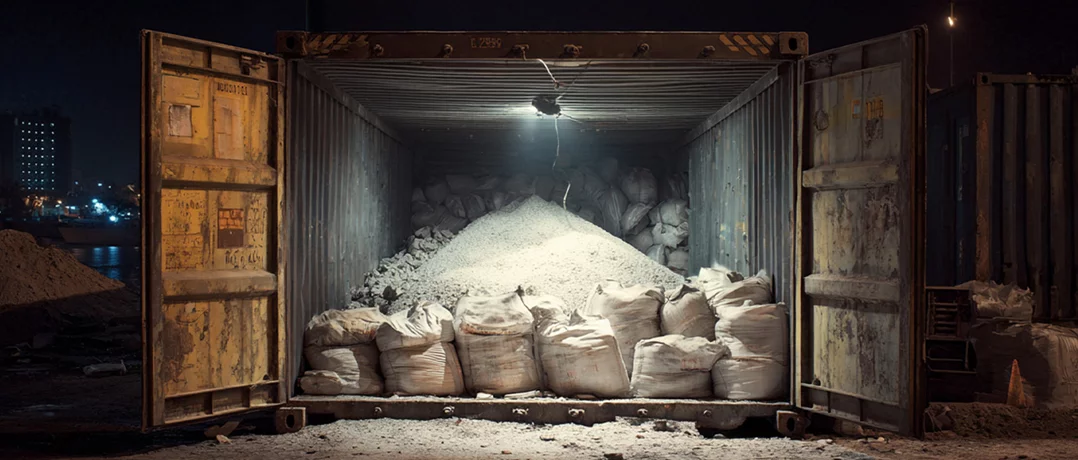
More than 5 years after the Beirut port explosion, the story of the ship Rhosus and the ammonium nitrate cargo it was carrying remains shrouded in uncertainty, caught between suspended investigations and lost responsibilities.
In this context, Russian captain Boris Borkoshev, commander of the Rhosus on its final voyage, provides Nidaa Al-Watan with a detailed testimony, revealing what happened from the moment he boarded the vessel, through the ambiguous maritime journey, to the crew’s forced detention in the Port of Beirut for an entire year; without a clear judicial decision and with no legal or diplomatic protection.
Borkoshev says the first thing that raised his suspicions was the complete change of the ship’s crew. “Usually, one or two people are replaced, but for the entire crew to be changed is abnormal. Even stranger was the presence of two captains on the ship at the same time.”
When he asked about the reason, he was told that the previous crew had refused to sail to Mozambique, but he says he was not convinced by that explanation.
Why greece? And why Beirut?
According to Borkoshev, the shipowner requested heading to Greece to refuel and resupply. “We could have done that in Turkey, but instead we went to Greece and stayed there for more than 10 days. Later it became clear that the shipowner was trying to find a way to secure the full financial cost of sailing to Mozambique.”
At that stage, the idea was proposed to carry out a transport order for equipment from Beirut to the port of Aqaba in Jordan. “We agreed, thereby securing the full required costs, despite the fact that the route to Mozambique is very dangerous due to pirates in the Red Sea.”
Upon arriving in Beirut, the crew encountered problems loading the equipment. When this proved impossible, the shipowner requested that the vessel leave the port immediately for Cyprus. “But the maritime agent informed me that a judicial decision had been issued to detain the ship due to financial disputes with its owner. At first, I thought it was related to port fees, but over time it became clear that the matter was much bigger.”
A year of detention
Borkoshev describes the period following the seizure as “a vortex of exhaustion and suffering” that lasted a full year. He says: “We asked to leave the Port of Beirut more than once. I even thought of escaping to the nearest Syrian port, and the shipowner supported the idea, but I was unable to carry it out.”
The captain categorically denies all speculation suggesting that Lebanon was the destination of the nitrate shipment, stressing that the ship was not intended to unload in Beirut.
Offers to sell and smuggle the nitrate
Borkoshev reveals that there were serious attempts to sell the ammonium nitrate cargo during the detention period. “The captain of a ship called Zarina, a refrigerated vessel for transporting meat that was docked next to us and undergoing renovation, an Egyptian national, offered to transfer bags of nitrate using the ship’s crane onto trucks, then cover them with renovation waste and debris. I immediately refused.”
He also recounts that a Lebanese businessman, the owner of the Zarina, according to his account, offered to purchase the entire cargo and settle the judicial file, on the condition that the shipment be transferred to another vessel at sea, after which the Rhosus would be taken to Turkey and sold as scrap. “However, the shipowner, Igor Grechushkin, rejected the offer and refused to sign any waiver of the ship and its cargo.”
No responsibility on the crew
Borkoshev emphasizes that the crew bears no responsibility for what happened. “We were detained on the ship for a full year without any attention, neither from the Lebanese authorities nor from the Russian authorities. Even the Russian consul informed me that President Vladimir Putin was not prepared to carry out an evacuation operation for us, despite my sending him several messages.”
Fears of being a ‘scapegoat’
The Russian captain speaks of arrest warrants issued against him via Interpol. He confirms that he received an offer, through a journalist, to go to Lebanon and meet the judge under the sponsorship of a senior Lebanese officer. “I was ready to do so, but after consulting my lawyer in Lebanon and the Russian consul in Beirut, they advised me not to come, because I would be imprisoned immediately and the responsibility would be pinned on me; I might be used as a scapegoat.”
He adds clearly: “I am ready to meet the judge via video conference, or for the judge to come to Russia, but no one has contacted me.”
Gross negligence at the port
Borkoshev confirms that the crew’s departure took place without any official procedures. “No one from Customs or the port authority came to inspect the ship or its cargo. Only General Security personnel helped us reach the airport.”
He adds that a month before their departure, individuals accompanied by members of Lebanese Customs came, inspected the nitrate, took samples, and photographed the cargo, then left without any further communication with him.
An open mystery
Borkoshev describes the shipowner, Igor Grechushkin, as “a mysterious person… I do not know what his plan was. What I understood is that the ship was lured to Beirut to pressure him into settling debts. I later heard in the media that he was detained in Bulgaria. The strangest thing is that no one from the company that owned the cargo contacted us throughout that entire period.”
A final message
The captain concludes with a direct message to the Lebanese people: “We were merely passing through Lebanon, and Beirut was not the destination of the cargo as far as I knew. I am ready to appear before the judiciary, provided there is fairness and humanity in how we are treated.”
