



A cautious diplomatic opening between Iran and the United States is emerging as Oman prepares to host talks on nuclear tensions and regional security.
Oman to host US-Iran talks amid rising tensions
Oman to host US-Iran talks amid rising tensions
By The Beiruter | February 04, 2026

Reading time: 6 min
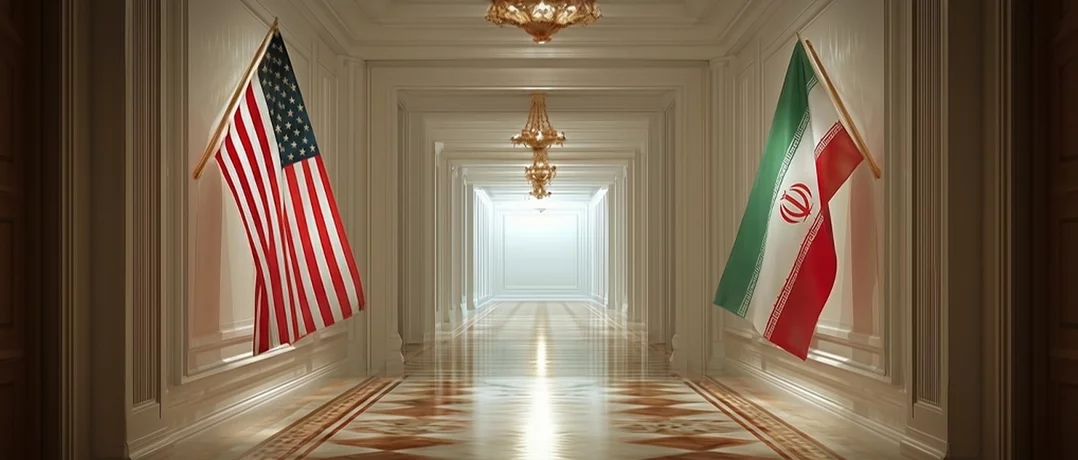
A cautious diplomatic opening appears to be forming between Iran and the United States (US), even as military tensions remain high across the Gulf region. With regional stability, global energy security, and nuclear non-proliferation all at stake, Oman is emerging as a key mediator by hosting anticipated negotiations between Washington and Tehran.
The planned talks reflect renewed international efforts to contain escalation between the two rivals, whose decades-long hostility continues to shape the security landscape of the Middle East. As both sides enter discussions burdened by deep mistrust and competing strategic priorities, the outcome of these negotiations could significantly influence the trajectory of regional diplomacy and conflict in the months ahead.
Tehran’s renewed diplomatic overture
Iranian President Masoud Pezeshkian has indicated that Tehran is prepared to pursue what he described as “fair and equitable negotiations” with Washington. His directive to Foreign Minister (FM) Abbas Araghchi to engage in negotiations come at a time of escalating security incidents, including the US military’s downing of an Iranian drone and a separate maritime confrontation involving Tehran’s Islamic Revolutionary Guard Corps (IRGC) and a U.S.-flagged commercial vessel. It also signals a notable shift in Iran’s diplomatic posture. For weeks, the Iranian leadership had focused largely on internal unrest following a violent crackdown on nationwide protests. Pezeshkian’s statement suggests that Iranian authorities now view diplomatic engagement as an essential tool for easing external pressure and stabilizing domestic conditions.
The move appears particularly significant because it likely reflects approval from Supreme Leader Ayatollah Ali Khamenei, whose backing is critical for any major foreign policy initiative. Historically, Iran’s leadership has remained divided over direct talks with Washington. Reformist figures, including Pezeshkian, have generally supported diplomatic engagement, while conservative factions (namely the IRGC) have expressed deep skepticism. Statements from senior security adviser Ali Shamkhani suggest that negotiations could initially take place through indirect channels before potentially evolving into direct discussions if progress is achieved.
Iran continues to insist that negotiations should focus primarily on its nuclear program. Tehran maintains that it does not seek to develop nuclear weapons, although its uranium enrichment activities (reaching up to 60% purity) have raised significant international concerns due to their proximity to weapons-grade levels.
Trump’s 4 non-negotiable demands
Despite signs of diplomatic willingness, major obstacles remain. Reports indicate that US President Donald Trump intends to maintain 4 core demands that Washington is unlikely to compromise on during negotiations. According to informed sources, these demands include requiring Iran to:
- completely abandon its nuclear program.
- halt the development of ballistic missile capabilities.
- end financial and military support for regional proxy groups (namely Hezbollah, Hamas, Houthis and Iraqi factions).
- address the government’s handling of recent domestic protests.
The reports suggest that Trump seeks to build both domestic and international legitimacy for his approach toward Iran, potentially strengthening political support should military options be considered in the future. This was partially achieved as the European Union (EU) listed the IRGC as a “terrorist” organization, enhancing the pretexts and incentives for any future strike. Nevertheless, US officials have stressed that diplomacy remains the preferred path, but they have simultaneously reiterated that alternative measures remain under consideration if negotiations fail.
Iran, however, is reportedly seeking to narrow the scope of talks exclusively to nuclear issues. This fundamental disagreement over the negotiation agenda could complicate diplomatic progress and undermine efforts by regional mediators attempting to facilitate dialogue.
US military response and maritime confrontations
While diplomatic efforts continue, military tensions remain prevalent. US Central Command (CENTCOM) confirmed that an F-35C fighter jet operating from the USS Abraham Lincoln shot down an Iranian Shahed-139 drone after it approached the aircraft carrier in international waters. US officials stated that the drone’s flight pattern and failure to respond to warning measures were interpreted as a potential threat to naval personnel and assets.
In a separate incident occurring hours later, IRGC fast boats, supported by a surveillance drone, reportedly approached the US-flagged tanker Stena Imperative in the Strait of Hormuz. US naval forces responded by dispatching the guided missile destroyer USS McFaul, which escorted the vessel and prevented further escalation. Iranian sources later suggested that the ship had entered Iranian territorial waters without proper authorization, illustrating the sharply conflicting narratives that often surround such encounters.
These incidents underscore the strategic importance of the Strait of Hormuz, through which a substantial portion of global oil supplies transit. Even limited confrontations in this narrow waterway carry the potential to disrupt international energy markets and escalate regional instability.
Venue disputes and Oman’s mediation significance
Several regional actors are attempting to mediate the diplomatic process. While Türkiye was initially proposed as the host for negotiations, Iran has reportedly requested that talks be held in Oman. The US has signaled willingness to relocate the negotiations, which are now expected to take place in Oman this upcoming Friday, 6 February 2026.
It is worth noting that Oman has long been recognized as a discreet and trusted mediator in international diplomacy, especially between the US and Iran, owing to its neutral foreign policy and good relations with both sides. Historically, Omani back‑channel talks helped lead to the 2015 Iran nuclear deal, officially the Joint Comprehensive Plan of Action (JCPOA). Additionally, in 2025 Muscat hosted indirect negotiations between American and Iranian representatives on Tehran’s nuclear program, with Oman’s Foreign Minister Badr al‑Busaidi shuttling between the parties to bridge divides. Regional and Arab states have publicly praised Oman’s facilitation efforts, highlighting its contribution to regional security and stability.
Tehran often prefers Muscat as a venue because Oman’s geographic proximity and low‑profile diplomacy reduce external pressures, making it easier to pursue dialogue. By maintaining open channels with both Washington and Tehran, Oman continues to play a key role in easing tensions and supporting sustained diplomatic engagement.
Persistent risks of escalation
White House Press Secretary Karoline Leavitt confirmed that discussions remain scheduled and emphasized that diplomacy requires cooperation from both sides. She also reiterated that President Trump continues to keep military options available if diplomatic efforts collapse.
Indeed, many remain divided over the likelihood of a breakthrough. This is true given that both sides continue to maintain rigid negotiating positions, reducing the prospects for a comprehensive agreement without significant concessions. During US Special Envoy Steve Witkoff’s visit to Israel, the latter’s Prime Minister (PM) Benjamin Netanyahu believed that “Iran has repeatedly proven it cannot be trusted to meet its commitments.”
It must be noted that during the 12-Day War between Iran and both the US and Israel in 2025, negotiations between Washington and Tehran were also taking place, prompting Iranian leaders to criticize America’s military escalation as a betrayal to diplomacy. If these past events reveal anything, it is that despite diplomatic engagement, military options could advance at any time.
In conclusion, the simultaneous pursuit of diplomacy and military preparedness reflects the complex and often contradictory nature of US-Iran relations. President Pezeshkian’s openness to negotiations offers a potential path toward de-escalation, but deep-rooted mistrust, competing strategic interests, and ongoing security incidents continue to threaten progress. As regional mediators attempt to bridge the widening gaps between Washington and Tehran, the upcoming negotiations may prove decisive in determining whether diplomacy can prevail over confrontation in one of the world’s most volatile geopolitical arenas.
-
-

-
The Beiruter
-
