



Hezbollah’s missile attack on Israel has drawn Lebanon into a renewed war, triggering mass displacement and Israeli strikes while reigniting a defining national question over who holds the authority to decide war and peace in the country.
Once again, Hezbollah drags Lebanon into war

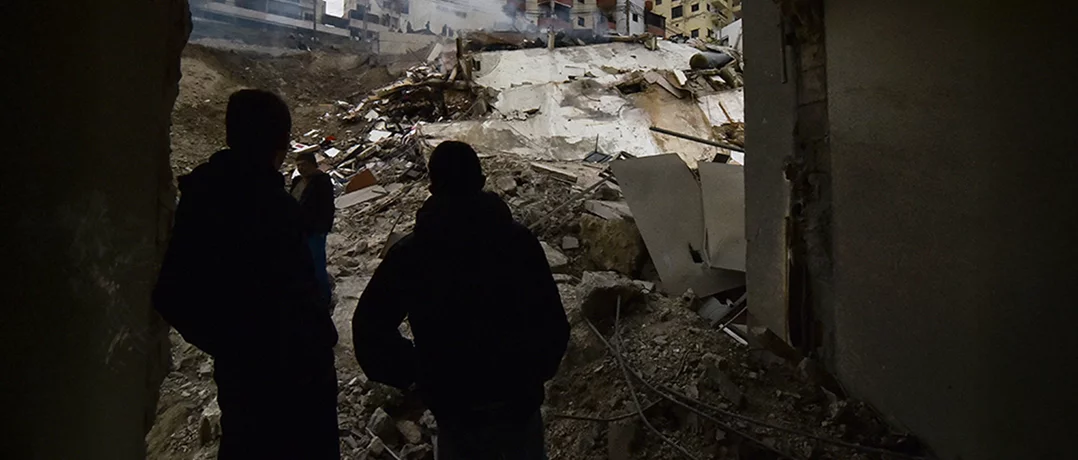
Lebanon has once again been dragged into a devastating confrontation, as rockets launched by Hezbollah toward Israel triggered a sweeping Israeli military response and plunged the country into renewed instability.
Within hours, hundreds of thousands of civilians were displaced from the south, the Bekaa Valley, and Beirut’s southern suburbs. At the heart of the unfolding drama lies a fundamental question: who decides war and peace in Lebanon?
Hezbollah opens support front war for Iran
In the early hours of 2 March 2026, Hezbollah announced it had launched missiles and drones toward Israeli targets, including what it described as a military missile defense facility south of Haifa. The group framed the attack as retaliation for the killing of Iran’s Supreme Leader, Ali Khamenei, and in response to what it called repeated Israeli violations and assassinations.
This marked the first large-scale cross-border attack since the 2023-2024 armed conflict between Israel and Hezbollah. The Israel Defense Forces (IDF) reported that several projectiles fell in open areas and that at least 1 was intercepted by its air force, with no injuries initially reported on the Israeli side.
However, the symbolic and political weight of the operation far exceeded its immediate military impact. By launching rockets from southern Lebanon, Hezbollah effectively overrode the Lebanese state’s declared policy of distancing the country from regional confrontations. The attack was widely viewed as aligning Lebanon directly with Iran’s regional struggle against Israel; at a moment of heightened tensions in the Middle East.
For many Lebanese, this renewed escalation reinforced a long-standing concern: that decisions of war are being made outside state institutions, exposing the country to devastating consequences without national consensus.
Israeli response and threats: “A heavy price”
Israel’s reaction was swift and forceful. A wave of airstrikes targeted Hezbollah positions across Lebanon, including Beirut’s southern suburbs, the south of the Litani River, and areas in the Bekaa Valley. More than a dozen explosions rocked the capital in what observers described as the most intense strikes since the 2024 conflict. These strikes reportedly targeted Hezbollah Member of Parliament (MP) and Vice Secretary-General Mohammad Raad, while news of his fate remain uncertain.
Israeli Chief of Staff Eyal Zamir declared that Hezbollah had “opened a campaign against Israel” and would bear full responsibility for the escalation. He warned that the fighting could last “many days,” signaling the possibility of a sustained military campaign rather than a limited exchange.
The Israeli military issued evacuation warnings to residents in 53 villages in southern and eastern Lebanon, an unprecedented number, urging them to move at least 1 kilometer away from their homes. Airstrikes reportedly targeted towns including Qana, Hadatha, Qlaileh, Tayr Falsayeh, Siddiqine, and areas near the Litani River. The message from Tel Aviv was unambiguous: Hezbollah’s actions would carry a heavy cost.
The human toll was intense. Lebanon’s Ministry of Public Health (MoPH) announced an initial death toll of 31 people, with 149 injured. 20 fatalities were recorded in Beirut’s southern suburbs, and 11 in the south. As the bombardment intensified, civilians fled in masses, as roads from the south and the Bekaa toward Beirut and Mount Lebanon became gridlocked. Schools in the capital opened their doors to displaced families, while emergency hotlines were activated by the Prime Minister’s office.
This scene of displacement evoked painful memories of previous wars. Entire neighborhoods emptied overnight, as families sought safety wherever they could find it. The specter of widespread destruction loomed, with Israeli officials explicitly warning that further escalation was imminent.
The Council of Ministers meeting: A decisive turn?
In response to mounting pressure and the gravity of the situation, an emergency session of the Council of Ministers was convened at Baabda Presidential Palace. The outcome marked a significant moment in Lebanon’s political trajectory.
Following deliberations, the Cabinet issued a statement explicitly condemning the rocket launches attributed to Hezbollah. It affirmed that the decision of war and peace rests exclusively with the Lebanese State and declared that any military or security activity conducted outside legitimate state institutions is unlawful.
Most strikingly, the Council of Ministers announced a decision to prohibit any military or security operations by Hezbollah and to require the group to surrender its weapons to the Lebanese State, restricting its role to political activity within constitutional and legal frameworks. The statement further instructed the Lebanese Armed Forces (LAF) to implement previously presented plans to assert state control north of the Litani River and to prevent unauthorized military actions from Lebanese territory.
Additionally, the government called upon international guarantors of the 2024 ceasefire to secure Israel’s commitment to halt attacks on Lebanese territory, while reaffirming Lebanon’s adherence to international resolutions. Diplomatic efforts were to be intensified through the Ministry of Foreign Affairs and Emigrants (MOFA), and emergency relief measures were assigned to the Ministry of Social Affairs and other state agencies.
This declaration, if implemented, would represent a watershed in Lebanon’s long-running debate over arms outside state control. Yet its practical enforcement remains uncertain. Hezbollah retains substantial military capabilities and political representation, and past efforts to curtail its armed status have faltered amid internal divisions and regional pressures.
From here, Lebanon stands at a defining crossroads. The latest exchange of fire has once again exposed the tension between state sovereignty and non-state military power. The human cost (displacement, casualties, and fear) has already been severe, and the prospect of prolonged conflict looms large.
The Council of Ministers’ decision signals an attempt to reassert constitutional authority at a critical juncture. Whether this marks the beginning of a new chapter in which the Lebanese State consolidates exclusive control over security decisions, or whether it becomes another unfulfilled declaration, will shape the country’s future.
In the coming days, Lebanon will race against time to prevent further devastation. The stakes extend beyond the battlefield: they touch on the very nature of the state, its legitimacy, and its capacity to protect its citizens. The question is no longer only what Hezbollah has done, but whether the Lebanese State can reclaim the power to decide its own destiny.
-
-

-
The Beiruter
-
