Operation Litani was the culmination of a decade-long erosion of Lebanese sovereignty that transformed South Lebanon into a central battleground of the Arab-Israeli conflict.


Operation Litani was the culmination of a decade-long erosion of Lebanese sovereignty that transformed South Lebanon into a central battleground of the Arab-Israeli conflict.

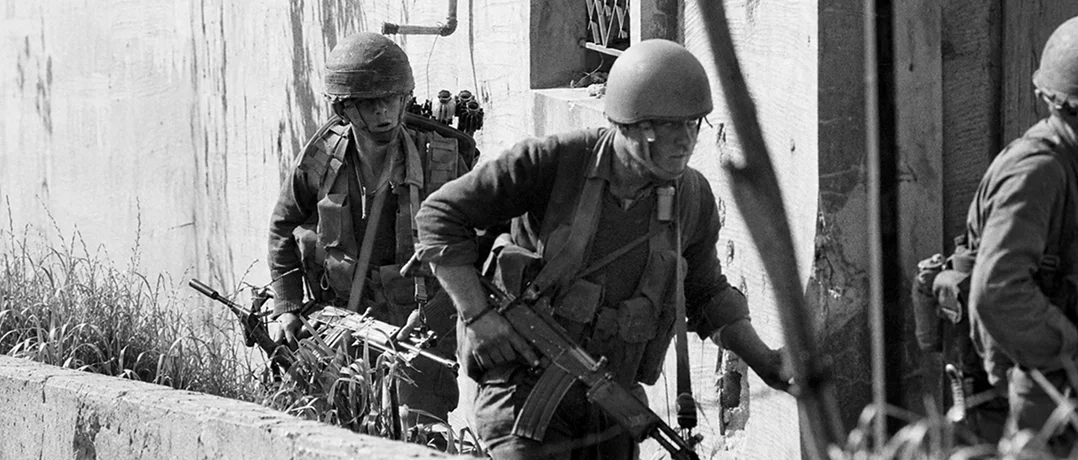
When Israeli forces crossed the Lebanese border on 14 March 1978 and launched Operation Litani, the invasion was officially presented as a response to Palestinian attacks originating from South Lebanon. The declared objective was to push Palestinian fighters north of the Litani River and establish a security buffer protecting Israel's northern settlements. Yet the invasion cannot be understood solely through the events of March 1978. By then, Lebanon had already become one of the principal battlegrounds of the Arab-Israeli conflict. The gradual erosion of state sovereignty, the militarization of the Palestinian presence following the Cairo Agreement, and the emergence of armed organizations operating beyond state authority had transformed Lebanese territory into a frontline of a regional conflict increasingly beyond Beirut's control.
The origins of this transformation can be traced to the Cairo Agreement of 1969. Signed between the Lebanese authorities and the Palestine Liberation Organization (PLO) under Egyptian sponsorship, the agreement granted Palestinian organizations broad freedom of military activity in refugee camps and parts of South Lebanon. While presented as a temporary arrangement, it fundamentally altered the relationship between the Lebanese state and armed Palestinian groups. For the first time since independence, an armed organization operating outside state institutions acquired a recognized sphere of military activity on Lebanese territory.
The consequences became even more pronounced after Black September in Jordan in 1970. Following their expulsion from Jordan, Palestinian organizations relocated much of their military and political infrastructure to Lebanon. Refugee camps evolved into military strongholds, while training facilities, command centers, and logistical networks expanded across South Lebanon. Lebanon rapidly became the principal base of operations for the Palestinian resistance movement.
For many Lebanese communities, particularly in the South, the consequences were severe. Palestinian military operations against Israel frequently triggered Israeli retaliatory strikes against Lebanese villages and infrastructure, while the Lebanese Army struggled to exercise authority in territories where Palestinian organizations operated autonomously. The issue was no longer merely the Palestinian cause or the presence of refugees. It had become a question of sovereignty and state authority.
By the mid-1970s, many Lebanese political actors viewed the PLO and its coalition of Lebanese leftist, nationalist, and Islamist allies as attempting to alter Lebanon's political balance through military power and establish a state within a state. The conflict that erupted in April 1975 was therefore perceived by a significant segment of Lebanese society not simply as an internal confrontation, but as a struggle over sovereignty, constitutional legitimacy, and control of the Lebanese state itself.
As the conflict expanded, Lebanon became the arena through which regional actors pursued competing objectives. Syria intervened militarily in 1976 not to restore Lebanese sovereignty, but to prevent the emergence of a Palestinian-dominated order and establish itself as the principal arbiter of Lebanese affairs. Meanwhile, Palestinian organizations continued to use Lebanese territory as a base for military operations against Israel. By the late 1970s, Lebanon was no longer merely affected by the Arab-Israeli conflict - it had become one of its central battlegrounds.
This transformation had profound geopolitical implications. Since its independence in 1943, Lebanon had attempted to navigate the Arab-Israeli conflict through a delicate balance. While officially part of the Arab consensus and formally at war with Israel, successive Lebanese governments sought to avoid direct military involvement in regional confrontations. Unlike Egypt, Syria, or Jordan, Lebanon lacked both the military capabilities and the political cohesion required to sustain prolonged conflict with Israel.
The rise of the Palestinian military presence fundamentally altered this equation. Decisions concerning military operations against Israel increasingly originated outside Lebanese state institutions. As Palestinian organizations consolidated their infrastructure in South Lebanon, Beirut gradually lost its ability to control one of the most sensitive aspects of state sovereignty: the decision to wage war or maintain peace.
From the Israeli perspective, this development created a new strategic reality. Throughout the 1950s and 1960s, Lebanon had largely remained the quietest front along Israel's borders. By the mid-1970s, however, Israeli military planners increasingly viewed South Lebanon as the principal base for Palestinian operations. The challenge, in Israeli eyes, was no longer the Lebanese state itself but the emergence of an armed actor capable of operating from Lebanese territory while remaining beyond Beirut's control.
At the regional level, Syria faced a different dilemma. President Hafez al-Assad supported the Palestinian cause rhetorically but feared the emergence of an autonomous Palestinian military structure capable of challenging Syrian influence. Damascus therefore sought to control, rather than eliminate, the Palestinian presence. This explains the apparent contradiction of Syrian intervention against Palestinian and leftist forces in 1976 despite Syria's public commitment to the Arab struggle against Israel.
As a result, Lebanon became the meeting point of competing regional calculations. For Palestinian organizations, it was the last major base of armed resistance. For Syria, it was a strategic sphere of influence. For Israel, it was an increasingly unstable security frontier. The tragedy for Lebanon was that its territory became the arena where these competing projects confronted one another while the authority of the Lebanese state continued to erode.
By 1978, the crisis was no longer simply a Lebanese crisis. It had become a regional geopolitical confrontation unfolding on Lebanese soil.
The immediate trigger for Operation Litani came on 11 March 1978, when Palestinian militants carried out the Coastal Road attack inside Israel, killing dozens of civilians. The attack provided the government of Prime Minister Menachem Begin with the justification for a large-scale military operation. Yet Israeli concerns predated the attack itself. For years, Israeli military planners had increasingly viewed South Lebanon not as territory effectively controlled by the Lebanese state, but as a sanctuary from which Palestinian organizations could conduct cross-border operations with relative impunity.
Operation Litani therefore represented more than a military response. It was Israel's attempt to reshape a strategic environment that had emerged over nearly a decade. Israeli forces rapidly advanced into southern Lebanon, displacing hundreds of thousands of civilians and inflicting extensive damage on villages and infrastructure. While the operation succeeded in pushing Palestinian forces northward, it failed to eliminate the military infrastructure of the PLO or restore Lebanese sovereignty to the region.
The international response was swift. United Nations Security Council Resolutions 425 and 426 established the United Nations Interim Force in Lebanon (UNIFIL) and called for Israeli withdrawal. Yet the deployment of international peacekeepers could not resolve the deeper crisis. The Lebanese state remained unable to reassert full authority, Palestinian organizations continued to operate, Syria expanded its influence, and Israel maintained its involvement through local allies.
Looking back nearly five decades later, Operation Litani appears less as an isolated military operation than as the consequence of a deeper sovereignty crisis. By 1978, decisions concerning war and peace were increasingly shaped by actors operating outside the authority of the Lebanese state, leaving Lebanon exposed to conflicts whose objectives extended far beyond its borders.
Operation Litani did not create that reality. It revealed it.
The lesson would not be learned. Four years later, Israel would return with a far larger invasion aimed at dismantling the Palestinian military infrastructure and reshaping Lebanon's political landscape. The cycle that began with the erosion of sovereignty in the early 1970s was far from over.