



Lebanon’s used car sector faces near-total paralysis amid economic collapse, security instability, declining demand, mounting losses, and collapsing liquidity nationwide.
Paralysis strikes the used car sector

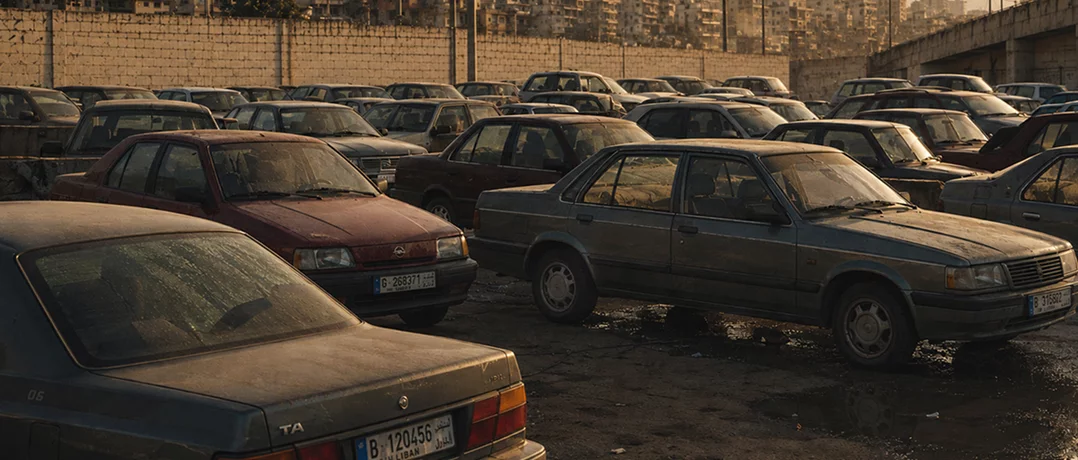
Lebanon’s used car sector has been experiencing a suffocating crisis that has continued to worsen since 2019 as a result of the ongoing economic collapse. The latest security developments have further complicated the reality facing the sector. Between declining purchasing power and the absence of stability, the market has entered a state of near paralysis that has directly affected sales and imports.
The used car sector is going through what is considered its most difficult phase in years, with commercial activity having come to an almost complete standstill. Cars have piled up in showrooms and ports, while their market value is gradually deteriorating amid the lack of demand and the continuation of costs, according to Syndicate of Importers President Elie Kazzi. The impact of the crisis is not limited to the car trade alone, but also extends to sectors directly linked to it, most notably car rental and logistics services, reflecting the depth of the economic decline and the widening scope of losses, at a time when prospects for a solution appear dependent on any improvement in the security and political situation.
Kazzi adds: “The sector has been receiving consecutive blows since 2019 and has been suffering from accumulated crises, only for the Israeli war in 2024 to further aggravate the situation significantly.”
He points out that “the car sector is classified by some as a luxury sector, yet a wide segment of citizens considers the car a necessity that cannot be dispensed with in daily life. However, under the difficult economic and security conditions, citizens prefer to postpone purchasing a car until the situation becomes clearer, especially since the priority becomes securing the basic needs of the family and children. With every crisis, the car sector is among the first sectors to be affected, prompting people to freeze purchasing decisions and wait to see how events unfold.”
He notes that “the current situation is a state of war in every sense of the word, and our work today has come to a complete halt. It can be said that activity has dropped to zero percent. Cars are piled up in showrooms, while the sun and natural elements directly affect them, as their prices and market value decline day after day, meaning that we are incurring continuous losses. A large number of showrooms are facing an extremely severe crisis, and the condition of the sector has become extremely difficult.”
He stresses that “the crisis is not limited to the car sector alone, but extends to dozens of sectors directly and indirectly linked to it, all of which are also experiencing paralysis and a sharp decline in business.”
The most dangerous point
The most dangerous aspect, however, lies in the fact that “the sector had been relying primarily on the summer season. Traders had begun preparing for it months ago, as is customary every year. When preparing for the season, goods are ordered in advance, especially since the arrival of cars from the United States takes between three and four months. Today, these cars have started arriving successively at the Port of Beirut, but the problem lies in the absence of sales and distribution activity.”
He continues: “When sales operations stop, the liquidity needed to clear the cars through customs and transport them from the port to the showrooms disappears, meaning we are facing double losses: at the port, fines and costs continue to rise, while in the showrooms there is no sales activity whatsoever, even as the cars continue to lose their value gradually.”
Kazzi sums up the situation by saying: “Our situation is extremely miserable,” expressing hope that “the security and political conditions will calm down.” He points out that those working in the sector “are not relying on the state or any other party. All they need is security and political stability, because the sector has the ability to recover again if the proper conditions are available. For years, we have understood that the state itself is suffering from major financial crises, and therefore we do not expect any real support from it.”
Regarding banks, he notes that “banking facilities have almost completely stopped, which further increases the pressure we are experiencing and places us in an extremely difficult and embarrassing position.”
As for the sector’s workforce, he explains that “employees have been with us for many years, and they cannot simply be dismissed or have their salaries reduced because work has stopped for a month or two. Until now, no part of salaries has been deducted, but if the crisis continues for a longer period, we may be forced to reduce wages. And if the situation drags on further, the damage will not be limited to employees alone; many institutions may also be forced to shut down and declare bankruptcy.”
The car rental sector
Regarding the car rental sector, Kazzi indicates that “the crisis here is also severe, and even under normal circumstances this sector cannot rely solely on the summer season. Companies that own between 200 and 300 cars need to operate year-round in order to cover expenses and achieve the minimum level of continuity.”
He adds: “In times of war, rental activity becomes almost non-existent, and those who resort to renting a car generally limit its use to local travel and at very low prices. If the rental price of a car used to be $30, today it is rented out for only $15. Consequently, both the car import and car rental sectors are experiencing the same suffering, just like the various economic sectors across the country. The situation is no longer bearable, and everyone is now in need of real solutions after exhaustion has reached its limit.”
In light of this reality, Lebanon’s used car sector appears to be facing a delicate and unprecedented stage of mounting pressures, where the economic crisis intertwines with security tensions to deepen the state of paralysis in the market. Between declining demand, lack of liquidity, and rising costs, the circle of losses continues to expand, affecting workers in this sector as well as the sectors linked to it.
Despite the bleak picture, hope remains pinned on any breakthrough in the security and political landscape, as this is considered the fundamental condition for the gradual return of activity to the market and the reactivation of the economic cycle. Without stability, all recovery attempts will remain limited and temporary.
