



Paris brought together Lebanon and global partners to shape a roadmap for strengthening Beirut’s security institutions, expanding state authority, and preparing future support.
Paris meeting sets stage for Lebanon security aid
Paris meeting sets stage for Lebanon security aid
By The Beiruter | September 18, 2026

Reading time: 5 min
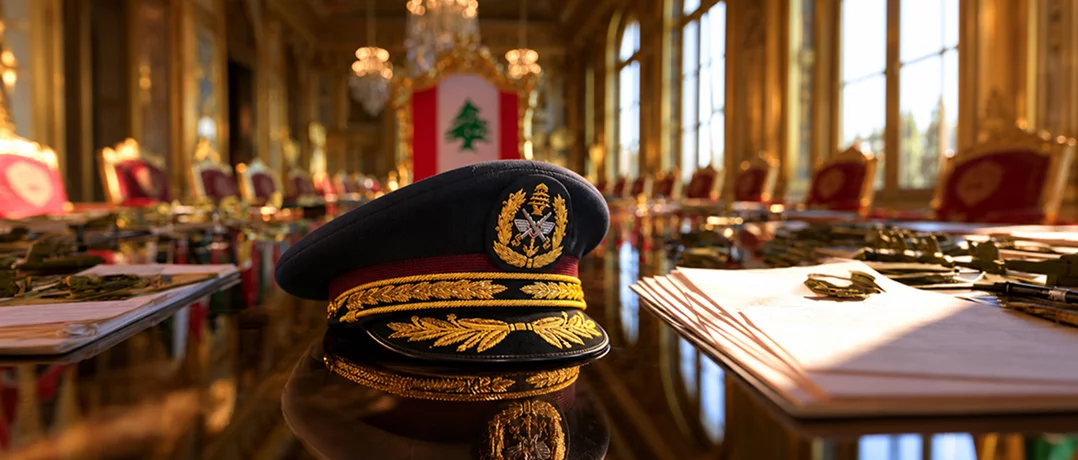
France hosted a high-level preparatory meeting in Paris on Thursday aimed at building international support for the Lebanese Armed Forces (LAF) and the Internal Security Forces (ISF), as Lebanon seeks to strengthen state authority and expand the deployment of its security institutions across the country.
The gathering, held within the framework of the Aqaba Process, brought together Lebanese President Joseph Aoun, French President Emmanuel Macron, Jordan’s King Abdullah II, senior military officials, and representatives from 17 countries, including the United States (U.S.), the United Kingdom (U.K.), Saudi Arabia, Italy, Canada, and the European Union (E.U.).
The gathering was not a donor conference and did not announce immediate financial or military assistance. Instead, it served as a technical and political preparatory meeting aimed at identifying the operational requirements of Lebanon’s security institutions, coordinating potential contributions from international partners, and establishing a roadmap for a larger international support conference expected later this year or in early 2027.
Defining the LAF’s operational requirements
The central objective of the Paris meeting was to assess what the LAF and the ISF require to undertake expanded responsibilities across Lebanon, particularly in southern Lebanon.
French officials described the discussions as focusing on a “clear, credible, and realistic” deployment plan for the LAF. The initiative seeks to define the conditions, implementation mechanisms, timelines, and operational priorities necessary before international partners commit additional assistance.
Commander of the LAF General Rodolphe Haykal presented the military’s assessment of its current capabilities and outlined the institution’s priority requirements. According to participants, discussions focused on strengthening the army’s ability to deploy additional personnel, secure borders, maintain internal stability, combat terrorism and organized crime, counter smuggling activities, protect critical infrastructure, and assume greater responsibility in southern Lebanon.
Coordinating international military assistance
Rather than seeking immediate financial pledges, the conference concentrated on coordinating future support among participating countries to avoid duplication and ensure that assistance corresponds directly to the army’s operational priorities.
The assistance under discussion includes financial support, military equipment, logistical assistance, maintenance programs, spare parts, communications systems, training, advisory missions, intelligence cooperation, border surveillance technologies, and counter-drone capabilities.
At the conclusion of the preparatory meeting, participants discussed producing a declaration of intent outlining a timetable for future assistance, including equipment deliveries, military cooperation, and training programs based on the priorities presented by the Lebanese military leadership.
Strengthening state institutions
During the conference, President Joseph Aoun reiterated that Lebanon has chosen to place responsibility for protecting national sovereignty, maintaining stability, and preserving security exclusively in the hands of the state’s military and security institutions.
Addressing the participants, Aoun said the LAF constitute the cornerstone of the state’s effort to extend its authority across the country, describing this objective as a Lebanese national choice rather than an externally imposed condition.
He also called on Lebanon’s international partners to accompany the country’s reform process by strengthening the capacities of the LAF and the ISF while ensuring transparency and accountability in the management of international assistance.
Aoun added that Lebanon intends to gradually increase domestic financing for its security institutions as public finances recover, while stressing that international support remains necessary during the current transitional period.
Three interconnected security files
The discussions reflected the close relationship between three major security issues currently facing Lebanon.
The first concerns expanding the Lebanese state’s authority across its territory and reinforcing the role of official security institutions. Lebanese officials have repeatedly stated that the objective is to ensure that the state alone exercises responsibility for national defense and security; currently undermined by Hezbollah’s military and security activities and interventions.
The second relates to the continued presence of Israeli forces in parts of southern Lebanon. Lebanese officials maintain that the full implementation of existing understandings requires an Israeli withdrawal alongside the expanded deployment of the LAF; most notably in the designated pilot zones.
The third concerns the future security arrangements in southern Lebanon as the mandate of the United Nations Interim Force in Lebanon (UNIFIL) approaches its scheduled expiration at the end of the year.
Participants agreed that these three issues are operationally interconnected, making coordination between Lebanon and its international partners essential during the coming months.
Planning for the post-UNIFIL phase
One of the conference’s principal topics was the future international security presence in southern Lebanon following the expected reduction or conclusion of UNIFIL’s mission.
France and Italy are examining several possible arrangements for the post-UNIFIL period. Options under discussion include a multinational support mechanism outside the UN framework, an EU mission focused on military training, advisory assistance, and technical support, or a smaller UN presence dedicated primarily to coordination and technical functions.
No final decision was reached during the Paris meeting, and discussions remain ongoing among participating governments and the UN.
French President Emmanuel Macron argued that any transition should be carefully managed to avoid creating a security vacuum. He stressed that future international arrangements should complement, not replace, the LAF, allowing the army to assume primary responsibility for security in southern Lebanon.
President Aoun likewise asserted that any transition beyond UNIFIL should strengthen the Lebanese state’s presence rather than create gaps in security.
High-level diplomatic consultations
Ahead of the conference, President Aoun met French President Emmanuel Macron at the Élysée Palace, where the two leaders discussed efforts to halt Israeli military operations, the ongoing Lebanese-American-Israeli negotiations conducted under the existing framework agreement, and future arrangements for southern Lebanon.
The discussions also covered bilateral cooperation in economic affairs, energy, and the possible resumption of offshore oil and gas exploration in Lebanese waters.
Later, Aoun joined Macron and Jordan’s King Abdullah II for a trilateral summit focusing on regional coordination, support for Lebanon’s security institutions, and wider developments in the Middle East.
King Abdullah reaffirmed Jordan’s continued support for the LAF, describing the army as the principal pillar of Lebanon’s security and stability. He also highlighted the need to strengthen the military’s operational capabilities, including border surveillance, maintenance support, spare parts, and counter-drone systems.
-
-

-
The Beiruter
-
