



Being able to move around the world freely is not a God-given right and comes at a price.
Passport anxiety

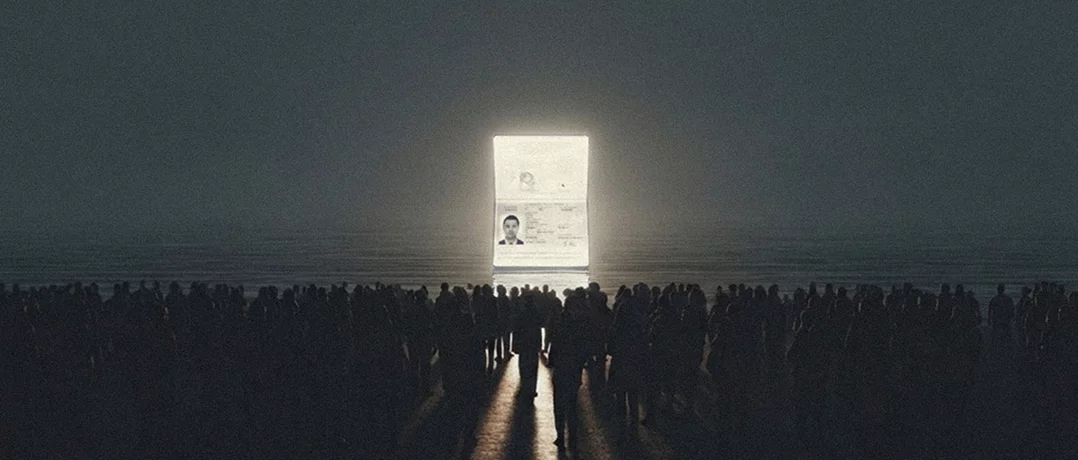
I’m sure my wife married me for my adonis-like looks, rapier wit and Clooney-esque charm. I’m 99% certain my British passport had absolutely nothing to do with it. But if I’m wrong, I’ll give her that 1%. Like having a nice house in the country or a well-paid job, while not a deal breaker, I’m sure it was a useful bonus; something to pass on to the kids or, equally importantly for Lebanese, allow unhindered access to the world, especially in times of trouble.
A decent passport was something I took for granted. I could travel, within reason, to wherever I wanted. I could, for instance, fly to America, Paris or Berlin at the drop of a hat. My first passport was hardback, my name handwritten in pleasing blue ink. On the inside cover it told (and still tells) pesky foreigners that “Her Britannic Majesty’s Secretary of State requests and requires in the name of Her Majesty all those whom it may concern to allow the bearer to pass freely without let or hindrance and to afford the bearer such assistance and protection as may be necessary.” You handed it over with a confidence verging on arrogance.
The Lebanese version has similar assurances, but being able to ‘pass freely without let or hindrance’ is clearly open to interpretation. When my wife, then my fiancée, wanted to travel to the US in 1992, she had to take a taxi to the American Embassy in Damascus and wait in a humiliating line to hopefully be granted a visa.
It’s hardly surprising, therefore, that one of the many duties of being Lebanese is making sure one has functioning travel bona fides. Any trace of foreign ancestry offers a glimmer of hope. My grandmother was Swedish, something that was nothing more than a quaint piece of trivia. That is, until the Civil War and people needed to get out of town pronto. It was at this point that some of my more enterprising cousins beat a hasty path to the door of the Swedish consulate claiming their long lost nationality.
Sadly it wasn’t to be. Back in the 70s, the Swedes were not as progressive as we think and it was only in 1979 that mothers could pass on the nationality to their children, let alone grandchildren. If our grandmother had been German or Irish it would’ve been a different story.
What I didn’t realise, but which on reflection doesn’t surprise me, is that some passports – rather like an address, a car, a handbag or a watch – are considered more prestigious than others. Topping the wish lists are France, the UK, Swiss, US, Canada and Australia.
The last two can be the source of mild status anxiety. I was having coffee with a friend 10 years ago when she told me she was satisfied with her Canadian passport but confessed it lacked the cachet of the US, British or French. “Don’t get me wrong,” she said “I can’t complain and it certainly beats an Australian passport and it’s definitely far superior to the African or Caribbean ones that some people have, but I’d really love to be British.”
Since 2019 the economic collapse; the 2020 port explosion and the 2024 war, as many as 500,000 Lebanese – mainly young, educated professionals, have sought work and stability abroad. Securing a second nationality, as well as a decent job, has once again become a priority.
Becoming a citizen of a Caribbean island is the quickest option. Saint Kitts & Nevis, Dominica, Grenada, Antigua and Barbuda and St. Lucia all have Citizenship by Investment programs that don’t require you to live there and will give you the nationality in a couple of weeks for as little as $250,000. Those requiring an EU profile need a bit more patience but buying a property in say Portugal or Greece gets you a Schengen visa and full citizenship in five to seven years.
My wife was told she would have to live in the UK before she could apply for citizenship. She got it in 2019, 25 years after we got married and after spending several thousand pounds on residency visas; filling in an application form the size of War and Peace; taking a nationality exam; swearing a solemn oath of allegiance under a photograph of Queen Elizabeth II and singing the national anthem. The Blue document arrived in the post a few days later. It was all a bit of an anticlimax.
The irony is that she can’t wait to come back to Lebanon and retire.
-
-

-
Michael KaramJournalist/Author
-
