

Lebanon’s 28% pasta tariff may aid local producers but could soon push up consumer prices.
Pasta tariff increase: Protecting industry or punishing consumers?
Pasta tariff increase: Protecting industry or punishing consumers?
By The Beiruter | December 09, 2025

Reading time: 4 min
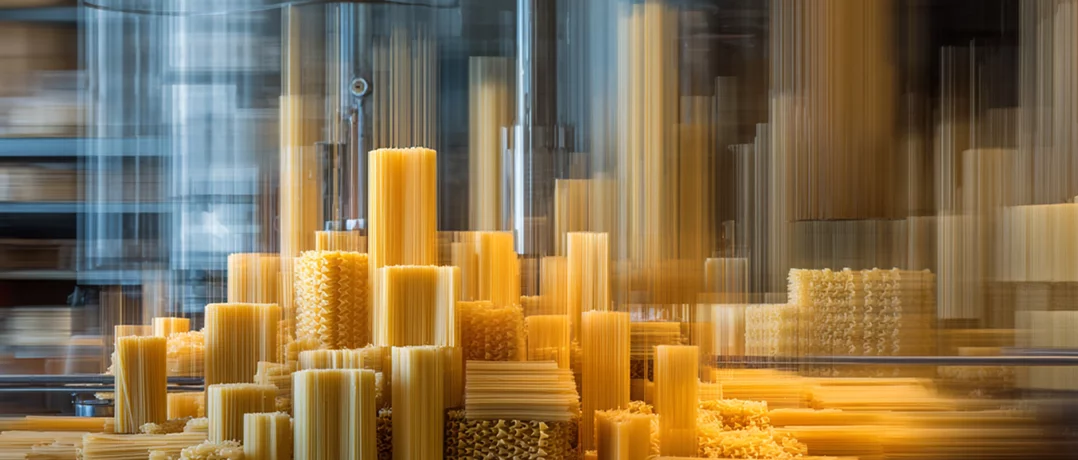
The Ministry of Finance issued Decision No. 146/2025, which amended the customs duties on the import of all types of pasta and “moghrabieh,” as well as stuffed pasta, whether cooked or prepared, including spaghetti, macaroni, noodles, lasagna, gnocchi, ravioli, and cannelloni. Meanwhile, the customs duty remained unchanged for dry pasta made from durum wheat semolina or soft wheat, including spaghetti, vermicelli, lasagna, and dry noodles.
What is notable in the decision is that the additional customs duties will take immediate effect on products imported from countries that have no trade agreements with Lebanon. In addition to the 28% duty stipulated in Article 1 of the decision, a 5% customs duty was imposed on imported uncooked, unstuffed pasta that contains eggs; dough made from potatoes; and other types of stuffed pasta, whether cooked or prepared.
With a simple calculation, the price of imported pasta subject to the 28% tariff effectively increases by about 30%, or even more once customs, VAT, transportation, and traders’ margins are accounted for. Thus, an imported product costing one dollar would rise to between $1.30 and $1.40 at minimum.
The decision entered into effect on 6 November for a period of six months ending on 5 May 2026, renewable for 2 years. However, prices have not yet increased on supermarket shelves, as their current stock has not been depleted.
Regarding the decision’s details, the head of the Syndicate of Food Importers, Hani Bohsali, told Nidaa Al-Watan: “This decision applies to pasta products imported from Turkey, which make up 60-70% of pasta imports to Lebanon, and not to those imported from Italy and France, with whom we have signed trade agreements. Therefore, the increase in prices across the majority of goods will be significant, about 30%. If this decision lasts longer, people may shift to Italian, Egyptian, or Lebanese pasta.”
Studies show that imported pasta constitutes about 80% of the pasta market in Lebanon. Based on Lebanese customs data, pasta imports in recent years averaged 30,000 metric tons annually, peaking at around 41,267 tons in 2020. In this regards, Bohsali states: “Statistics show that in 2024, imports reached 30,000 metric tons, with 62% coming from Turkey, 18% from Italy, and 11% from Egypt; compared to 25,000 tons in 2023, of which Turkey held 68%, Italy 16%, and Egypt 8.5%. As for 2022, imports reached their lowest level at 20,000 tons, with 70% from Turkey, 16% from Italy, and 2% from Egypt.”
When will pasta prices rise?
Economic expert Wissam Fahd explained to Nidaa Al-Watan that the recent increase in customs duties has not yet led to higher consumer prices. The impact of the new 28% customs duty remains weak in the short term due to 2 main reasons:
Firstly, suppliers still have large inventories, allowing them to continue selling at previous cost levels without adjusting prices immediately.
Secondly, Market demand has been weaker than expected, limiting suppliers’ ability to raise prices.
As a result, retail prices have remained largely stable despite the rise in customs duties on pasta imports. However, these assessments only reflect short-term effects. In the long term, once current inventories are exhausted, significant price increases may occur. At this stage, the magnitude or timing of future price hikes cannot be estimated. That covers imports, but what about local production?
Local industry
Data shows that recent years have witnessed an increase in the number of factories producing pasta in Lebanon. According to the Lebanese industrial directory (IDICO), there are about 19 factories/companies registered as pasta producers in Lebanon.
Although some factories have upgraded production lines and expanded operational capacity, such as factories in Taanayel and Baalbek, whose individual capacities range between 3,500 and 4,500 tons annually, most production units remain small or medium-sized. Many do not operate at full capacity due to high energy costs and rising prices of raw materials, which may necessitate continued reliance on imports to fill the supply gap.
The 28% tariff increase may translate into a 30% or even higher increase for consumers, due to weak oversight of profit margins. This will further accelerate inflation; first on this food product used widely in restaurants, and on pasta dishes sold in restaurants, which may raise their prices under the pretext of higher customs duties, even if they use locally produced pasta.
The hope remains that some Lebanese factories will not exploit the rise in the price of imported pasta to increase their prices by 10% or 20%, given the growing demand for local products and the limited competition among the few existing factories (energy, transportation, and raw-material).
Decision No. 146/2025, issued last November 2025, has entered into force, amending customs duties on the import of all types of “pasta” and “moghrabieh” by 28%. An additional 5% customs duty was also imposed on imported uncooked, unstuffed pasta that contains eggs; dough made from potatoes; and other types of stuffed pasta, whether cooked or prepared; a step aimed at supporting local pasta production. This measure sparked the discontent of Italian-cuisine lovers, who consider “pasta” a staple dish on their tables. What does the decision include, and will it achieve its intended goal?
-
-

-
The Beiruter
-
