

Lebanon declared Iran’s ambassador persona non grata and recalled its envoy, signaling escalating tensions over sovereignty, diplomatic violations, and Iranian influence, while invoking international law to assert state authority and non-interference.
Persona non grata: Lebanon draws the line with Iran
Persona non grata: Lebanon draws the line with Iran
By The Beiruter | March 24, 2026

Reading time: 4 min
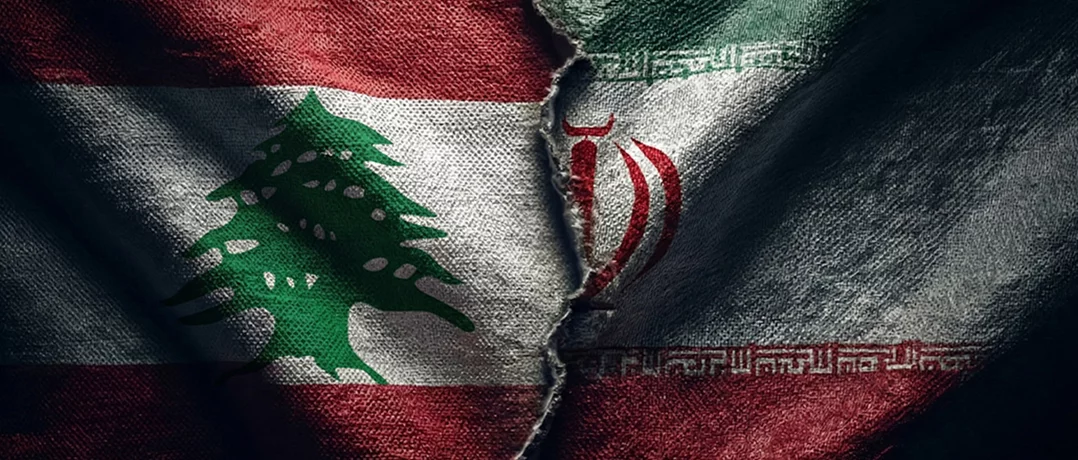
The Lebanese Ministry of Foreign Affairs and Emigrants (MOFA) summoned the Iranian Chargé d’Affaires in Lebanon, Toufic Samadi Khoshkhu, to convey a significant diplomatic decision. The Lebanese state officially withdrew its approval for the appointment of the Iranian ambassador-designate, Mohammad Reza Sheybani, declaring him persona non grata. The ambassador has been given until Sunday 29 March 2026 to leave Lebanese territory.
While the decision does not constitute a severing of diplomatic relations with Iran, the measure was taken against the ambassador for violating diplomatic protocol and his obligations as an ambassador appointed to Lebanon, including the principle of non-interference in Lebanese affairs.
In a parallel diplomatic gesture, Lebanon recalled its own ambassador, Ahmad Sweidan, from Iran for consultations. This action underscores Beirut’s formal protest against what it perceives as repeated Iranian violations of diplomatic norms and the principles governing bilateral relations. Lebanese Foreign Minister (FM) Youssef Raggi publicly affirmed the decision, stressing the priority of Lebanese sovereignty, non-interference, and adherence to international diplomatic protocol.
Persona non grata: Definition, legal basis, and consequences
The term persona non grata, derived from Latin meaning “unwelcomed person,” is a formal designation in Article 9 if the 1961 Vienna Convention on Diplomatic Relations. It grants a host State unilateral authority to declare any member of a diplomatic mission, either preventing their entry or requiring the diplomat to leave if already present (the latter being the case of Ambassador Sheybani).
As for the timeline for departure, it is often defined by national regulations, generally ranging from a few days to approximately 10 days; with Lebanon granting Ambassador Sheybani 6 days to depart.
Grounds for such a declaration include violations of host State laws, interference in domestic political affairs, or actions incompatible with diplomatic norms. Lebanon’s decision against Ambassador Sheybani reflects its assessment that Iran has repeatedly breached these standards, particularly through engagement with Hezbollah and other non-state actors in ways that undermine Lebanese sovereignty.
The implications of Lebanon’s decision
Declaring Ambassador Sheybani persona non grata marks a rare but significant escalation in Lebanese-Iranian relations. It signals Beirut’s determination to assert its sovereignty and enforce its authority over domestic political and security matters. The recall of Lebanon’s ambassador from Tehran also demonstrates a measured, yet firm, diplomatic response designed to convey disapproval without severing ties entirely. On the other hand, individuals and communities affiliated with Hezbollah would view such decision as targeting a country which they sharing deep cultural, religious, and political ties with.
This development occurs against a backdrop of intensified scrutiny of Iranian influence in Lebanon, with policymakers stressing adherence to international law, state monopoly over arms, and the need for non-interference. By invoking persona non grata, Lebanon is reaffirming its commitment to sovereign decision-making and signaling to both domestic and international audiences that foreign interference, regardless of source, will not be tolerated.
Historical context: Persistent Iranian influence in Lebanon
Lebanese-Iranian relations have deep roots, particularly through Lebanon’s Shiite community, which constitutes a significant sect and community in the country. Early connections date back centuries, with exchanges between Lebanon’s Jabal Amel region and Iran fostering clerical and cultural ties. In the modern era, the relationship evolved dramatically following the 1979 Iranian Revolution.
Iran’s strategic involvement in Lebanon intensified with the creation of Hezbollah in 1982, established under the guidance of the Iranian Islamic Revolutionary Guard Corps (IRGC). Hezbollah’s emergence transformed Lebanon’s political and security landscape, positioning the group as Iran’s primary interlocutor in Lebanese affairs and most influential proxy in the Middle East. Meanwhile, Tehran provided the group with billions in funding, military training, and sophisticated weaponry, establishing it as a key instrument in Iran’s regional strategy, aimed at expanding its influence, exporting its revolution based on “Wilayat al-Faqih” Shiite Islamic doctrine (the Guardianship of the Islamic Jurist).
While Hezbollah operates as a Lebanese political party and social service provider, its close association with Iran has often complicated Lebanon’s internal balance. Iranian interventions, particularly through Hezbollah, have occasionally provoked internal divisions and instability, as well as fueled perceptions of Lebanon as being a mere platform for Iran’s regional ambitions. The death of the group’s former Secretary-General Hasan Nasrallah in 2024 and its launching of the recent support front for Iran (in revenge for the death of Ayatollah Ali Khamenei) amplified Lebanese concerns over sovereignty, prompting increased calls for state monopoly over arms and redefining Lebanese-Iranian relations based on the principles of sovereignty, territorial integrity, and non-intervention in internal affairs.
Furthermore, the level of the IRGC’s penetration and embeddedness in Lebanese affairs and territories has raised serious alarms in Beirut, most notably in the 2024 and today’s current armed conflicts. The latter encompasses illegal entries into the country (including through fake passports), their controversial renting of apartments, and their effective dominance over Hezbollah’s military and possibly even its political apparatuses. This prompted the Lebanese Cabinet to “prevent any activity” that members of the IRGC might carry out from Lebanese territory, instructing security and judicial bodies to detain any IRGC members discovered operating in Lebanon and to initiate deportation procedures through the appropriate legal channels.
Hence, Lebanon’s declaration of the Iranian ambassador as persona non grata represents both a legal and symbolic assertion of sovereignty. The decision highlights the relevance of international diplomatic tools in upholding state sovereignty and maintaining the integrity of bilateral relations. As Lebanon navigates its internal political landscape and regional dynamics, the message is clear: diplomatic norms must be respected, and the independence of Lebanese decision-making remains non-negotiable.
-
-

-
The Beiruter
-
