

After the killing of Iran’s Supreme Leader Ali Khamenei, the regime has so far held together, despite growing uncertainty, a divided public mood, and questions over future reform.
Post-Khamenei Iran: Elite cohesion, public division
Post-Khamenei Iran: Elite cohesion, public division
By The Beiruter | March 02, 2026

Reading time: 4 min
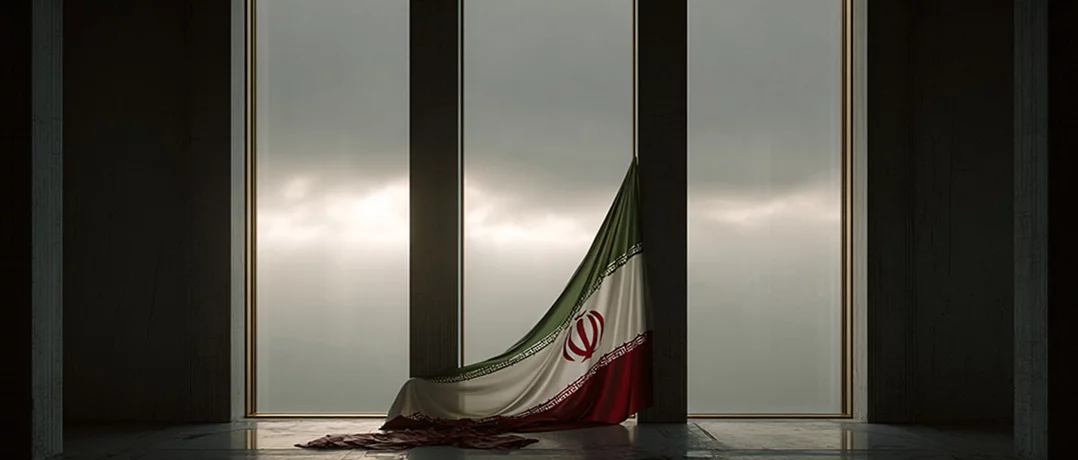
In the aftermath of Supreme Leader Ali Khamenei’s killing, Iran’s political order shows fewer immediate cracks than some observers anticipated. Youssef Azizi, an Iranian Arab expert and human rights activist, argues that the country’s power structure has yet to experience a meaningful internal rupture, despite the shock of losing a leader who ruled for nearly 36 years.
Power structure holds
Azizi says the relationship between the religious establishment and the Islamic Revolutionary Guard Corps, or IRGC, remains intact. Authorities have announced a three-member supreme governing body made up of the president, the head of the judiciary and a member of the Expediency Council. The arrangement signals continuity at the top. For now, no visible fissures have appeared within the IRGC that would suggest a serious split inside the ruling elite.
Structural uncertainty without open rupture
Still, Iran has entered a new chapter. Khamenei’s lengthy tenure made him the ideological and strategic engine behind the state’s core policies. His absence introduces structural uncertainty. The killing of other senior figures alongside him contributes to a sense of relative weakness within the system, even if that vulnerability hasn’t translated into open institutional conflict.
A divided public mood
Beyond the corridors of power, the social landscape is more complicated. The security apparatus remains firmly in place, but the public mood is divided. In some neighborhoods of Tehran, celebrations reportedly followed news of Khamenei’s assassination. Elsewhere, pro-regime rallies took place. Iranian society is far from politically unified. Azizi estimates that roughly 10% of the population continues to support the ruling establishment—whether out of loyalty, material interest or institutional affiliation. The rest is fragmented, including groups that oppose foreign military strikes not because they back the regime, but from nationalist, leftist or democratic convictions.
The risk of internal rivalry
Internal power struggles remain possible, though Azizi does not foresee them in the immediate term. Much depends on how the leadership transition takes shape. The current three-member governing body includes figures with differing orientations, among them President Masoud Pezeshkian, widely viewed as relatively moderate, alongside more hardline personalities. Whether this configuration produces cohesion or rivalry will determine whether underlying tensions evolve into overt institutional conflict.
Two militaries, one center of gravity
On the question of military authority, Azizi notes that Iran effectively maintains two-armed forces: the conventional army, rooted in the Shah’s era, and the ideologically driven IRGC, which currently holds the upper hand. In his view, real power remains concentrated in the Revolutionary Guard rather than the traditional military establishment.
Regional posture under constraint
Regionally, Iran’s trajectory will hinge on how the new leadership recalibrates its priorities. Azizi argues that Tehran is unlikely to expand its influence beyond the levels reached under Khamenei. Financial constraints, combined with the loss of the ideological architect who championed regional expansion, are likely to curb further projection of power. Political, economic and operational pressures could instead steer Iran toward tactical de-escalation or internal consolidation rather than renewed expansion.
Reform prospects in a post-Khamenei era
Azizi ultimately contends that Khamenei stood as a central barrier to political openness and economic reform, resisting public demands for change. His removal may, after a transitional period, create space for gradual societal transformation. Whether that transformation materializes will depend on the balance of power within the ruling establishment and on the character of the leadership that ultimately consolidates control.
-
-

-
The Beiruter
-
