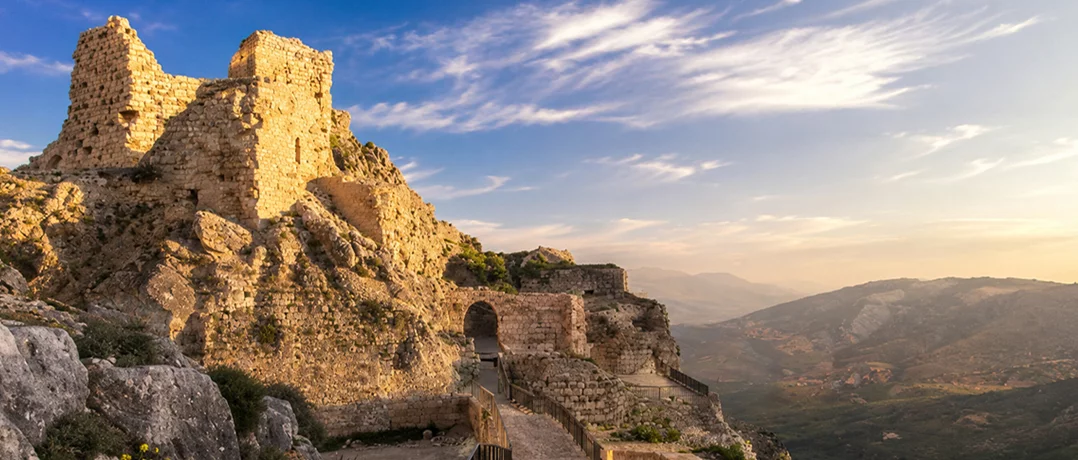
UNESCO's World Heritage Committee has voted to inscribe the Ancient City of Tyre and the five castles of Jabal Amel on the List of World Heritage in Danger, a decision reached this week at the Committee's 48th session in Busan, South Korea, where Lebanon is serving as a Vice-Chair alongside Jamaica, Senegal, Türkiye, and Ukraine.
The dual designation, delivered under an emergency procedure reserved for sites facing severe and imminent threat, formally recognizes the damage inflicted on two of Lebanon's most storied cultural landmarks amid the recent conflict, while placing their protection at the center of the international community's attention.
The Ministry of Culture to The Beiruter: a milestone
The Ministry of Culture confirmed to The Beiruter that "in 2025, the Ancient City of Tyre was placed under the Enhanced Protection system established by the Second Protocol to the 1954 Hague Convention for the Protection of Cultural Property in the Event of Armed Conflict, in recognition of its exceptional significance and the need to strengthen measures for its protection during armed conflicts." That earlier safeguard now sits alongside this week's decision, extending a continuum of international concern for a city whose Roman-era ruins have held World Heritage status since 1984.
Reacting to the Committee's decision, the ministry told The Beiruter that "this marks an important milestone for Lebanon and for the protection of our shared cultural heritage." It added that Minister Salame "extends his sincere gratitude to the World Heritage Committee for its decision to inscribe the Jabal Amel Castles on the UNESCO World Heritage List, while simultaneously recognizing the exceptional challenges facing this property by placing it on the List of World Heritage in Danger."
Five castles with a profound history
The inscription of the Jabal Amel Castles marks a landmark in its own right, granting the serial property its first entry on the World Heritage List even as it is simultaneously flagged as endangered. The property comprises Beaufort Castle (Qalaat al-Shaqif), Tebnine Castle (Toron), Chaqra Castle (Doubiyeh), Deir Kifa Castle (Maroun), and Chamaa Castle.
The ministry described the decision as recognition of "the outstanding universal value of a unique serial property comprising five historic castles that collectively shaped the history of southern Lebanon over the centuries." Together, the fortresses "formed an integrated defensive and administrative network controlling the strategic routes linking the Mediterranean coast with the inland regions," standing witness, in the ministry's words, to "nearly one thousand years of political, military, and cultural history."
The architecture of the castles reflects the successive civilizations that shaped the region. The ministry noted that the fortifications trace "the succession of civilizations that passed through the region, from the Crusader, Ayyubid, Mamluk, and Ottoman periods to local rulers," illustrating an enduring exchange of military knowledge, architectural traditions, and construction techniques between East and West. "Today," it said, "they stand not only as stone monuments but also as symbols of resilience, coexistence, and Lebanon's rich cultural identity."
Damage, recovery, and a call for collective action
The ministry clarified the origins of the danger listing, stressing that it "reflects the severity of the damage caused by the recent conflict" while also demonstrating "the international community's commitment to supporting its protection and recovery."
Lebanese officials have taken pains to frame the designation as an appeal for shared responsibility. "Lebanon does not view this inscription as a judgment or condemnation," the ministry said, "but rather as a call for collective action and an acknowledgment of the profound impact of the recent conflict, as well as the international community's determination not only to preserve the site's outstanding universal value but also to support efforts to protect, restore, sustain, and transmit it to future generations."
The Committee's decisions in Busan reflect a broader pattern this session, which also saw the West Bank site of Sebastia placed simultaneously on the World Heritage List and the List of World Heritage in Danger, underscoring how ongoing regional conflict is reshaping UNESCO's agenda in 2026.
Safeguarding our heritage
The dual recognition granted to Tyre and the Jabal Amel Castles carries both honor and urgency, an acknowledgment of extraordinary cultural value alongside a warning that this value is under threat. The Ministry of Culture reiterated Lebanon's commitment to the World Heritage Convention and to working with the international community to protect this shared heritage, framing the Busan decision as the beginning of a sustained effort rather than its conclusion. For Tyre's Roman ruins and the ramparts of Jabal Amel, the coming years will test whether international attention can be translated into the restoration and safeguarding these sites urgently require.