



Israeli strikes near Qaraoun Dam indicate escalation targeting Lebanese infrastructure, raising fears of widened conflict and increased regional instability concerns.
Qaraoun Dam attack signals a new and dangerous phase
Qaraoun Dam attack signals a new and dangerous phase
By The Beiruter | May 29, 2026

Reading time: 4 min
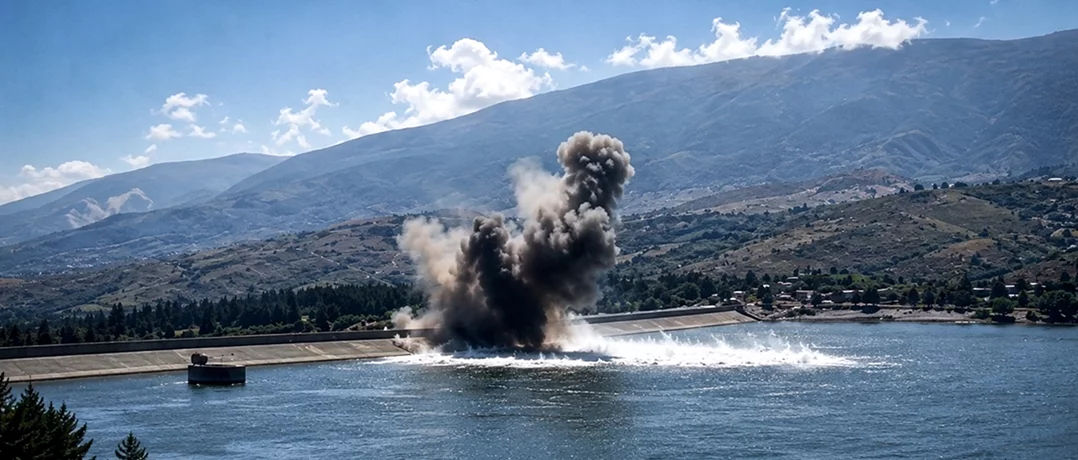
The recent Israeli airstrikes near the Qaraoun Dam in western Beqaa have raised serious concerns about a potential shift in the nature of the ongoing confrontation between Israel and Lebanon. For the first time since the escalation of cross-border hostilities with Hezbollah, military operations appear to be moving beyond the southern border region into the heart of Lebanon’s strategic infrastructure network.
The strikes, which targeted areas surrounding one of the country’s most vital water and energy assets, have sparked debate over whether Israel is entering a new phase of deterrence; one that could include pressure on civilian infrastructure to reshape the battlefield dynamics.
From border skirmishes to strategic depth strikes
Until recently, most Israeli operations were concentrated in southern Lebanon, primarily targeting border villages and suspected Hezbollah positions. However, the reported strikes near the Qaraoun Dam signal a geographical and strategic expansion toward Lebanon’s interior.
Israeli officials have repeatedly stated that their operations aim to dismantle Hezbollah’s military capabilities and infrastructure. Yet the choice of targets near a critical national facility suggests a broader interpretation of what constitutes a “legitimate military objective,” especially in the context of escalating drone and rocket attacks launched by Hezbollah against northern Israel.
This shift coincides with intensified Israeli military activity, including expanded air operations and reserve mobilization ordered by Israeli Prime Minister (PM) Benjamin Netanyahu, reflecting what can be described as an effort to increase pressure and alter the operational balance.
The strategic significance of the Qaraoun Dam
The Qaraoun Dam is not merely a water reservoir; it is a cornerstone of Lebanon’s infrastructure system. Located on the Litani River in western Beqaa, it forms part of the country’s most important hydrological and energy network.
Qaraoun Dam has a storage capacity of approximately 220 million cubic meters, making it the largest reservoir in Lebanon. Built over 5 decades ago, it plays a central role in irrigation, electricity generation, and water supply.
The dam feeds 4 hydroelectric power stations with a combined capacity of nearly 195 megawatts and supports extensive irrigation networks that sustain agriculture across the Beqaa Valley and southern Lebanon. It is also linked to the ambitious “Canal 800” project, designed to expand irrigation coverage and improve water distribution for more than 100 towns and villages.
Given this multifunctional role, any threat to the dam or its surrounding infrastructure carries implications far beyond local damage; it risks destabilizing essential services for large portions of the country.
Why targeting infrastructure raises the stakes
The reported escalation is consistent with a broader Israeli strategy of expanding operational depth. Instead of limiting strikes to border areas, the military has increasingly targeted what it describes as Hezbollah-linked infrastructure across Lebanon.
More importantly, military analysts argue that the significance of the recent strikes lies not only in their location but in their symbolic and strategic implications. Infrastructure such as dams, power plants, and water systems is typically considered off-limits under international humanitarian norms unless directly linked to military activity.
Striking near such facilities sends a dual message: increasing pressure on Hezbollah while simultaneously signaling to the Lebanese state that the costs of continued escalation may extend into the civilian domain. This approach, according to some observers, reflects an attempt to widen deterrence by raising the economic and societal stakes of the conflict.
However, it also introduces significant risks, including potential humanitarian consequences and the possibility of broader escalation if critical infrastructure is damaged. Indeed, the blurred line between civilian and military infrastructure increases the risk of unintended damage to national systems essential for daily life.
Political pressure on the Lebanese state
Beyond military objectives, the strikes are widely interpreted as part of a broader effort to exert pressure on the Lebanese government. Lebanon is currently facing severe economic and institutional crises, which limits its ability to absorb further shocks to its infrastructure.
Targeting or threatening key facilities increases internal pressure on Lebanese authorities to adopt stricter security arrangements or engage more actively in indirect negotiations related to border demarcation and Hezbollah’s military role.
This pressure is further amplified by international financial measures and diplomatic constraints, which collectively restrict Lebanon’s capacity to respond or rebuild quickly after any escalation.
Regional negotiations and strategic calculations
The escalation near the Qaraoun Dam also appears intertwined with broader regional diplomacy, particularly discussions involving indirect negotiations between Israel and regional actors under international mediation. These talks often include issues related to border security, maritime boundaries, and the role of Hezbollah within Lebanon’s political system.
In this context, military escalation may serve as a negotiating tool, aimed at strengthening Israel’s position before any potential diplomatic settlement. At the same time, Hezbollah continues to stress its ability to maintain deterrence through continued cross-border strikes, reinforcing a cycle of action and response that limits de-escalation prospects.
As tensions continue to rise, Lebanon finds itself increasingly exposed; not only along its southern border, but across its entire strategic infrastructure network, where the next phase of escalation could carry consequences far beyond the battlefield.
-
-

-
The Beiruter
-
