

Lebanon’s National Commission for Lebanese Women has launched a draft law proposing a women’s quota in parliamentary elections to boost female representation in Parliament.
Quota plan seeks stronger female voice in Parliament
Quota plan seeks stronger female voice in Parliament
By The Beiruter | February 19, 2026

Reading time: 3 min
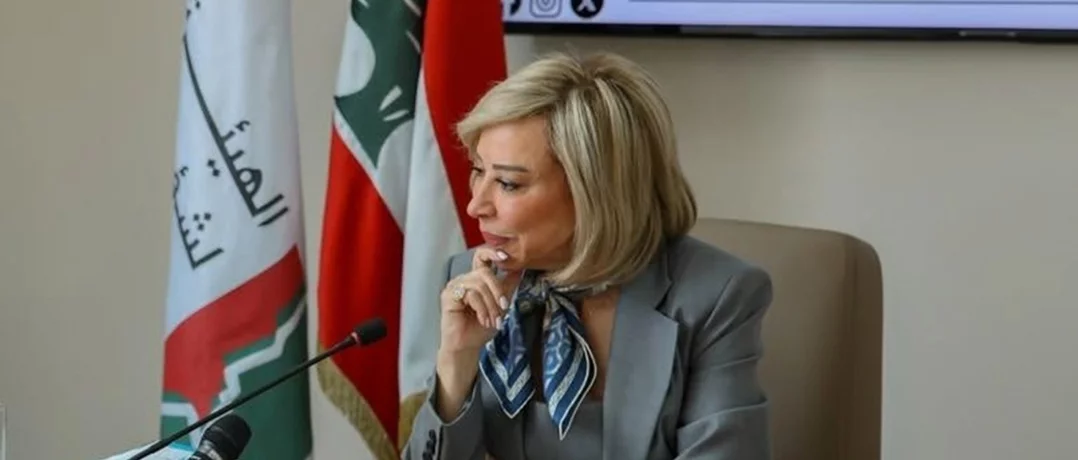
The National Commission for Lebanese Women, chaired by the First Lady of Lebanon, Mrs. Nehmat Aoun, held a national meeting to launch a unified draft law aimed at enhancing women’s representation in Parliament through the adoption of a women’s quota in the electoral law. The meeting was organized in partnership with the United Nations (UN) in Lebanon, with support from UN Women and the United Nations Development Programme (UNDP), and with funding from the British Embassy in Beirut, the European Union (EU), the Government of Canada, the Spanish Agency for International Development Cooperation, and the International Organization of La Francophonie.
This meeting follows up on a national gathering held earlier this year to unify efforts among various stakeholders to strengthen women’s participation in decision-making positions, as well as the technical meetings that followed to discuss proposed observations and draft the final version of the legislative proposal or draft law. This work was carried out in cooperation with the Arab Women Organization and the Civil Society Coalition for Quota Support.
The meeting was attended by the Vice President of the Commission, Ambassador Sahar Baassiri Salam; the United Nations Special Coordinator for Lebanon, Ms. Jeanine Hennis-Plasschaert; and the Director-General of the Arab Women Organization, Dr. Fadia Kiwan. It was also attended by ministers, ambassadors, heads of United Nations agencies and international organizations, members of Parliament, as well as representatives of ministers, public administrations, civil society organizations, trade unions, political parties, media and academic institutions, United Nations bodies and international organizations, and members of the National Commission.
The First Lady opened the meeting with remarks, stating:
We gather today at a pivotal stage in a long national journey that did not begin today, nor will it end today. We meet after having listened, discussed, reviewed, and engaged in dialogue with all partners, and after taking into account all observations, questions, reservations, and concerns. This meeting is not a repetition of previous ones, but rather the culmination of a serious participatory process and a clear moment of declaration: we have completed our work, and today we present its final outcomes with full responsibility and transparency.
Mrs. Aoun noted that:
“This process began years ago, carried forward by Lebanese women, civil society, experts, and institutions. When we assumed responsibility, we did not start from scratch; rather, we carried the torch and continued the journey. Yes, today we are presenting a law that has been carefully drafted, widely discussed, and has received broad support from the majority of parties present here today. But let it be clear to everyone: the law is a tool, not an end in itself. If it is not adopted today, tomorrow, or during this legislative term, genuine reform is cumulative work that advances through steady steps, even if they sometimes appear slow. The process will not stop, the will shall not be broken, and the struggle shall not retreat, because the objective goes beyond a legal text. The objective is a Parliament that reflects the reality of Lebanese society; a Parliament that cannot be legitimately representative, genuinely democratic, or expressive of the people’s will if it continues to exclude half of society. A Parliament without meaningful female representation is a Parliament that does not resemble Lebanon.”
She concluded by stating:
We are not pursuing this path alone; we are pursuing it with you, with political leaders, experts, civil society, and the international community, whose support and engagement we value. Today, we are not asking for permission, nor justifying a right, nor bargaining over a principle. We clearly declare that women’s representation in political life is an irreversible choice, a national responsibility, and a moral and constitutional commitment.
We will continue together until women’s presence in Parliament becomes normal; neither an exception, nor a favor, nor a battle. A law that is not adopted will not stop us, resistance to change will not deter us, and no step will take us backward. The Lebanon we seek, and the state we deserve, cannot be built except through women’s participation, leadership, and full representation.”
The United Nations Special Coordinator for Lebanon then delivered a speech stressing that:
“The time has come to translate promises into practical initiatives in all fields, including the adoption and implementation of the draft law concerning temporary special measures.”
She added:
Despite the effective role of women in Lebanese society, their capacities as voters, candidates, or elected representatives remain ‘untranslated.’
”The Special Coordinator explained that the proposed legislation is “not merely a technical amendment,” but rather “a genuine opportunity to strengthen women’s representation in Parliament” and enhance women’s role in “leading Lebanon’s future.
Following that, researcher at Information International, Mr. Mohammad Shamseddine, presented the final version of the legislative proposal/draft law prepared by the National Commission, which aims to amend Law No. 44 of 17 June 2017, governing the election of members of Parliament. The proposal ensures “the allocation of 40% of candidacies on electoral lists for women and the reservation of 33% of parliamentary seats for them.”
The meeting concluded with an open discussion among participants.
-
-

-
The Beiruter
-
