

Lebanese FM Raggi visits Rome and Vatican seeking support for southern Lebanon security, international aid, diaspora ties, and diplomacy efforts.
Raggi’s diplomatic mission to Rome and the Vatican
Raggi’s diplomatic mission to Rome and the Vatican
By The Beiruter | May 11, 2026

Reading time: 4 min
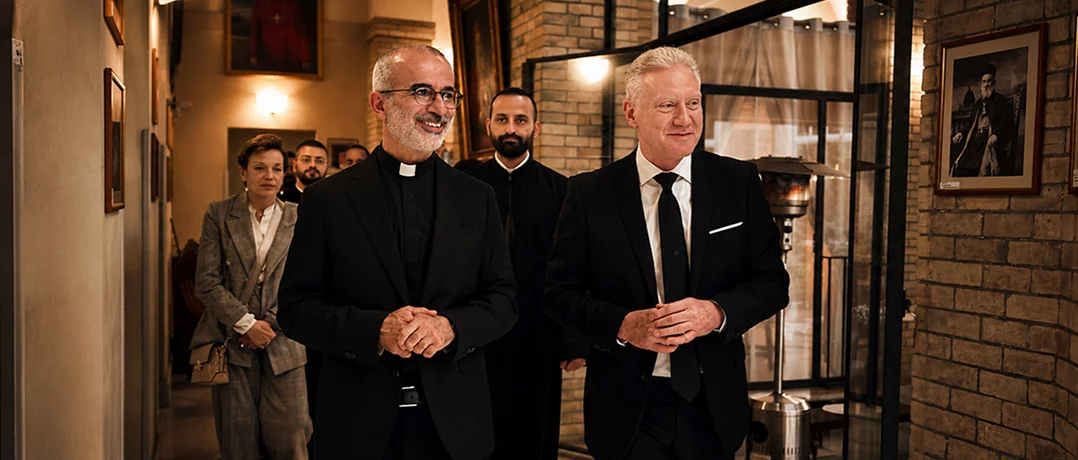
Lebanese Minister of Foreign Affairs and Emigrants Youssef Raggi has embarked on an official visit to Italy and the Vatican City at a particularly delicate moment for Lebanon and the wider Middle East. The visit comes amid growing international concern over the fragile security situation in southern Lebanon, ongoing regional tensions, and mounting diplomatic efforts aimed at preserving stability along the Lebanese-Israeli border.
Raggi’s meetings with Cardinal Pietro Parolin and Italian Foreign Minister Antonio Tajani reflect Lebanon’s attempt to mobilize political, diplomatic, and international support at a time when the country faces complex security, economic, and institutional challenges. Beyond protocol and symbolism, the visit carries strategic significance, particularly regarding the future of southern Lebanon, the role of the Lebanese Armed Forces (LAF), and the broader international approach toward Lebanese sovereignty and regional de-escalation.
South Lebanon and the debate over security arrangements
The situation in southern Lebanon remains the central issue surrounding Raggi’s visit to Italy and the Vatican City. Since the military confrontations between Hezbollah and Israel in 2023-2024 and 2026, southern Lebanon has become a major focus of regional and international diplomacy amid fears of a wider war.
Talks with Italian Foreign Minister (FM) Antonio Tajani are expected to center on preserving stability along the border and strengthening the role of the Lebanese state in the south. Italy occupies an important position in this file because it is among the leading contributors to the United Nations Interim Force in Lebanon (UNIFIL), both militarily and diplomatically, which has long operated south of the Litani River to monitor the ceasefire and support stability efforts.
Discussions are also likely to address continued Italian military assistance to the LAF, which international actors increasingly view as essential to maintaining security and reinforcing state authority. At the same time, broader diplomatic debates continue regarding future security arrangements in southern Lebanon, including the possible expansion of the army’s role and closer coordination with UNIFIL forces.
However, the issue remains highly sensitive because it intersects with the question of Hezbollah’s weapons and its ties to Iran. Lebanese officials therefore continue attempting to balance international pressure for stronger state control with the need to avoid internal political and sectarian tensions that could destabilize the country further.
Lebanon’s search for international support
Beyond the security dimension, Raggi’s visit reflects Lebanon’s broader effort to restore international confidence after years of political paralysis, financial collapse, and institutional deterioration. Lebanese officials increasingly recognize that the country’s recovery depends heavily on rebuilding relations with international partners capable of providing political backing, humanitarian assistance, economic aid, and military support.
Italy has remained one of Lebanon’s consistent European partners throughout recent crises. In addition to its role within UNIFIL, Rome has repeatedly supported Lebanese state institutions through humanitarian programs, development initiatives, and assistance to the armed forces. Within the broader framework of the European Union (EU), Italy also advocates maintaining international engagement with Lebanon despite growing regional instability.
Raggi’s meetings in Rome are therefore expected to extend beyond immediate security concerns and address Lebanon’s urgent need for sustained international cooperation. Discussions may include economic support, reconstruction efforts in southern Lebanon, humanitarian assistance for displaced populations, and coordination regarding migration and regional security challenges in the Mediterranean.
The visit to the Pontifical Maronite College
The Lebanese foreign minister also used the visit to highlight the importance of the Lebanese diaspora in preserving Lebanon’s international presence. During his meeting with members of the Lebanese community in Rome at the Pontifical Maronite College, Raggi stressed the role of expatriates in building bridges between Lebanon and the world, promoting Lebanon’s cultural identity, and supporting the country during periods of crisis.
At a time when Lebanon continues to face one of the most severe economic crises in its modern history, the diaspora remains a crucial economic and diplomatic lifeline through remittances, investments, and advocacy abroad; which Raggi reiterated.
The Vatican’s diplomacy and historical interest in Lebanon
The Vatican City occupies a unique position in international diplomacy. Unlike traditional global powers, the Vatican does not rely on military (hard power) or economic influence, but rather on moral authority, mediation, and soft power. Through its diplomatic network and global religious influence, the Holy See has historically played important roles in conflict mediation, humanitarian advocacy, interfaith dialogue, and peacebuilding efforts across the world. Vatican diplomacy is often characterized by quiet negotiations conducted away from public attention, allowing it to maintain communication with opposing international actors simultaneously.
In recent decades, the Vatican has become increasingly active on issues such as migration, war prevention, poverty, and the protection of religious and cultural pluralism. Successive popes have stressed dialogue and coexistence as essential tools for reducing global tensions, particularly in conflict-prone regions such as the Middle East.
Within this framework, Lebanon holds a special place in Vatican diplomacy and historical thinking. The Holy See has long viewed Lebanon as a unique model of coexistence between religions and cultures in the region. Successive popes repeatedly described Lebanon as a “message” of pluralism, freedom, and interreligious dialogue rather than merely a small state in the Middle East.
Indeed, Lebanon occupies a special symbolic place within Vatican diplomacy because of its historic Christian communities, particularly the Maronite Church, and its long-standing cultural ties with the Holy See. Raji’s visit to the Pontifical Maronite College in Rome reflected this deep historical relationship.
Recent statements by Pope Leo XIV calling for peace and stability in Lebanon reflect the Vatican’s continued concern over the country’s future. The Holy See consistently supports the preservation of Lebanese state institutions, national unity, and social diversity, while opposing any developments that could push the country toward fragmentation or prolonged instability.
Lebanon also maintains deep historical ties with the Vatican through the Maronite Church and centuries of religious, educational, and cultural cooperation. This relationship has contributed to the Vatican’s sustained diplomatic engagement in Lebanese affairs, especially during periods of crisis and regional conflict.
From here, the Holy See represents an important channel of dialogue with Western powers, including the United States (U.S.). Given its immense symbolic and religious influence across the world, specifically in countries with an established Christian majority (such as the case with regards to the West), the Vatican could use its leverage to advocate for the needed policies, approaches or even the mere attention of those powers towards the Lebanese scene.
-
-

-
The Beiruter
-
