

New data shows renewables are shifting from a climate solution to a strategic asset in an increasingly uncertain energy landscape.
Renewables just became strategic

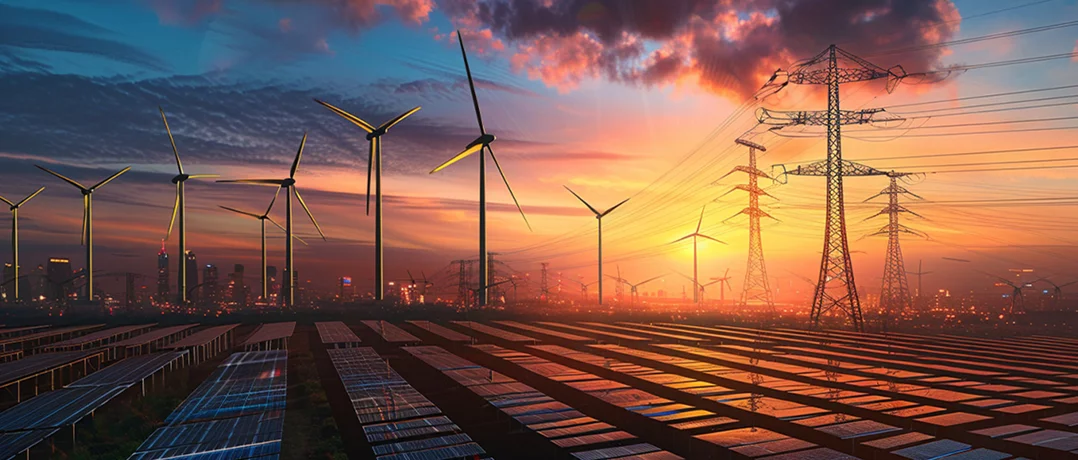
The case for renewables is no longer anchored in climate targets alone, but increasingly framed in terms of risk, resilience, and control. In April, the International Renewable Energy Agency (IRENA), an intergovernmental body that advises governments on energy policy, warned that renewables are now “a strategic necessity for energy security and national resilience.”
The shift is already visible. According to IRENA, in 2025 alone, 692 gigawatts of renewable capacity were added globally, bringing renewables to nearly half of total installed power capacity worldwide while costs for solar and wind remain. As costs continue to fall, remaining well below fossil fuel alternatives in most regions, the recent Iran war has reinforced a broader reality. Energy systems built on imported fuel are exposed. Those built on domestic generation are not.
From cost advantage to risk management
For years, renewables gained ground because they became cheaper. That trend has only accelerated. Since 2010, the cost of solar power has fallen by 87 percent, onshore wind by 55 percent, and battery storage by 93 percent, according to IRENA. Today, around 91 percent of newly installed renewable capacity delivers electricity at a lower cost than the cheapest fossil fuel alternative. Onshore wind has followed a similar trajectory, with costs down by more than half over the same period.
What has changed is how those cost dynamics are being interpreted. In its April 2026 policy advisory focused on the Middle East, IRENA emphasizes that renewables provide not only lower costs, but also insulation from fuel price volatility. Unlike gas or oil-fired generation, solar and wind operate without ongoing fuel inputs. That distinction has become more significant as global energy markets experience repeated shocks.
Analysis by Ember, a U.K.-based energy research group focused on power sector transitions, describes the current moment as a “twin fossil shock,” where volatility in oil and gas markets feeds directly into electricity prices. In that context, renewables function differently. Their costs are largely fixed upfront, insulating power systems from repeated price spikes.
The geopolitics of domestic energy
The strategic dimension becomes clearer when viewed through a geopolitical lens. Energy systems built on imported fossil fuels are inherently exposed to external pressures, from supply disruptions to price manipulation. The Iran war has sharpened those concerns across fuel-importing economies, particularly in regions already navigating political instability.
IRENA’s recent press analysis frames renewables as a pathway toward greater energy independence. By expanding domestic generation capacity through solar and wind, countries can reduce reliance on international fuel markets and limit exposure to geopolitical shocks. This is especially relevant for Middle Eastern economies that have historically depended on either exporting or importing hydrocarbons.
There are already measurable examples. In Europe, increased deployment of solar and wind has reduced the need for imported fossil fuels enough to save an estimated €58 billion in fuel costs during recent energy disruptions, according to Ember. Similar dynamics are emerging in parts of the Middle East, where countries such as the United Arab Emirates and Saudi Arabia are delivering electricity at record-low prices, while smaller-scale installations are expanding access in more constrained markets.
Speed and scalability in uncertain conditions
One of the less discussed advantages of renewables is deployment speed. Large fossil fuel projects, particularly gas infrastructure, require long development timelines, complex financing arrangements, and stable geopolitical conditions. Solar and wind projects, by contrast, can often be deployed more rapidly and in incremental phases.
This difference matters in periods of uncertainty. As the Ember report notes, the ability to add capacity quickly allows countries to respond more flexibly to changing demand and supply conditions. It also reduces the risk of locking into long-term investments that may become less viable as market dynamics shift.
IRENA highlights this flexibility as a key component of energy security. Systems that rely on a diverse mix of renewable sources, supported by storage and grid upgrades, are better positioned to absorb shocks. They can adjust more easily to fluctuations in demand, disruptions in supply chains, or shifts in policy environments.
From transition to central pillar
The shift in how renewables are being valued, as emphasized in IRENA’s recent analysis, does not mean the transition is complete. Fossil fuels continue to play a significant role in global energy supply, and many systems remain heavily dependent on them. Grid infrastructure, storage capacity, and regulatory frameworks still need to evolve to support higher shares of renewable generation.
But the direction of travel is becoming clearer. The combination of falling costs, deployment speed, and insulation from fuel price volatility, Ember notes, is changing how policymakers and investors evaluate energy options. Renewables are being assessed not only on environmental grounds but as instruments of economic stability and strategic resilience.
The Iran war has reinforced that logic without fundamentally altering it. It has served as a reminder of the risks embedded in existing energy systems, particularly those tied to global fuel markets. In doing so, it has accelerated a shift already underway, one that positions renewables at the center of how economies navigate an increasingly uncertain energy landscape.
-
-

-
The Beiruter
-
