As war and economic collapse deepen Lebanon’s humanitarian crisis, disability-focused organizations like Al-Amal are working to restore mobility, dignity, and survival for some of the country’s most vulnerable communities.




As war and economic collapse deepen Lebanon’s humanitarian crisis, disability-focused organizations like Al-Amal are working to restore mobility, dignity, and survival for some of the country’s most vulnerable communities.

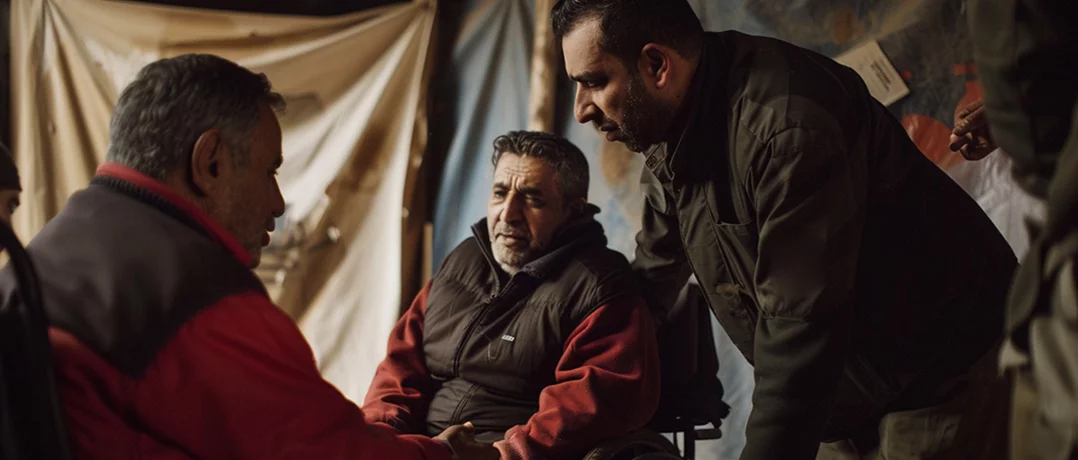
In a country battered by overlapping crises, one group of Lebanese is consistently hit hardest and reported on least: people with disabilities. Al-Amal for Development & Social Care Association, a Lebanon-based humanitarian organization, has spent the past year working to change that. The Beiruter sat down with the team to understand what their emergency response actually looks like on the ground.
“Our priorities have shifted toward emergency response, particularly addressing the immediate needs of injured individuals and persons with disabilities, who have been disproportionately affected by the ongoing crisis,” a spokesperson for Al-Amal told The Beiruter.
The organization operates across three regions chosen to cover Lebanon’s most underserved geographies during the war: Saida City in the south, Iqlim El Kharroub in Mount Lebanon, and Dinnieh in the north. These are not random locations. South Lebanon has absorbed the brunt of the direct conflict and the wave of war-related injuries, while Iqlim El Kharroub and Dinnieh have hosted significant numbers of displaced families pushed inland and upward.
Al-Amal’s wartime work runs across four interconnected sectors: health and rehabilitation services, assistive devices, food security, and non-food item support. What sets the organization apart, the spokesperson said, is its specialization.
“What distinguishes our organization is our specialized expertise in disability inclusion and rehabilitation, particularly in the provision of prosthetic limbs and mobility support within emergency settings,” the spokesperson explained. “Our work places a strong emphasis on restoring mobility, dignity, and independence for individuals who have suffered injuries or disabilities as a result of the conflict.”
That distinction matters. In a humanitarian response landscape often dominated by food and shelter, dedicated disability inclusion remains rare, and amputee care during an active conflict requires technical capacity most NGOs simply do not have.
The organization’s interventions target three overlapping groups: persons with disabilities, injured individuals including amputees, and displaced families. On the rehabilitation side, that translates into prosthetic limbs, wheelchairs, crutches, essential medications, and adult and child diapers. On the relief side, it means mattresses, hygiene kits, ready-to-eat meals, and food parcels.
“For someone who has lost a limb in this war, a prosthetic is not just a medical device,” the spokesperson said. “It is the difference between dependence and a life they can rebuild.”
Since the war began, Al-Amal has delivered twelve prosthetic limbs, distributed more than 700 food parcels, and served over 1,000 hot meals. More than 150 mattresses have gone to displaced families, alongside over 200 hygiene kits and more than 50 packages of diapers and essential medications for people with disabilities whose supply chains evaporated overnight. The team has also facilitated more than 30 therapeutic sessions and two surgical interventions.
Twelve prosthetic limbs may sound modest next to a thousand hot meals, but each one represents a months-long process of assessment, fitting, manufacture, and rehabilitation. Twelve people who, in another timeline, would have been left without the equipment to walk.
Lebanon’s healthcare and social protection systems have been hollowed out by years of currency collapse, hospital underfunding, and brain drain. For people with disabilities, the system was already inadequate before the latest escalation. Then came the war.
Al-Amal’s response sits in the gap that larger international agencies often overlook, because disability-specific programming requires specialized staff and supply chains that most general-purpose responders do not maintain.
“Our priorities have shifted toward emergency response,” the spokesperson reiterated, “but the long-term need for rehabilitation, mobility support, and inclusion does not end when the news cycle moves on.”
For a country still counting its dead, its injured, and its displaced, Al-Amal’s specialization is a reminder that humanitarian response is not just about keeping people alive. It is about whether they can move, work, and live with autonomy once the bombing stops.

